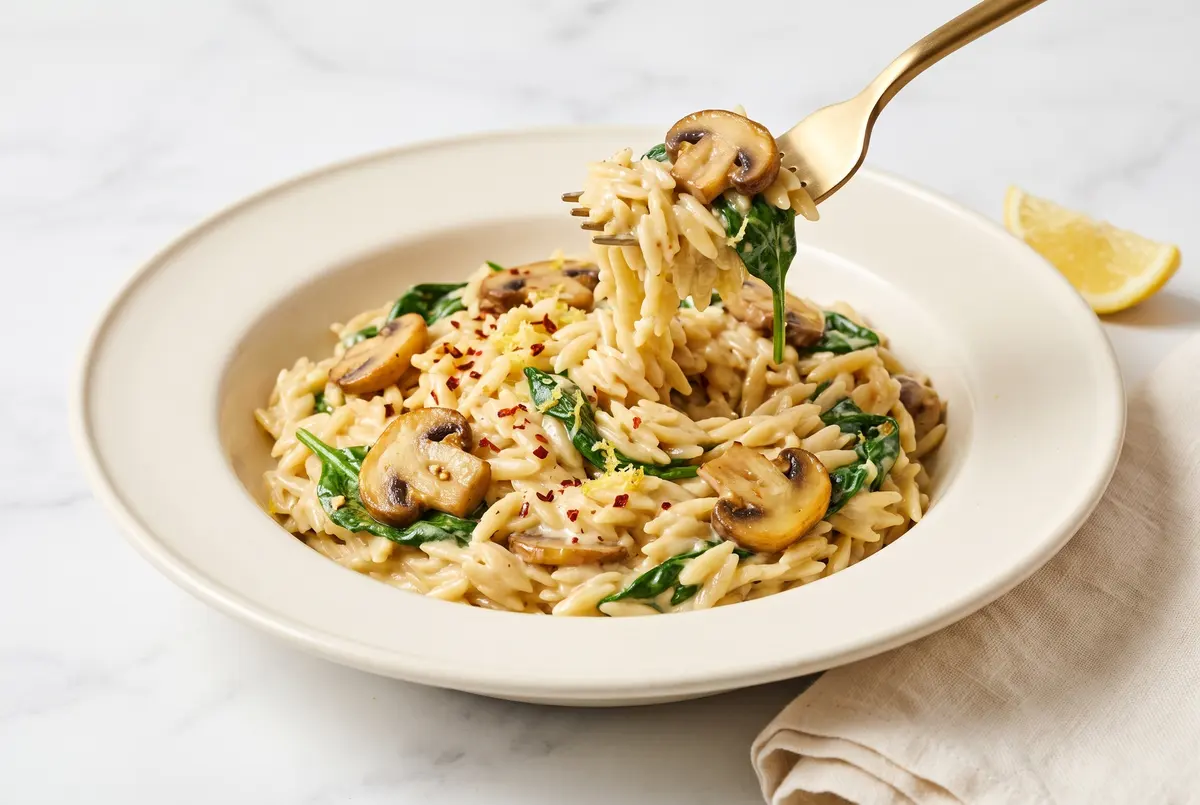
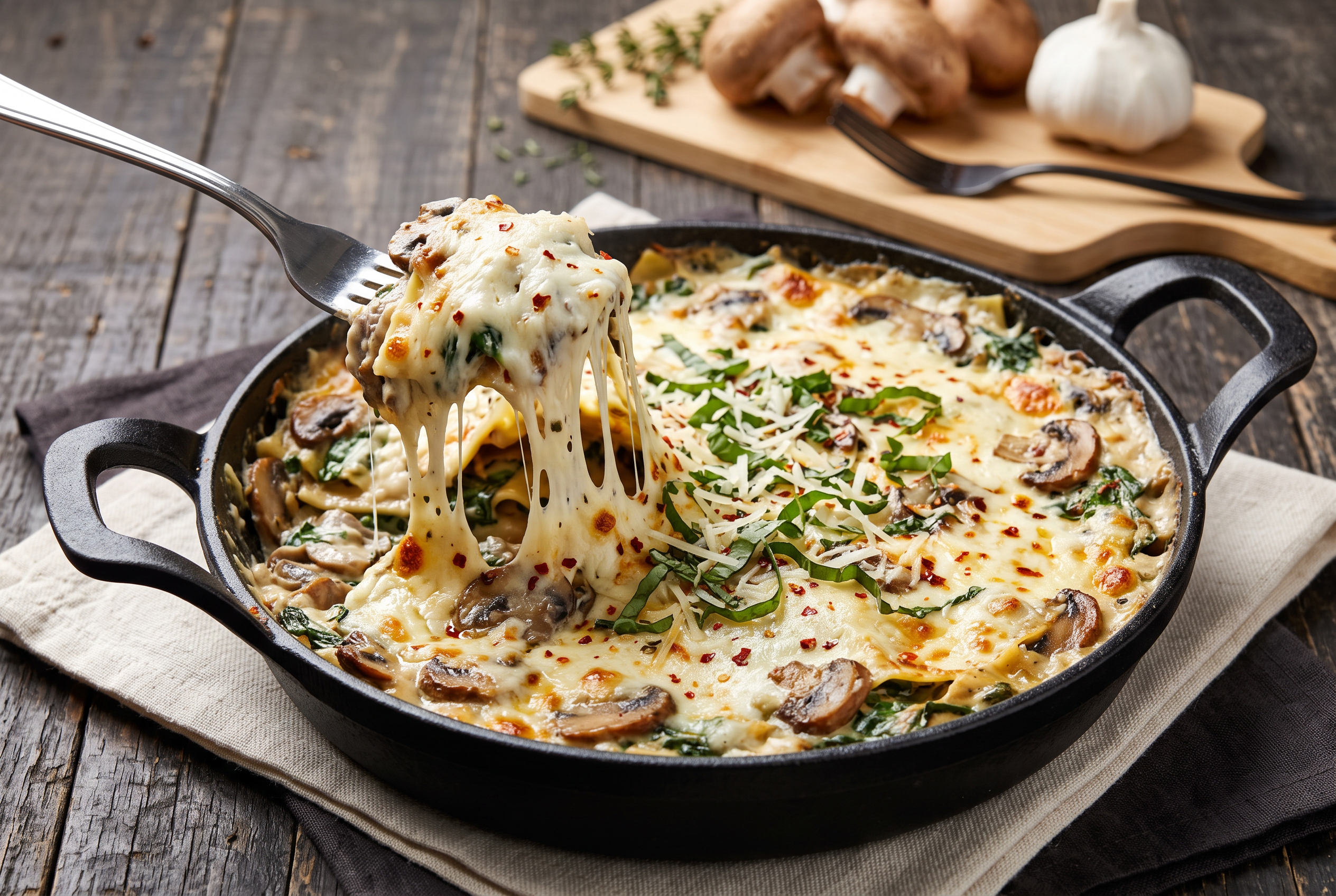
Have you ever had one of those weeknights where you want something creamy and comforting but you absolutely cannot face the pile of dishes waiting in the sink? That’s the night this orzo was invented for. It’s the pasta I make when I want my family at the table in half an hour and I want to be back on the couch in twenty minutes, with one pan to wash and enough leftovers to pack for tomorrow’s lunch. Tiny rice-shaped orzo, golden-brown mushrooms, a tangle of wilted spinach, all coated in a glossy garlic-parmesan cream sauce. Nothing fussy, nothing pretentious, just the kind of dinner that makes you feel like a competent home cook without breaking a sweat.
I first learned to make orzo years ago from a neighbor who had lived in Greece for a stretch. She told me the trick was to treat it like risotto — give it a quick toast in the fat before adding any liquid, and stir it gently so the starch releases into a sauce all on its own. Once I had that little trick down, I started making this creamy version at least twice a month. My grandson calls it “the fancy rice pasta,” which is the kind of thing only a five-year-old can get away with. He’ll eat three helpings and then ask for the recipe, which tells you everything you need to know about how it lands at the table.
Why This Works So Well
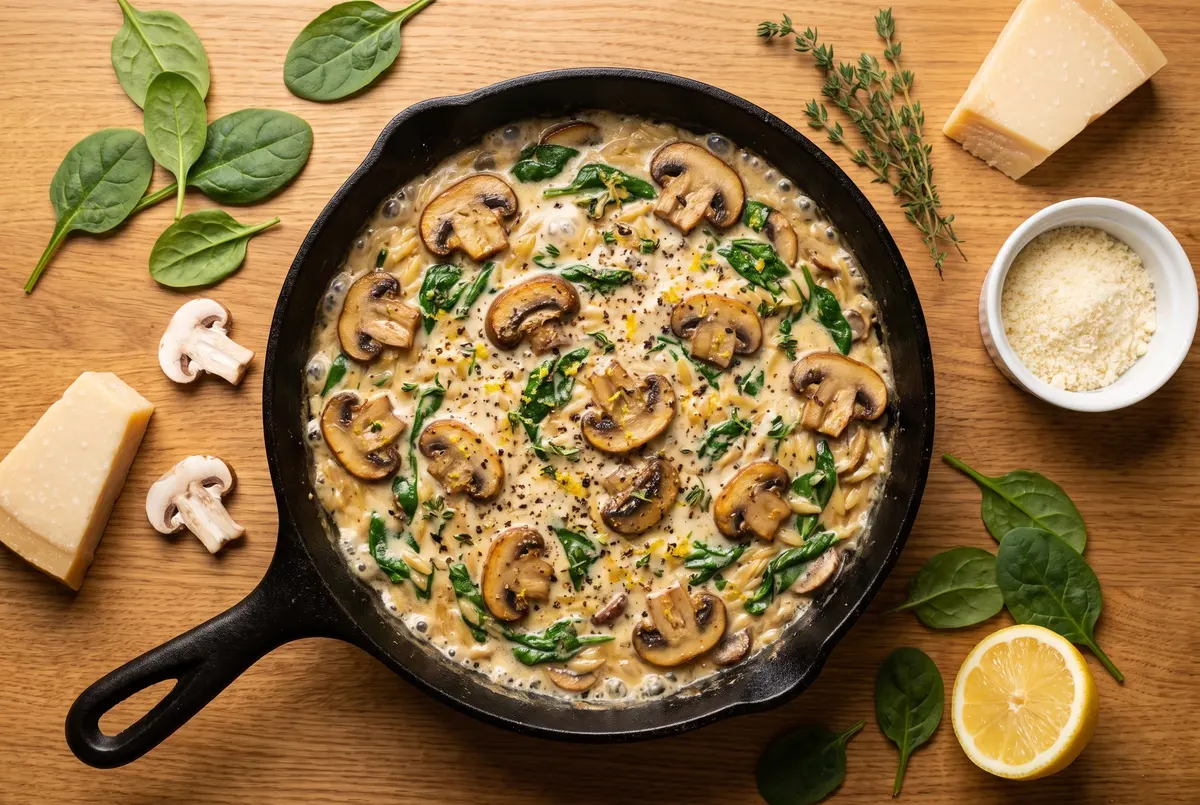
There are a few small but important things happening in this dish. The first is browning the mushrooms properly. Mushrooms have a lot of water in them, and if you crowd them into a cold pan, they’ll steam and turn gray and rubbery. Give them space, keep the heat high, and don’t stir them too much. You want them to develop a deep golden crust on each side — that’s where the meaty, savory flavor lives. The second is toasting the orzo in butter for a minute before you add any broth. That toasting brings out a nuttiness in the pasta that makes the whole dish taste like you’ve been cooking for hours.
The third is the spinach. Don’t add it at the beginning. Add it at the very end, after you’ve taken the pan off the heat, and just fold it in. The residual heat from the orzo and the sauce wilts the leaves in about thirty seconds. They turn bright green, glossy, and barely-cooked, which means they keep their color and their nutrients. If you cook them too long they get sad and gray, so the timing matters more than you’d think.
And finally, the parmesan. Grate it fresh — please don’t use the pre-shredded stuff in the green can. Real parmesan melts into the sauce in a way that the shelf-stable version just can’t replicate. It adds salt, umami, and a little bit of that funky, aged-cheese depth that makes the whole thing taste like it came from a restaurant. If you can swing it, look for Parmigiano-Reggiano with the dotted rind. Worth every penny.
From Pot to Plate
Step 1: Heat a large, deep skillet over medium-high heat. Add a tablespoon of olive oil and half the mushrooms in a single layer. Don’t crowd the pan — work in two batches if you need to. Let them sit undisturbed for about three minutes until they’re deeply browned on the bottom, then flip and brown the other side. Transfer the first batch to a plate and repeat with the remaining mushrooms. This step is non-negotiable; it’s the difference between a sad gray pasta and something you’ll dream about later.
Step 2: Lower the heat to medium and add the butter to the same pan. Once it’s melted and foaming, add the finely diced onion and cook for three minutes until soft and translucent. Add the minced garlic and cook for just thirty seconds more — you want it fragrant, not browned. Browned garlic turns bitter and will throw off the whole balance of the dish.
Step 3: Add the flour and stir it into the buttery onion mixture. Cook for one minute to get rid of the raw flour taste. Slowly pour in the milk while whisking constantly, then the chicken broth. Keep whisking until everything is smooth and combined, with no lumps of flour hiding at the bottom of the pan.
Step 4: Add the orzo, a generous pinch of salt, and a few grinds of black pepper. Stir once, then put a lid on the pan and bring it up to a gentle simmer. Lower the heat to medium-low and let it cook for about ten minutes, stirring every couple of minutes so the orzo doesn’t stick to the bottom. The orzo will absorb the liquid and release its own starches, which is what creates that silky, clingy sauce without any extra cream.
Step 5: While the orzo is cooking, squeeze the excess water out of the thawed spinach. Once the orzo is tender and the sauce is thick and creamy, take the pan off the heat. Stir in the grated parmesan, the cooked mushrooms, and the spinach. Fold gently until the cheese is melted and the spinach has wilted. Taste for salt and pepper, adjust as needed, and serve immediately with extra parmesan on the side.
Creative Twists Worth Trying
Swap the button mushrooms for a mix of cremini, shiitake, and oyster mushrooms for a more complex, earthy flavor. About 4 ounces of each is plenty.
Add a splash of dry white wine to the pan after the garlic cooks — let it bubble for a minute before adding the milk and broth. It brightens the whole dish.
Stir in a few tablespoons of mascarpone or cream cheese at the end for an extra-luxurious sauce. My daughter does this for special occasions and it disappears fast.
Use kale instead of spinach if you want a heartier green. Just chop it finely and let it cook a minute longer in the residual heat.
For a protein boost, top each bowl with a jammy soft-boiled egg or a handful of toasted pine nuts. Both add a nice textural contrast.
Add a pinch of red pepper flakes with the garlic for a little heat, or a teaspoon of fresh thyme leaves for a more herbal, savory note.
Serving & Pairing Ideas
What should I serve with this orzo? A simple arugula salad with lemon juice, shaved parmesan, and a glug of olive oil is the perfect counterpoint — the peppery arugula cuts the richness beautifully. Warm crusty bread is also a must, the kind you can swipe through the sauce at the end of the bowl. For a vegetable side, try roasted asparagus with lemon zest or quickly sautéed broccolini with garlic. For wine, a crisp Sauvignon Blanc or a light Pinot Griggo plays nicely with the creamy sauce. If you’re skipping alcohol, a glass of sparkling lemon water is just as refreshing.
Why I Love This Orzo
What I love most about this dish is how it makes people feel. There’s something about a bowl of creamy pasta with golden mushrooms and bright green spinach that just feels like an embrace. It’s the kind of dinner that makes a hard day feel softer, that turns a regular Tuesday into something worth remembering. My family gravitates to the kitchen when this is on the stove, drawn by the smell of butter and garlic and browning mushrooms.
It’s also a remarkably forgiving recipe. Forgot to thaw the spinach? Fresh works. Don’t have parmesan? Pecorino or even a sharp white cheddar will do. Out of chicken broth? Use vegetable broth or even just water with an extra pinch of salt. The bones of the dish are so simple and so good that small substitutions don’t really change the soul of it. That’s the kind of cooking I want more of in my life — recipes that are generous, easy, and forgiving on the days when I’m not at my sharpest.
Storage and Batch Cooking
Store any leftovers in an airtight container in the fridge for up to four days. The orzo will absorb more of the sauce as it sits, so when you reheat, add a splash of milk or broth and warm it gently in a skillet over medium-low heat, stirring frequently. I don’t love microwaving this one because the sauce can break and the texture gets gummy, but if you must, do it covered with a damp paper towel and stir every 30 seconds until warmed through.
This dish doesn’t freeze particularly well because the cream sauce can split when thawed and the orzo turns soft. If you want to meal-prep, I recommend making just the mushroom-spinach mixture ahead and storing it separately, then cooking fresh orzo when you’re ready to eat. The mushroom-spinach base keeps for about four days in the fridge and reheats beautifully with a splash of fresh cream or milk stirred in at the end.
Troubleshooting Your Sauce
Why is my sauce thin and watery? The orzo probably needed more time to absorb the liquid, or you added too much broth. Let it simmer uncovered for a few more minutes and stir frequently — the starch from the orzo will thicken the sauce as it cooks. If it’s still thin, you can stir in a tablespoon of grated parmesan at the end to help it bind.
My mushrooms are gray and rubbery. You crowded the pan, or the heat wasn’t high enough. Mushrooms need space and high heat to brown properly. Work in batches, and resist the urge to stir them too much — let them develop a crust before flipping.
The orzo is sticking to the bottom of the pan. Your heat is too high, or you forgot to stir. Orzo is starchy and will stick if it sits undisturbed on direct heat. Lower the flame and stir every minute or two while it’s cooking.
My spinach turned dark and mushy. You added it too early. Spinach should go in at the very end, after the pan is off the heat. The residual warmth of the orzo wilts it in seconds — no additional cooking time needed.
Your Quick Questions, Answered
Can I use a different pasta shape? You can, but orzo is special here because of how it cooks. Small shells, ditalini, or even pastina would work in a pinch, but you may need to adjust the cooking time and the amount of liquid. Orzo’s starchiness is what creates the creamy sauce.
Can I use fresh spinach instead of frozen? Absolutely. About 5 ounces of fresh baby spinach, roughly chopped, is the equivalent. Add it at the very end and let it wilt in the residual heat.
Is this vegetarian? Yes, as written, this recipe is vegetarian. If you want to make it vegan, swap the butter for olive oil, use plant-based milk, and either skip the parmesan or use a vegan parmesan alternative. The flavor will be a little different but still good.
Can I make it ahead of time? You can prep all the components — slice the mushrooms, dice the onion, measure the broth — earlier in the day. The actual cooking takes about 20 minutes, so it’s hard to fully make ahead. But the components hold up well in the fridge for a day.
Why does my orzo clump together? Two likely reasons: you didn’t stir it enough while it was cooking, or your lid was on too tight, trapping steam and making the top layer gummy. Stir every couple of minutes, and if you use a lid, leave it slightly ajar to let moisture escape.
Can I add protein? Yes. Cooked chicken, shrimp, or Italian sausage would all be delicious stirred in at the end. You could also top each bowl with a fried or poached egg for a rich, runny-yolk finish.
A Few Last Thoughts
What I love about this dish, and what I hope you take away from it, is that good food doesn’t have to be complicated. It’s a few mushrooms, a handful of spinach, a cup of orzo, and some pantry staples. The whole thing comes together in less time than it takes to watch an episode of your favorite show, and it tastes like something you’d order at a cozy little bistro. That’s the kind of cooking I want to share with you — recipes that are generous, easy, and make you feel like a capable home cook at the end of a long day.
So grab your biggest skillet, pour yourself a glass of something cold, and let the smell of browning mushrooms and garlic fill your kitchen. You’ve got this.
A creamy 30-minute one-pot orzo with golden-brown mushrooms, wilted spinach, and a silky garlic-parmesan sauce. Weeknight comfort food at its easiest.
Ingredients
Notes
For extra richness, stir in 2 tablespoons of mascarpone or cream cheese at the end. Leftovers keep in the fridge for up to 4 days. Reheat gently in a skillet with a splash of milk or broth.
Keywords:orzo, mushroom, spinach, one pot pasta, weeknight dinner, creamy pasta
Elowen Thorn I cook, photograph and re-test every recipe in an ordinary home kitchen before it goes up, so what you make matches what you see. Savory Discovery is where simple weeknight cooking, seasonal ideas and the odd bit of kitchen craft sit side by side — written plainly, and worth cooking twice.