By Elowen Thorn · Autumn with a Toddler · 25 activities, five minutes to set up
The best fall activities for a toddler are not the ones you save and never do. They are the ones you can set up in the twenty minutes between snack and nap, from things already in your kitchen. This is a working list of twenty-five of them, sorted by how much mess they make and how much you have to supervise, plus the age-by-age guide to what your child can actually do right now.
There is a version of autumn with a toddler that involves a farm, a hayride, matching outfits and a photograph you will frame. There is another version where you are on the kitchen floor at four in the afternoon with a bowl of dry pasta and a muffin tin, and your child is happier than they have been all day. This guide is about the second one.
Simple wins for a reason that has nothing to do with laziness. A toddler’s attention runs in short bursts, and what holds it is repetition, not novelty. The same leaf pile, the same scoop, the same song, done eleven times, is the actual learning. Elaborate setups raise your stress and your child’s, and the activity usually ends in tears before it ends in play.
So everything below is built to be set up in about five minutes, from things you probably already own, and to be repeatable tomorrow. Each one is marked with the mess level and the supervision it needs, because those two things decide whether an activity actually happens on a Tuesday.
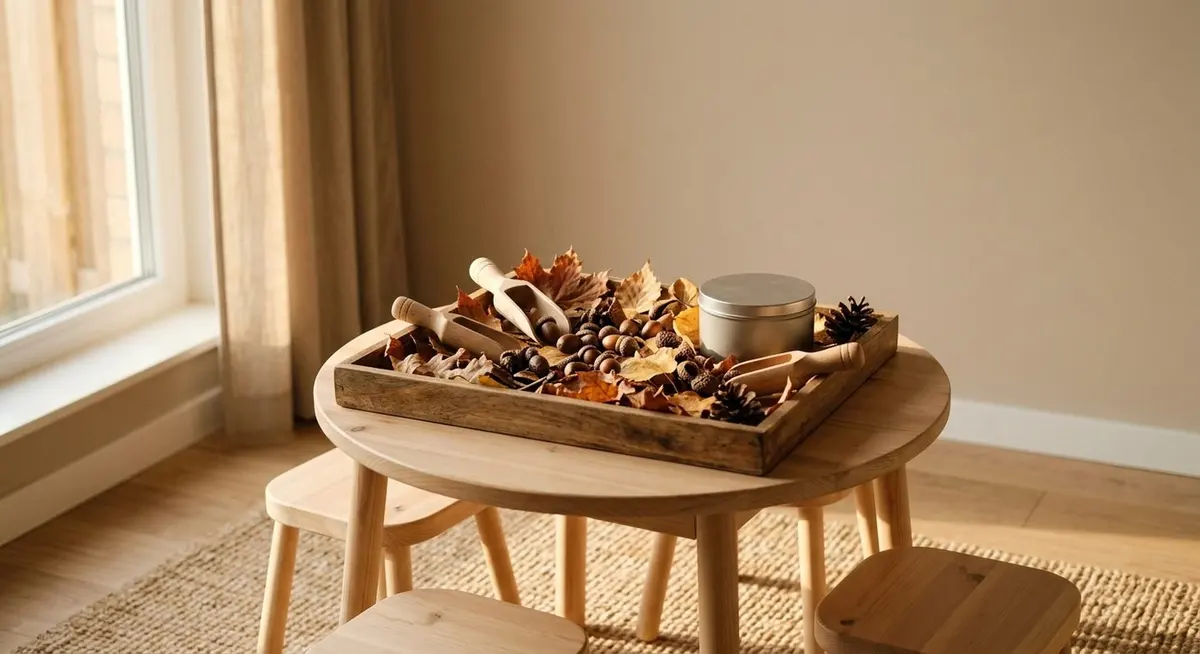
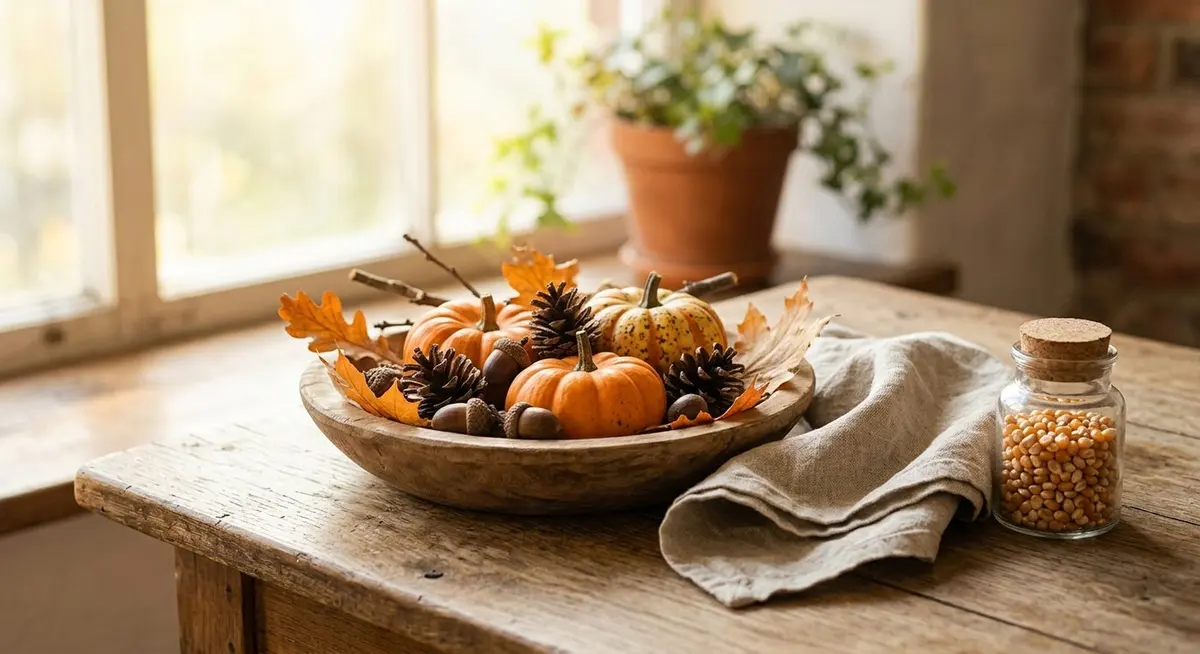
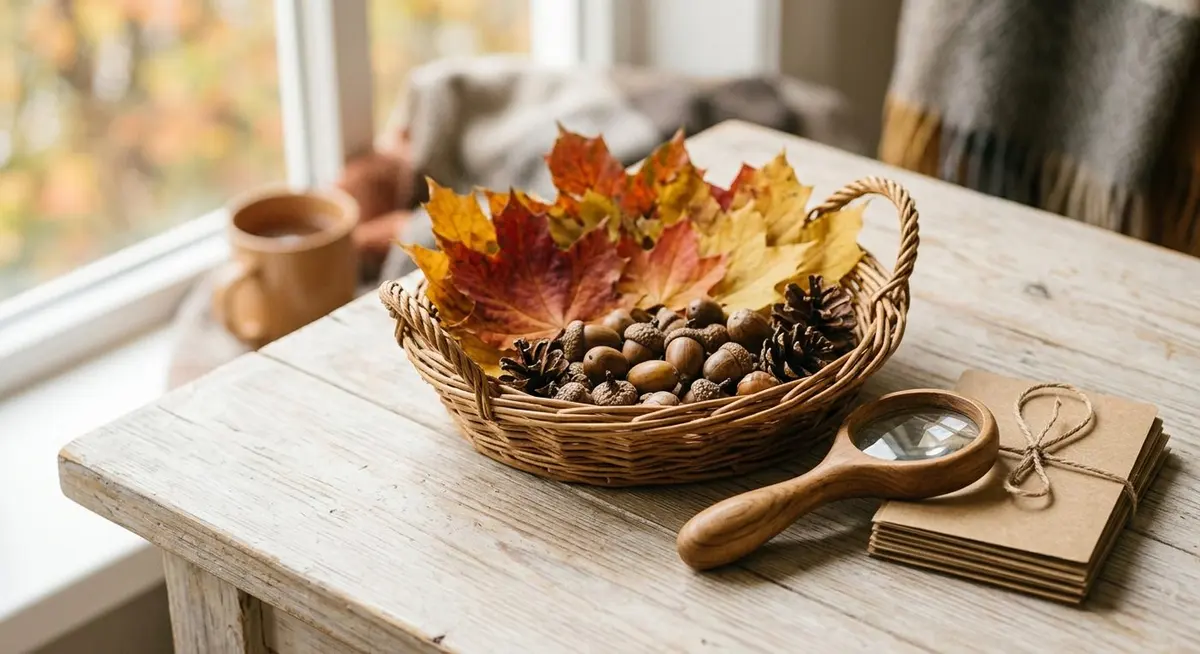
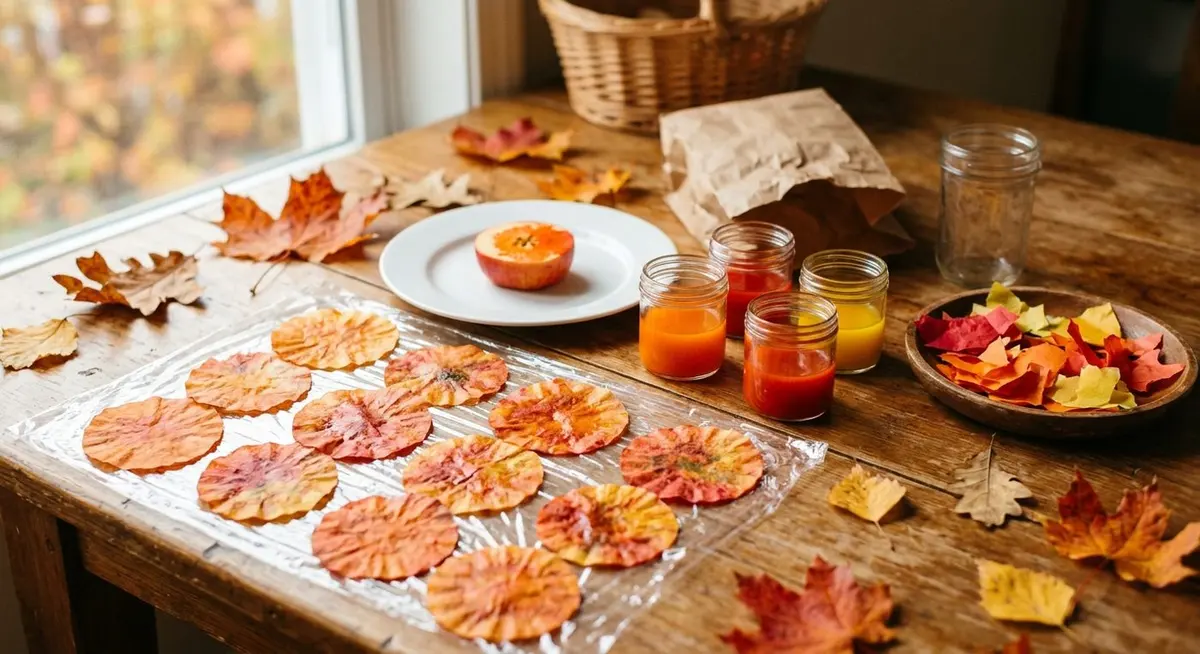
A low table, a tray and a handful of autumn finds. That is the whole setup, and it takes about two minutes.
The twenty-minute rule. If an activity is not working after five minutes, it is not a failure, it is information. Pack it up, try something else, and bring this one back in a week. Toddlers change fast, and the thing that flopped today often works beautifully on Friday.
What Your Toddler Can Do, by Age
The most common reason a fall activity flops is a mismatch between the activity and what the child can physically do. A two-year-old cannot cut with scissors, and a four-year-old will be bored by a bin of dry leaves. Here is roughly where the skills land, and which activities fit each stage.
Skills by age, and the activities that match
Age band
What they can do
Activities that fit
12 to 18 months
Mouths everything, sits and transfers objects hand to hand, loves cause and effect
Large-object sensory bins, leaf stomping, water play, stacking
18 to 24 months
Walks and climbs, carries and dumps, follows one-step directions
Leaf hunts, scooping, hand painting, simple stamping
2 to 3 years
Sorts by colour and shape, scribbles with intent, pours with help
Sorting trays, tape-resist art, playdough, apple printing
3 to 4 years
Cuts with help, draws recognisable shapes, follows two-step directions
The two-minute test. Before you set anything up, ask one question: can my child do the main action of this activity without me doing it for them? If the answer is no, either simplify the action or wait six months. Doing it for them is not play, and they know the difference.
Outdoor Activities, Low Mess
Outdoor activities are the easiest win in autumn, because the mess stays outside and the materials are free. These five need nothing but a coat and a pair of boots.
1. The leaf pile, eleven times
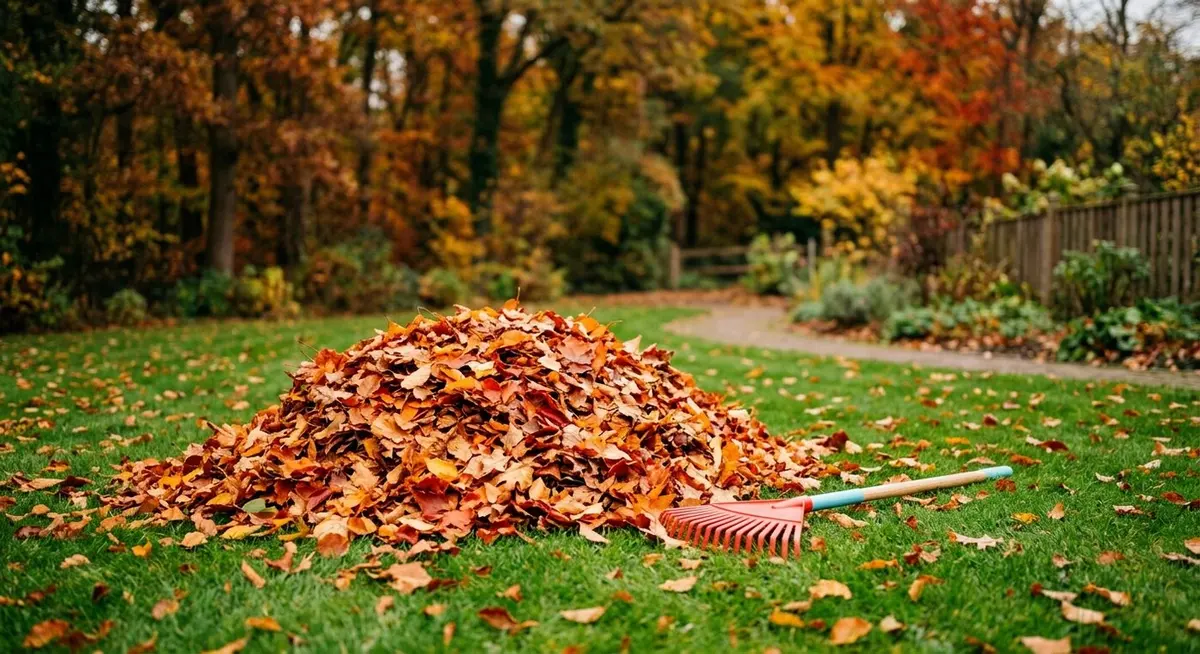
Rake a pile and let them jump in it, bury themselves, throw it, and then rake it again. The repetition is the point, not a failure of imagination. Add a small plastic rake their own size and they will copy you for twenty minutes while you get the real raking done.
2. Leaf stomping
Dry leaves on a hard path make a satisfying crunch. Walk it, run it, stomp it, then gather a handful and crumble them. This is a whole activity for a one-year-old, it costs nothing, and it works every single day of the season.
3. A nature walk with a paper bag
Give them a bag and a job: find five things that are not green. They will come back with sticks, acorns, a rock, a feather and something unidentifiable. Everything they gather becomes the material for an indoor activity later in the week, which is how one walk turns into three afternoons.
4. Chalk and puddles
Autumn rain leaves puddles, and chalk on wet pavement is brighter and softer than chalk on dry. Stomping in the puddles is its own reward. Bring a towel and let them get wet.
5. Acorn roll
Prop a board or a baking sheet against a step and roll acorns down it. Then try a ball, then a pinecone, then a toy car. Watching which one goes fastest is early physics, and it holds attention far longer than you would expect from a piece of wood and a nut.
Rake it, jump in it, rake it again. The pile is the activity, and it resets itself every time.
Dress for the mess, not against it. Waterproof trousers and wellies turn a muddy walk from a chore into the best hour of the week. If you are fighting the mud, you will cut the activity short, and the short version is the one nobody remembers.
Sensory Bins and Messy Play
Sensory play is where toddlers learn texture, volume and cause and effect, and it is also where the mess lives. The trick is not to prevent the mess but to contain it. A tray, a sheet and a boundary you have said out loud do most of the work.
6. The three-layer bin formula
Every good sensory bin has the same three parts. Once you know the formula you can build one in two minutes from whatever is already in the cupboard, and you never need to follow a recipe again.
The three layers of a sensory bin
Layer
What it is
Autumn options
Base
The bulk material they scoop and pour
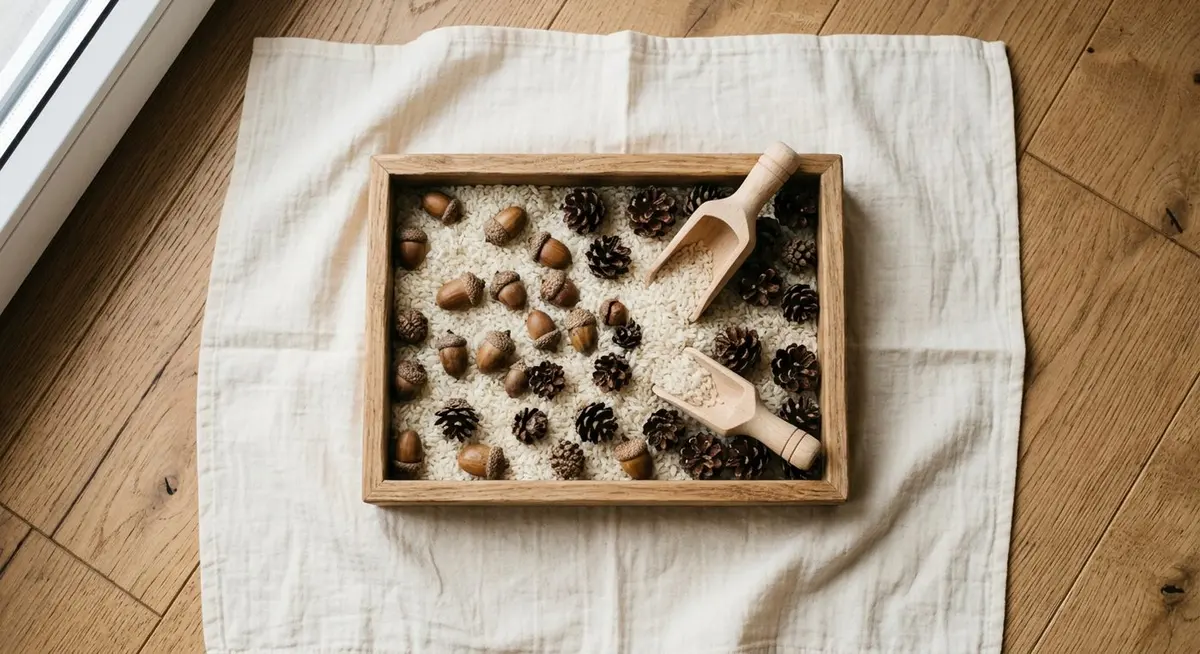
Dry rice, dry lentils, dried beans, corn kernels, play sand
Filler
The interesting bits they find and sort
Acorns, pinecones, leaves, small gourds, cinnamon sticks
Tools
What they use to move it around
Scoops, cups, spoons, tongs, a muffin tin, a funnel
7. Pumpkin-scented cloud dough
Mix eight cups of plain flour with one cup of vegetable oil and a tablespoon of pumpkin pie spice. It holds its shape when squeezed and crumbles when poked, which is exactly the texture toddlers find irresistible. It keeps for weeks in a sealed tub, so you make it once and use it all season.
8. Apple foam
A squirt of dish soap and a splash of water in a bowl, whipped with a hand mixer or a whisk until it foams up. Add a few drops of red food colouring if you like. Toddlers scoop it, spread it and squish it. Supervise closely, because it is soap and it tastes terrible.
9. Leaf soup
A bowl of water, a few leaves, a spoon and a cup. They stir, pour and serve you soup, and you say thank you and pretend to drink it. Add a drop of food colouring for a colour change they can watch happen.
10. Spiced playdough
Any playdough recipe works. Add cinnamon, nutmeg or cloves to the flour and the whole activity becomes autumn. The smell is what makes it memorable, and it is the version they will ask for again in November.
Base, filler, tools. Three layers, two minutes, and a sheet underneath to catch everything.
The eating rule. If your child still mouths everything, use only large objects, such as whole pinecones, big leaves and large scoops, and skip rice, lentils and beans entirely. This is not a rule you can bend. Dried beans are a genuine choking hazard for a child who puts things in their mouth.
Art and Craft
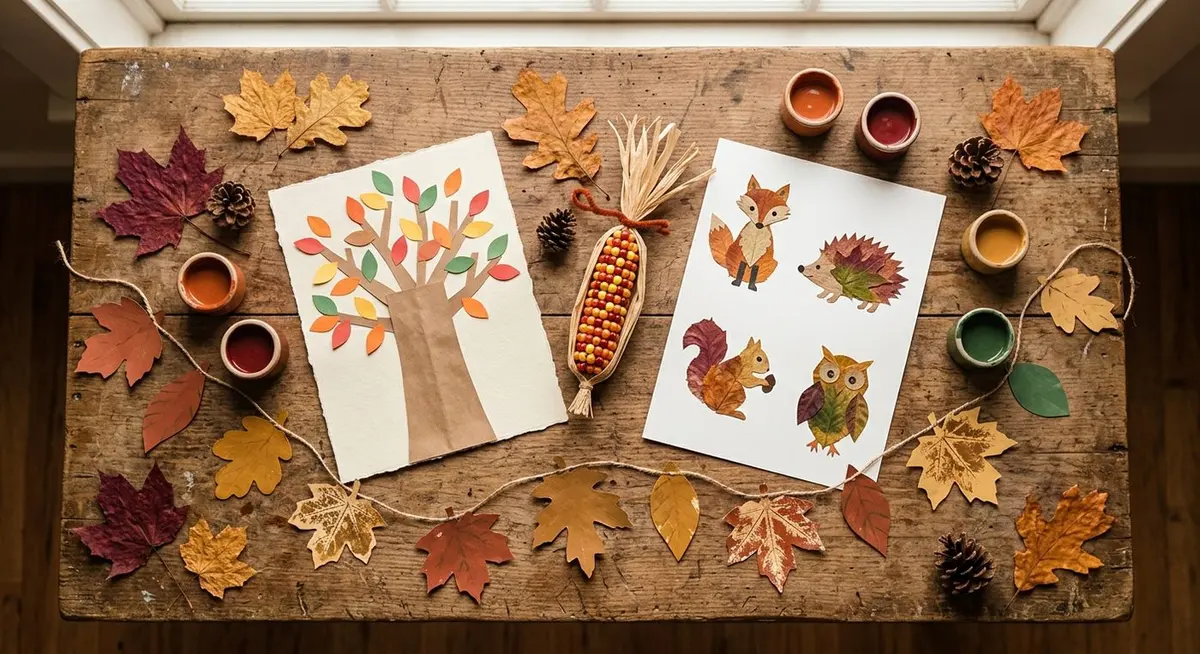
Art with a toddler is about the process, not the product. The painting is the point and the picture is a by-product. Set up for the process and you will both enjoy it far more, and you will stop trying to steer their hand.
11. Tape-resist art
Lay strips of masking tape across a sheet of paper in a pattern, let them paint over the whole thing, then peel the tape off once it is dry. The white lines underneath look deliberate and impressive, and the peeling is half the fun. This is the one to do when you want something worth putting on the fridge.
12. Apple printing
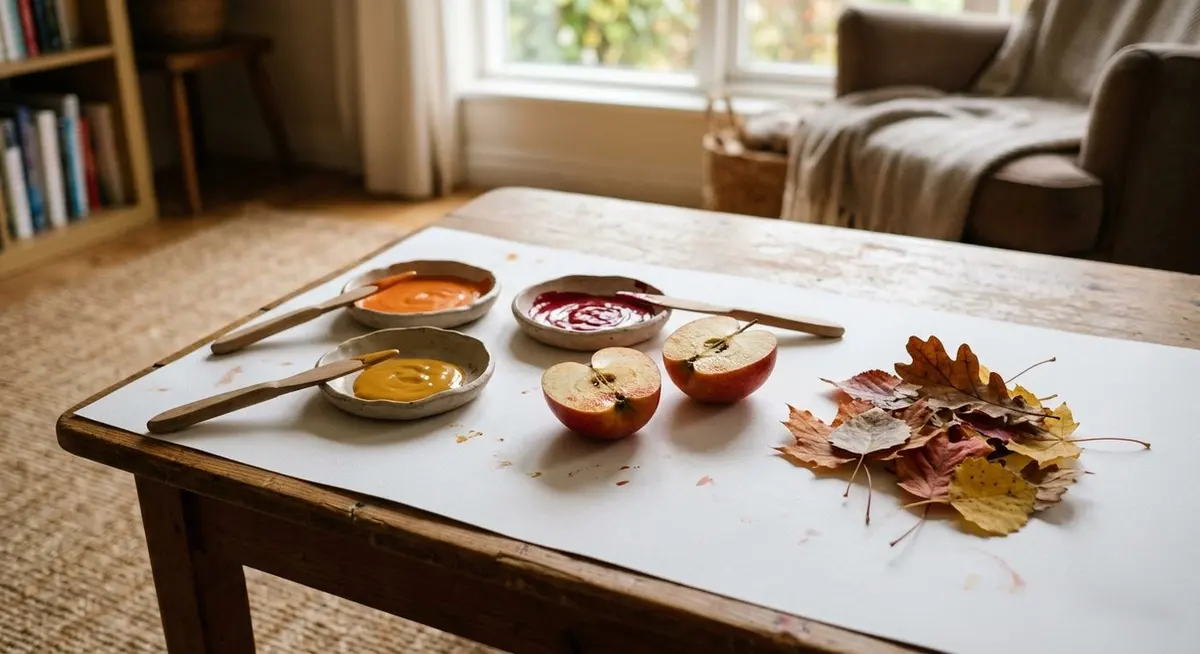
Cut an apple in half, dry the cut face on a paper towel, and press it into paint. Stamp it onto paper. The star shape in the middle is the surprise. Push a corn cob holder into the apple to give a toddler a handle they can actually grip.
13. Leaf rubbings
Put a leaf vein-side up under a sheet of paper and rub a crayon over it on its side. The shape appears like magic, and it works with coins, bark and keys too. This is the quietest activity on the list and the one to keep for the pre-dinner hour.
14. Handprint wreath
Trace their hand on coloured paper a dozen times, cut the shapes out, and glue them in a ring. It is a keepsake and an activity in one, and it gets easier and more recognisable as they get older. Do it every autumn and you have a record of their hands growing.
15. Sticky tree
Draw a trunk on paper, cover the top with clear contact paper sticky-side out, and let them press leaves, petals and scraps onto it. No glue, no drying time, and they can rearrange it as often as they like, which means it lasts much longer than a glued collage.
Set up for the process, not the picture. Washable paint, a covered table, and no steering their hand.
Washable everything. Buy washable paint, washable markers and washable glue. The five minutes you save by buying the cheap non-washable kind will cost you an hour of scrubbing a high chair, and you will think twice before doing it again.
Fine Motor and Early Learning
Fine motor skills, the small movements of fingers and hands, are what toddlers are building all day. Autumn materials are unusually good for it because they come in so many sizes and textures, and because there are so many of them.
Six activities and the skill each one builds
Activity
What it builds
What you need
Acorn transfer with tongs
Pincer grip and hand strength
Acorns, kitchen tongs, a muffin tin
Threading leaves onto a stick
Hand-eye coordination
A stick and leaves with holes punched, or a shoelace
Sorting by colour
Categorisation and colour naming
Coloured leaves, paper squares, a few bowls
Pushing sticks into playdough
Finger strength and aim
Playdough and short sticks or straws
Peeling tape off a tray
Pincer grip and persistence
Masking tape stuck to a baking sheet
Scooping and pouring
Wrist control and volume
Dry rice, cups and a funnel
None of these need to be presented as learning. Set the materials out, sit down beside them, and start doing it yourself. A toddler will join in within about thirty seconds, and the skill-building happens without anyone calling it that.
Let them struggle a little. The moment just before they succeed is where the learning happens. Count to five before you help, and you will be surprised how often they get there on their own. Rescuing them too fast takes the win away from them.
In the Kitchen
The kitchen is the most underrated activity room in the house. A toddler who is helping is a toddler who is not climbing the furniture, and the skills they pick up, pouring, stirring, counting, are the same ones the table above is building.
16. Pumpkin bars
Any simple bar or muffin recipe works. Give them the job of pouring in the measured flour or stirring the wet ingredients. Expect flour on the floor and plan for it rather than fighting it. The pride on their face when the tray comes out of the oven is worth the sweep, and it is the beginning of a lifetime of cooking.
17. Apple taste test
Put three or four apple varieties on a plate, sliced thin, and taste them together. Ask which is sweetest, which is crunchiest, which they like best. It is a snack and a language activity at the same time, and it costs one apple.
18. Washing vegetables
A bowl of water, a small brush and a pile of carrots or potatoes. They scrub, you cook. This is genuinely useful work and toddlers treat it as a game, which is the best possible combination.
19. Spice smelling jars
Small jars with cinnamon, nutmeg, cloves and ginger. Let them smell each one and name it. Do not let them eat the contents, because whole spices are a choking risk, and keep the jars closed between sniffs.
Give them a real job. Toddlers can pour, stir, tear lettuce and put things in the bin. A pretend task is noticed and abandoned within a minute. A real one is repeated, and it is the repetition that builds the skill.
Outings and Family Evenings
You do not need a farm or a pumpkin patch to make an outing. The best autumn outings for a toddler are short, close and repeatable. The same walk, done weekly, is worth more than one big day out, because the noticing is what they remember.
The same walk, every week. Pick a route and walk it weekly through the season. They will notice the leaves changing, the same dog, the same gate. That noticing is the whole point, and it is free.
A pumpkin patch, if you have one nearby. Go early in the day, bring a change of clothes, and let them choose their own pumpkin. Do not plan anything else for that day, because choosing a pumpkin is a full afternoon for a two-year-old.
The library. Autumn story times are free, warm and full of other toddlers. Borrow a book about leaves or pumpkins and read it all week, so the outing keeps giving.
A farmers’ market. Let them carry the bag and hand over the money. The sensory overload is the activity, and the shopping gets done at the same time.
A fire pit evening. Marshmallows, blankets and the smell of smoke. Supervise closely, keep a bucket of water within reach, and keep them a full arm’s length from the flames.
Shorter than you think. A toddler’s tolerance for an outing is about as long as their nap window. Two hours is a full day. Plan the exit before you need it, and leave while everyone is still happy, because the last twenty minutes are the ones that ruin the memory.
Setting Up in Five Minutes
The difference between an activity that happens and one that does not is almost always setup friction. If it takes fifteen minutes to get ready, it will not happen on a Tuesday. Here is how to make it take five.
Keep a bin of autumn materials ready to go: leaves, acorns, pinecones, a few scoops and cups.
Put a cheap shower curtain or a flat sheet under the play area. It becomes a two-second clean-up.
Pre-measure anything that needs measuring, so the activity starts with play rather than prep.
Set up at their height, on a low table or the floor, never on the kitchen counter.
Have the clean-up supplies out before you start: a damp cloth, a bin bag and a towel.
Say the boundary out loud before you begin: the rice stays in the tray. Toddlers follow rules they have heard.
Keep one activity in reserve for the moment the first one ends, because it always ends suddenly.
Rotate, do not accumulate. Keep three or four activities visible and put the rest away. A shelf of eleven options is overwhelming and gets ignored. A shelf of three gets used, and the ones in the cupboard feel new again next month.
Clean-Up That Actually Works
Clean-up is the part nobody pins, and it is the part that decides whether you do this again tomorrow. Make it fast, make it part of the activity, and make it theirs.
Mess levels and what each one costs you
Mess level
What it means
Clean-up
Low
Dry, contained, no staining
Sweep or shake the sheet outside. About thirty seconds.
Medium
Wet but washable, contained to a tray
Wipe the tray, rinse the tools, wash hands. About two minutes.
High
Paint, dough, water, or anything with food colouring
Shower, change of clothes, mop the floor. Ten minutes, and worth it.
The sheet trick. A flat sheet under the play area gathers everything. Pick it up by the corners and shake it outside, and the floor is clean.
Clean up together. Hand them a cloth and give them a job. It takes longer and it teaches the habit, which is the point.
Rinse tools immediately. Paint and dough set hard on brushes and scoops if you leave them, and a hardened brush is a brush you throw away.
Keep a dedicated bin. Everything for autumn play lives in one box, so next time setup is instant and you are not hunting for the scoops.
Do not skip the clean-up song. A two-line song you sing every time you tidy up turns a fight into a routine. It works for about six months, and six months of easy clean-up is a long time.
Safety, Honestly
Most autumn activity advice skips this section, and it is the part that matters most. None of it is complicated, but all of it is worth saying plainly, because the risks in this list are real and they are easy to miss.
Choking. Anything that fits through a toilet roll tube is a choking risk for a child under three. That includes acorns, dried beans, whole spices, small pinecones and grapes.
Mouthing. If your child still mouths objects, use only large materials and supervise constantly. This is not a phase you can rush, and it is not a sign of anything wrong.
Plants. Some autumn berries and leaves are toxic. Know what grows where you walk, and teach we look, we do not eat from the very first walk.
Water. A toddler can drown in an inch of water. Never leave a water bin, a bath or a puddle unsupervised, not even for a moment, and not even to answer the door.
Tools. Scissors, hot glue and anything sharp are adult tools. Give them the safe version and keep the real one out of reach, every time.
Allergies. If you are using food in play, check for allergies in the house and among visiting children before you set it out, not after.
The one rule that covers most of it. If you would not leave the room with it on the floor, do not leave the room. Everything else on this list follows from that single habit.
Your Four-Week Autumn Rhythm
You do not need a schedule. You need a rhythm: one outdoor activity, one messy activity and one quiet activity each week, in whatever order the week allows. That is twelve activities a month without ever planning a big day out.
A four-week rhythm you can repeat all season
Week
Outdoor
Messy
Quiet
Week 1
Leaf pile and stomp
Sensory bin with dry rice and acorns
Leaf rubbings
Week 2
Nature walk with a paper bag
Apple printing
Sorting the collected leaves by colour
Week 3
Acorn roll down a board
Cloud dough with pumpkin spice
Threading leaves onto a stick
Week 4
Chalk and puddles
Pumpkin bars in the kitchen
Sticky tree with contact paper
Then start again at week one. The repetition is not a lack of imagination, it is the whole method. By the second pass they will be doing the activities more independently, and you will be doing less setup, not more. If you want to build the season out further, a family fall bucket list is a good place to keep the bigger outings, and the full autumn activity guide has thirty more ideas sorted by type.
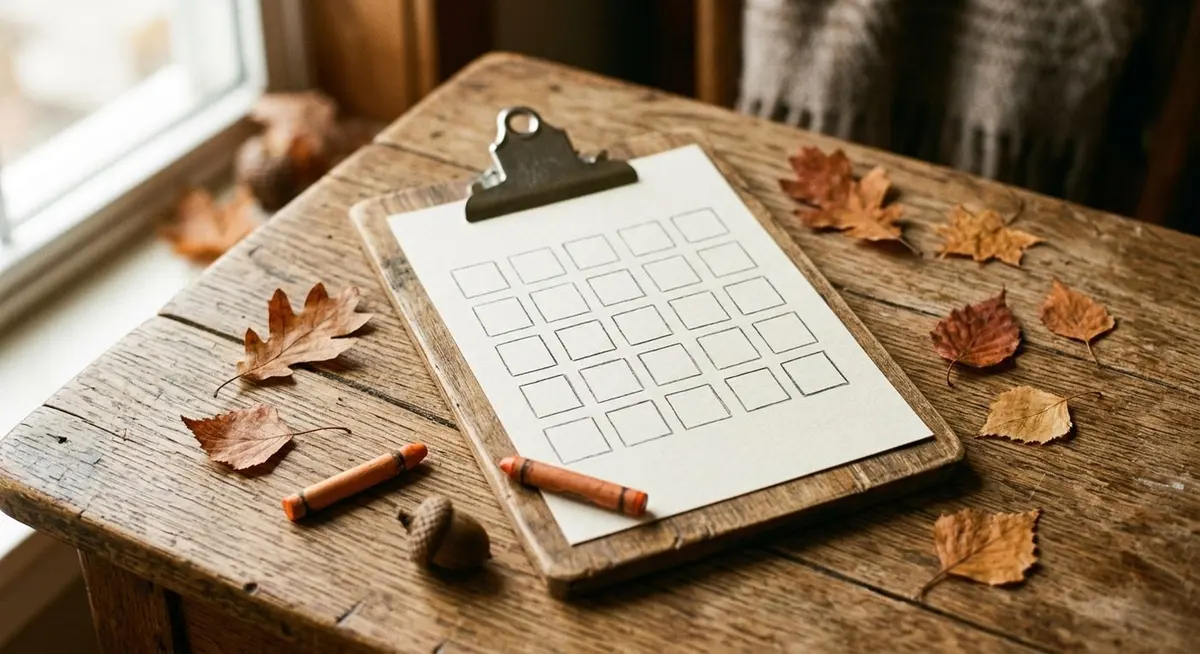
Write it on the fridge. A rhythm only works if you can see it. Print the planner below, stick it on the fridge, and tick the boxes as you go. The ticking is oddly motivating, and it stops the season from sliding past.
Questions Parents Ask
These are the questions that come up most often, and most of them come down to the same few things: matching the activity to the age, containing the mess, and not over-planning.
My toddler loses interest in two minutes. What am I doing wrong?
Usually nothing. Two minutes is a normal attention span at eighteen months, and the fix is not a better activity but a shorter one. Set up something they can do in one motion, like scooping or stomping, and let them come back to it three times in an afternoon rather than expecting one long session. If they are walking away from everything, they may be tired, hungry or overstimulated, and the answer is a snack and a cuddle, not a new craft.
How do I stop the mess from taking over the house?
Contain it rather than prevent it. A flat sheet under the play area, a tray with a rim, and a boundary you have said out loud will handle almost everything. Keep the truly messy activities, paint, water and dough, for the kitchen or outside, and keep the dry ones, rice, leaves and acorns, for the living room. Then clean up together, because a toddler who helps tidy is a toddler who makes less mess next time.
Is it safe to use food like rice and beans for play?
For a child who no longer mouths objects, yes, and it is one of the best sensory materials there is. For a child who still puts things in their mouth, no. Dried beans and rice are choking hazards, and no amount of supervision makes them safe for a mouthing toddler. Use large objects instead, such as whole pinecones, big leaves and large scoops, and wait until the mouthing phase passes.
What if my child eats the playdough or the cloud dough?
Both are made from food, so a taste is not dangerous, but it is not good for them either, and it means the activity has turned into a snack. If your child consistently eats the dough, switch to a taste-safe recipe made from flour, oil and water with no added salt, or move to a different activity entirely for a few months. Do not use any dough recipe that contains a large amount of salt if your child is likely to eat it.
Do I need to buy special supplies?
No, and you should not. Almost everything in this guide comes from the kitchen, the garden or the recycling bin. The only things worth buying are a cheap shower curtain or sheet for the floor, a set of washable paint, and a few scoops and trays. Everything else is free, which is part of why these activities actually get done.
How many activities should I have out at once?
Three or four, and no more. A shelf of eleven options is overwhelming and gets ignored, while a shelf of three gets used. Rotate the rest out of sight and bring them back in a few weeks, and they will feel new again. This is also the easiest way to keep the house from filling up with half-finished crafts.
What is the best age to start?
Around twelve months, with large objects and constant supervision. Before that, a toddler is mostly exploring with their mouth, and the safest sensory experience is a walk, a bath or a bowl of water with you right there. From about eighteen months the activities in this guide start to work properly, and by two and a half they will be doing most of them with very little help.
My child will not do the activity the way I set it up. Is that a problem?
Not at all, and it is usually a good sign. If they turn the sorting tray into a pouring game or use the paintbrush on their arm, they are following their own curiosity, which is exactly what you want. The only time to redirect is when they are doing something unsafe. Otherwise, let the activity become whatever they are making of it.
Free Printable: The Toddler Autumn Activity Planner
A printable companion to this guide: all twenty-five activities at a glance with age, mess level and time, the five-minute setup checklist, the three-layer sensory bin formula, a four-week rhythm planner, a safety checklist and an activity log to tick off as you go.
Elowen Thorn I cook, photograph and re-test every recipe in an ordinary home kitchen before it goes up, so what you make matches what you see. Savory Discovery is where simple weeknight cooking, seasonal ideas and the odd bit of kitchen craft sit side by side — written plainly, and worth cooking twice.