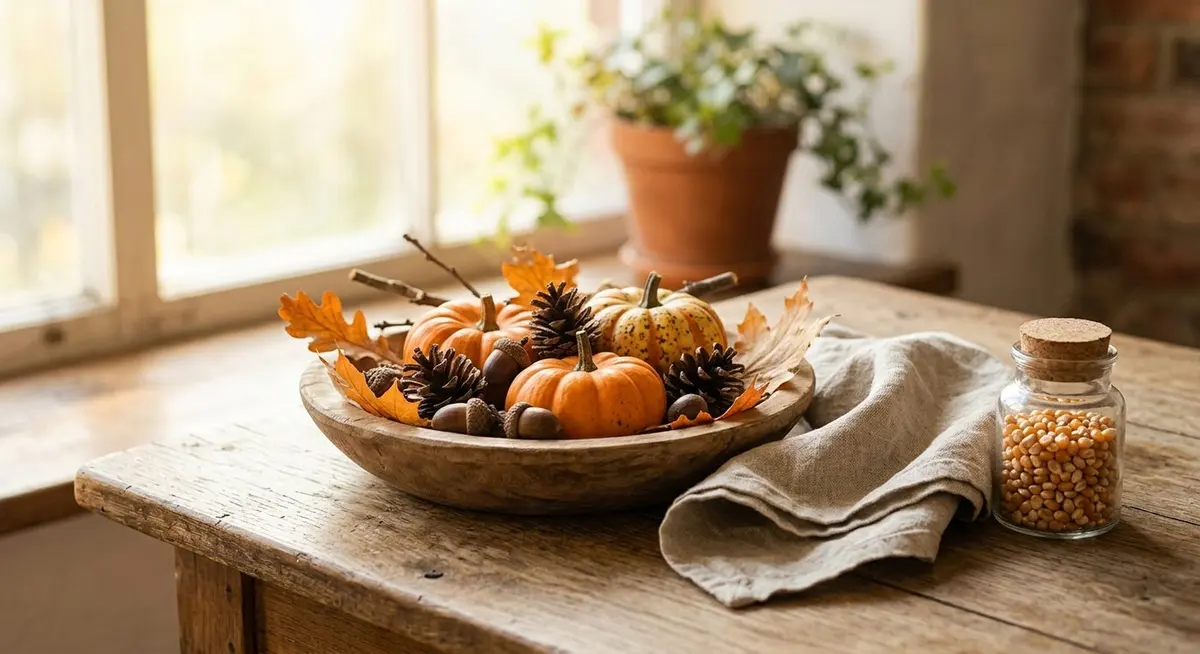
By Elowen Thorn · Halloween · 30 family activities
Thirty ideas is the easy part. The hard part is the Tuesday evening in the middle of October when you have forty minutes, one tired child and no pumpkin. Most Halloween lists are written as though every family has a free Saturday and a craft cupboard that looks like a shop. This one is sorted so you can find the idea that fits the evening you actually have — and so the season does not turn into a second job.
Start with time, not with the idea. A candy hunt in the garden takes fifteen minutes and no preparation beyond hiding a few sweets. A blanket-fort haunted house takes an hour and a half and will be talked about for years. Both are on the list below, and neither is better than the other — they simply belong to different evenings.
Then think about energy, and be honest that this includes yours. The activities that go wrong are almost always the ones where the adult is already tired and the setup is ambitious. Choose the low-effort option on a hard day and save the big one for a weekend. The season runs four weeks; there is room for both.
The last thing to weigh is who is actually in the room. A four-year-old and a ten-year-old want opposite things from October. The younger one wants to squash, pour and repeat; the older one wants a rule, a challenge and something to win. Where the list below splits by age, that is why — and the two halves can run side by side at the same table with a little planning.
The rule that saves the season: decide the activity before you announce it. Children commit hard to a plan, and changing it halfway through is what turns a good evening into a negotiation. Pick the row, say it out loud, then start.
All 30 at a Glance
Here is the whole list in one place, with the honest time and preparation each one needs. Scan the Time column first, then the Prep column, and take the row that matches the evening in front of you. Nothing here needs a special trip unless you want it to.
The 30 activities, sorted by what they ask of you
Activity
Best for
Time
Prep
Garden candy hunt
Ages 3–10
15 min
Hide the sweets
Paint pumpkins
Ages 2+
45 min
Cover the table
Spooky movie night
Ages 5+
2 hours
Pick the film
Neighbourhood costume parade
Ages 3–12
1 hour
Text the neighbours
Bake something orange
Ages 4+
1 hour
Check the cupboard
Pumpkin patch visit
All ages
Half a day
Pack wellies
Torchlight scavenger hunt
Ages 4–12
40 min
Charge the torches
Apple picking
All ages
Half a day
Book a slot
Spooky stories by torch
Ages 5+
30 min
Dim the lights
Halloween party at home
Ages 4–12
2 hours
Send the invites
Carve or decorate a pumpkin
Ages 3+
1 hour
Newspaper down
Blanket-fort haunted house
Ages 4–10
90 min
Every spare sheet
Trick-or-treating
Ages 3–12
2 hours
Check the route
Make costumes together
Ages 5+
An afternoon
Gather the box
Corn maze
Ages 5+
Half a day
Wear boots
Craft night
Ages 3+
1 hour
Paper and glue
Candy bingo
Ages 4–10
30 min
Print the cards
Toilet-paper mummies
Ages 3–8
20 min
Two rolls each
Handprint ghosts
Ages 2–6
30 min
Washable paint
Learn a magic trick
Ages 6+
45 min
A deck of cards
Dress up the dog
Ages 4+
20 min
A patient pet
Back-garden bonfire
Ages 6+
2 hours
Check the rules
Hay ride
All ages
1 hour
Book ahead
Spooky playlist dance party
Ages 2–8
30 min
Make the playlist
Trunk-or-treat
Ages 3–10
2 hours
Decorate the boot
Window silhouettes
Ages 4+
45 min
Black paper
Halloween gingerbread house
Ages 5+
90 min
Buy the kit
Apple bobbing
Ages 6+
20 min
A deep bowl
Zoo or farm Halloween event
All ages
Half a day
Book tickets
Spooky picnic
All ages
2 hours
Thermos and blankets
Almost everything on this list can be set up from what is already in the house. The table is the whole workshop.
If you only do three of these all season, make them the pumpkin painting, the torchlight hunt and the movie night. Those three cover making, moving and resting, which is roughly what a child wants from October. Everything else is a bonus.
Match the Activity to the Evening You Actually Have
The single most useful thing you can do is sort the list by the shape of your evening rather than by how good the idea sounds. Here is the same thirty ideas grouped three ways.
The twenty-minute evening
Garden candy hunt — hide wrapped sweets around the garden or one room and send them out with a bag. Fifteen minutes of hunting, ten minutes of eating.
Toilet-paper mummies — two rolls of paper each and a child who stands still. The wrapping is the game; the standing still is the challenge.
Apple bobbing — a deep bowl, cold water, no hands. Loud, wet and over quickly.
Spooky playlist dance party — thirty minutes of music and no tidying up at all.
Window silhouettes — black paper, scissors, tape. The result stays up for a fortnight.
The two-hour evening
Paint pumpkins — the best value activity of the whole season. See the full method in our no-carve pumpkin guide.
Blanket-fort haunted house — every spare sheet, a torch and a route through the house.
Halloween party at home — four friends, three games, one table of food.
Halloween gingerbread house — a kit, an icing bag and a lot of concentration.
Spooky movie night — the reward at the end of a busy week.
The whole-day-out
Pumpkin patch visit — the classic, and worth doing once properly.
Apple picking — pairs naturally with baking when you get home.
Corn maze — best for children who can read a map and walk for an hour.
Zoo or farm Halloween event — book ahead; these sell out in early October.
Hay ride — short, memorable and usually attached to a farm shop.
One warning about the whole-day-out: it is the only category that can be ruined by weather and by a late start. Book the slot, leave early, and take a spare set of clothes for everyone. A wet child ends the day for the whole family.
Ten Things to Do at Home
These are the ones that need nothing but what is already in the house. They are also the ones you will reach for most often, because they work on a school night.
1. The garden candy hunt
Hide wrapped sweets around the garden, or around one room if it is raining, and send the children out with a bag and a time limit. The trick is to count what you hide, because an unfound sweet will be discovered in the spring. For older children, write the hiding places on slips of paper and make each one a clue to the next.
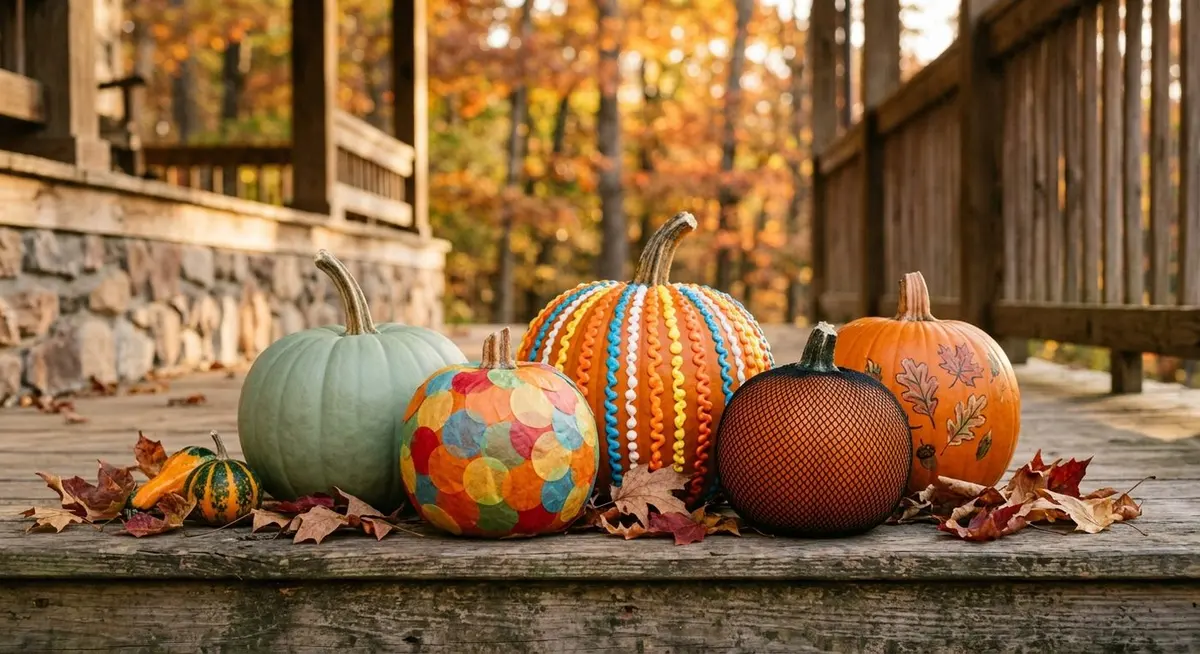
2. Paint pumpkins
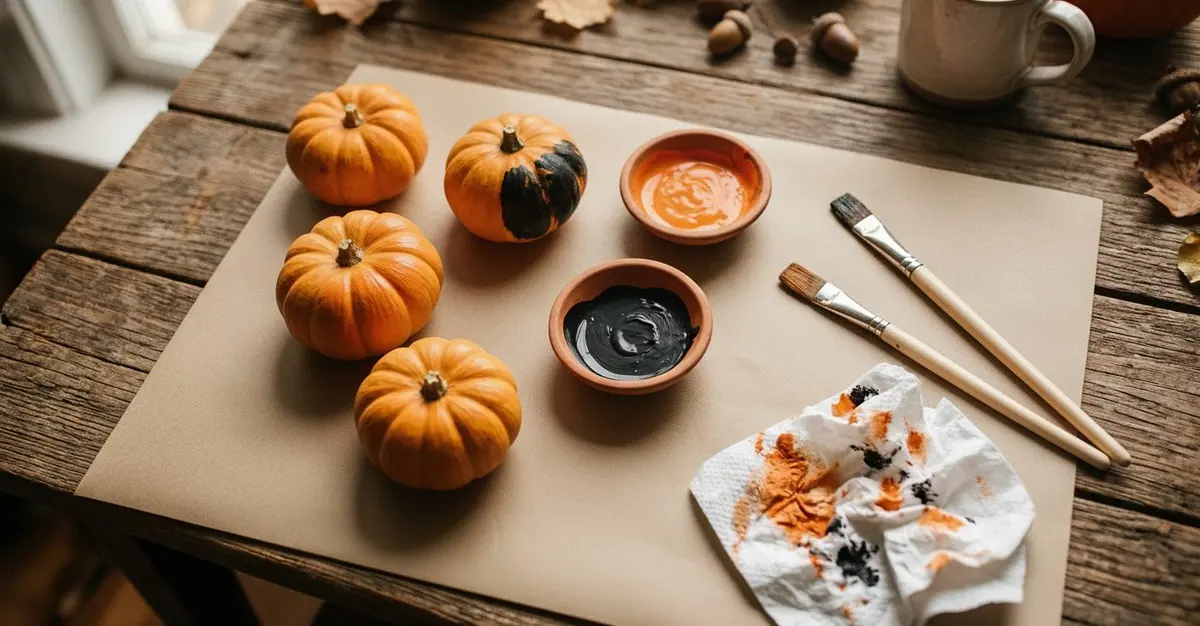
Painting beats carving for anyone under eight, and it beats carving for the adult who ends up doing the carving. Acrylic paint covers a pumpkin in one coat and dries in twenty minutes. Put newspaper down first, give each child one pumpkin and one brush, and let them work. The full method, including how to make the paint stick, is in our painted monster pumpkin guide.
3. Spooky movie night
The film matters less than the ritual. Blankets on the floor, the lights off, something warm to drink, and a rule that nobody talks during the scary bit. For younger children, choose something funny rather than frightening — a cartoon ghost is a much better first Halloween film than anything with a jump in it.
4. Blanket-fort haunted house
Every spare sheet in the house, draped over chairs and the backs of sofas, with a torch inside and a route that goes through at least two rooms. The building takes longer than the tour, which is fine — the building is the activity. Let them charge admission at the end.
5. Craft night
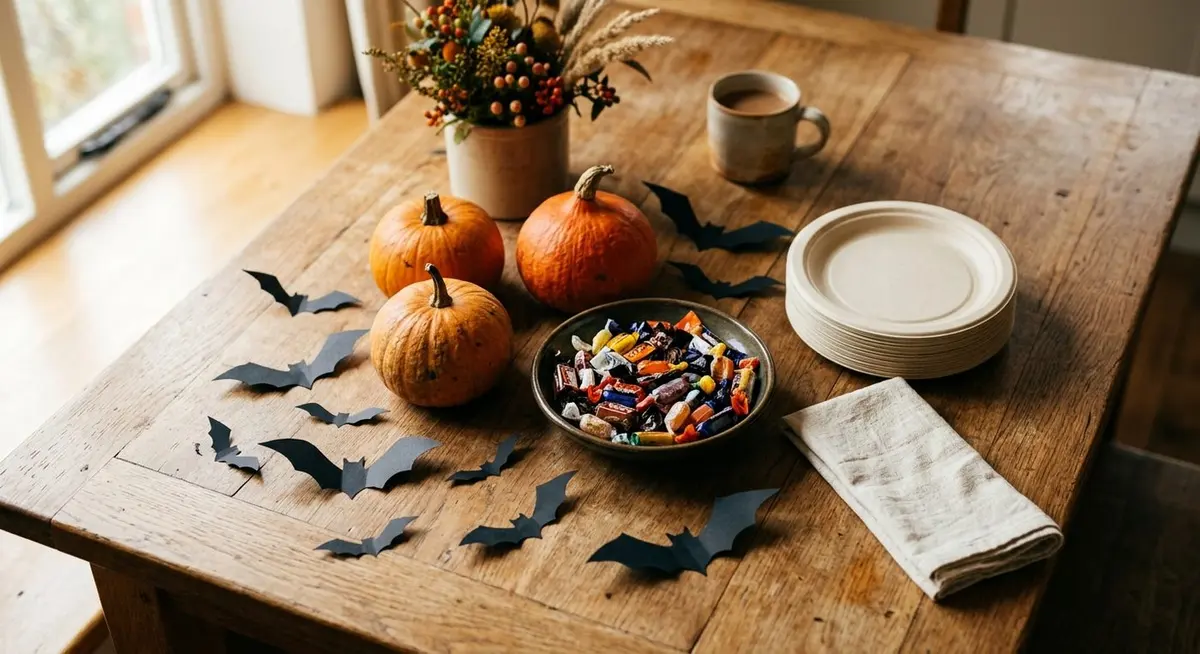
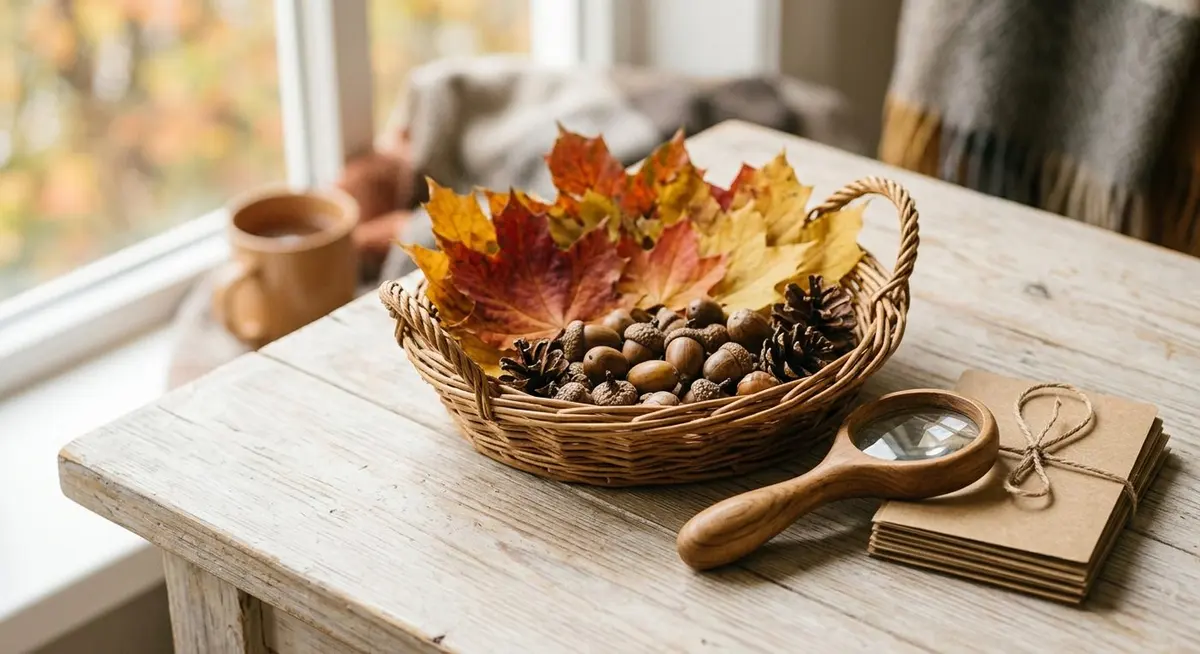
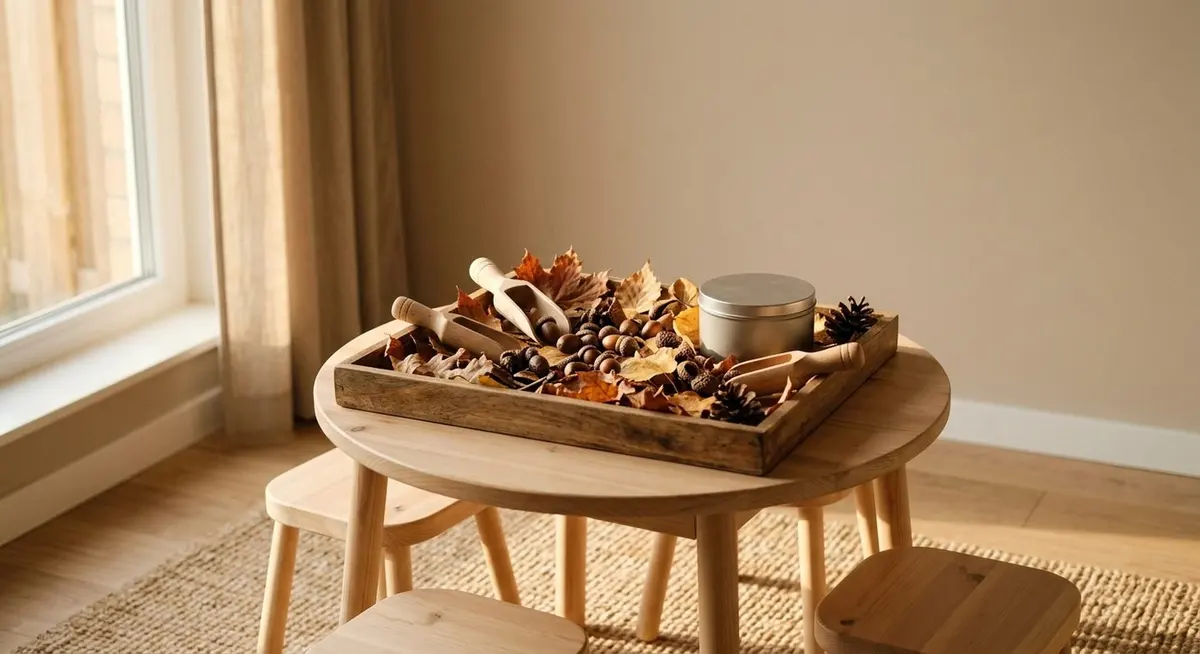
Paper, glue, black and orange card, and a table you do not mind ruining. Bats, spiders, paper chains and lanterns all come out of the same three materials. If you want a project with a proper result, the nature walk and leaf craft route gives you the raw material for free.
6. Candy bingo
Print a grid of nine squares, fill each square with a small sweet or a tiny toy, and call the squares out. It takes half an hour, it works for a mixed-age group, and the prizes are already edible. This is the single best game for a party where the children do not all know each other.
7. Toilet-paper mummies
Two rolls of paper per child, and one child wrapped by another. The game is to wrap a whole person before the paper runs out. It is loud, it is silly, and it takes twenty minutes from start to tidied up.
8. Handprint ghosts
White washable paint, a black pen and a sheet of card. Press the hand down, let it dry, then draw two eyes and a mouth on the palm. The result is a ghost, a keepsake and a record of how small their hands were this year, all at once.
9. Learn a magic trick
A deck of cards and one simple trick, practised until it works. Children between six and ten will spend an astonishing amount of time on this, and the performance at the end is the real reward. Teach them one trick properly rather than five badly.
10. Window silhouettes
Black paper, scissors and tape. Cut out bats, cats and a moon, and tape them to the inside of the window. From the street it looks like a proper decorated house, and it costs nothing. Add a torch behind them for a shadow effect after dark.
One pumpkin, one brush, one coat of acrylic paint. Painting is the version of pumpkin decorating that a four-year-old can finish alone.
Ten Things to Do Out and About
These need a car, a booking or a walk, and they are worth the effort once or twice in the season. Everything here is better booked in advance, because October weekends fill up fast.
11. Pumpkin patch visit
The classic for a reason. Go early in the month, take a photograph of the children next to the same sign every year, and let each child choose their own pumpkin rather than choosing for them. Bring a rug for the boot so the pumpkins do not roll.
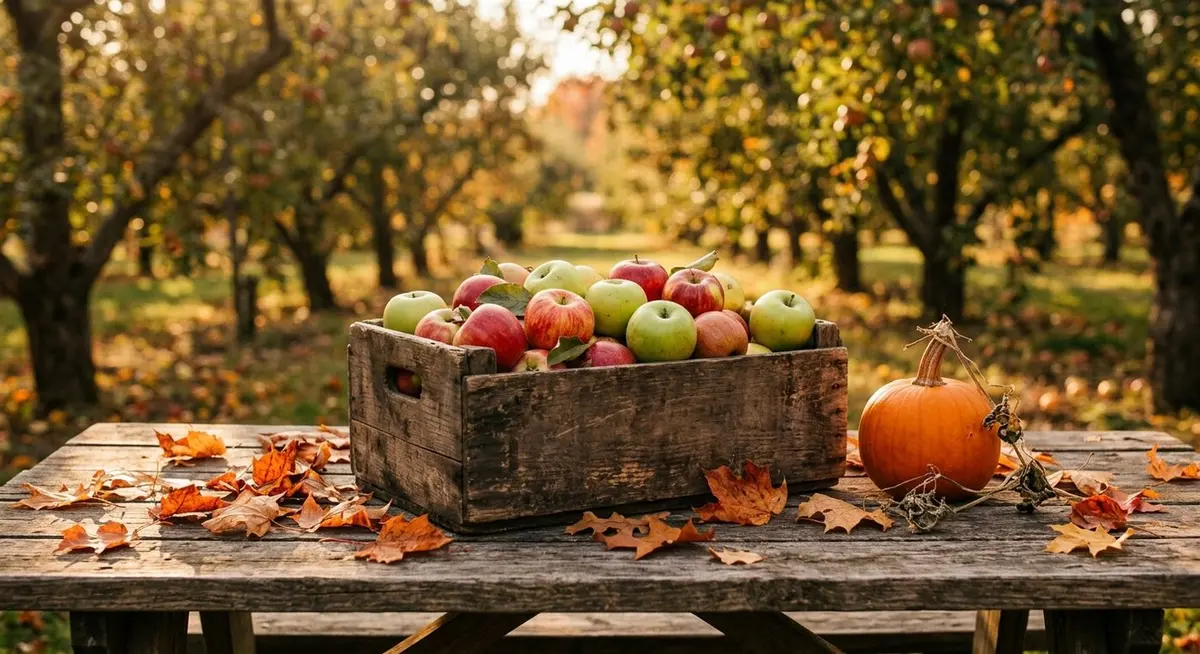
12. Apple picking
Pick more than you can eat and turn the rest into something warm. A bag of apples and an afternoon in the kitchen is one of the best-value family days of the whole autumn, and the spiced loaf that comes out of it freezes beautifully.
13. Corn maze
Best for children who can walk for an hour and read a simple map. Take a photograph of the map at the entrance, agree a meeting point, and set a time limit before you go in. A maze with a tired five-year-old is a long afternoon.
14. Hay ride
Short, memorable and usually attached to a farm shop, which means you can buy the pumpkin on the way out. Wrap up warmer than you think you need to; a trailer in the open is cold even on a mild day.
15. Zoo or farm Halloween event
Many zoos and farms run a Halloween trail through the last two weeks of October, usually with a treat at the end. Book as soon as tickets open. These are the events that sell out first and disappoint the most when they do.
16. Neighbourhood costume parade
This one costs nothing and builds the best memories. Pick a time, text a handful of neighbours, and walk a short loop in costume. It does not need to be organised beyond a message. If you want it to feel like an event, agree a meeting point and a route in advance.
17. Trunk-or-treat
A car park, a row of decorated boots and a lot of sweets. It is the safest form of trick-or-treating for small children, because the walking is short and the cars are stationary. Decorate the boot with a sheet and a torch and you are done.
18. Torchlight scavenger hunt
After dark, with torches, hunting for a short list of things: a leaf, a stone, something orange, something that makes a noise. It works in a garden, a park or a street. Our scavenger hunt guide has a printable list you can use as it is.
19. Spooky picnic
A thermos, blankets and food that can be eaten with cold hands. Go at dusk, eat quickly, and walk home in the dark. It is the cheapest way to make an ordinary evening feel like an occasion.
20. Back-garden bonfire
Check your local rules first, because many areas restrict garden fires. If you can have one, keep it small, keep water nearby, and let the children toast something on a long stick. A bonfire is the one activity that genuinely needs an adult doing nothing else.
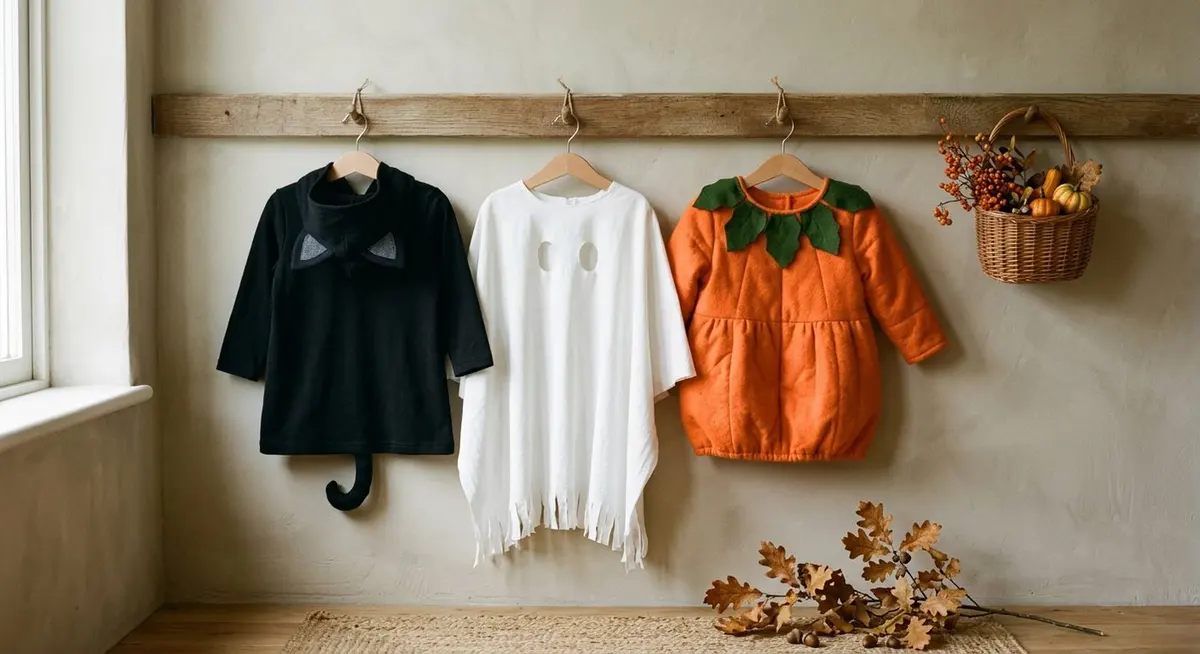
A costume parade needs no more than a time and a text message. Simple homemade costumes photograph better than anything bought.
Food, Treats and the Kitchen Table
Food is where Halloween gets expensive and where it gets easiest. You do not need a themed menu. You need one orange thing, one thing on a stick and one thing that is warm. Everything else is decoration.
Three things to make, and what each one is for
Make this
Why it works
Time
Something orange
Pumpkin muffins, squash soup or a spiced loaf — the colour does the theming for you
1 hour
Something on a stick
Fruit, cheese or marshmallows; children eat anything they can hold by a handle
15 min
Something warm
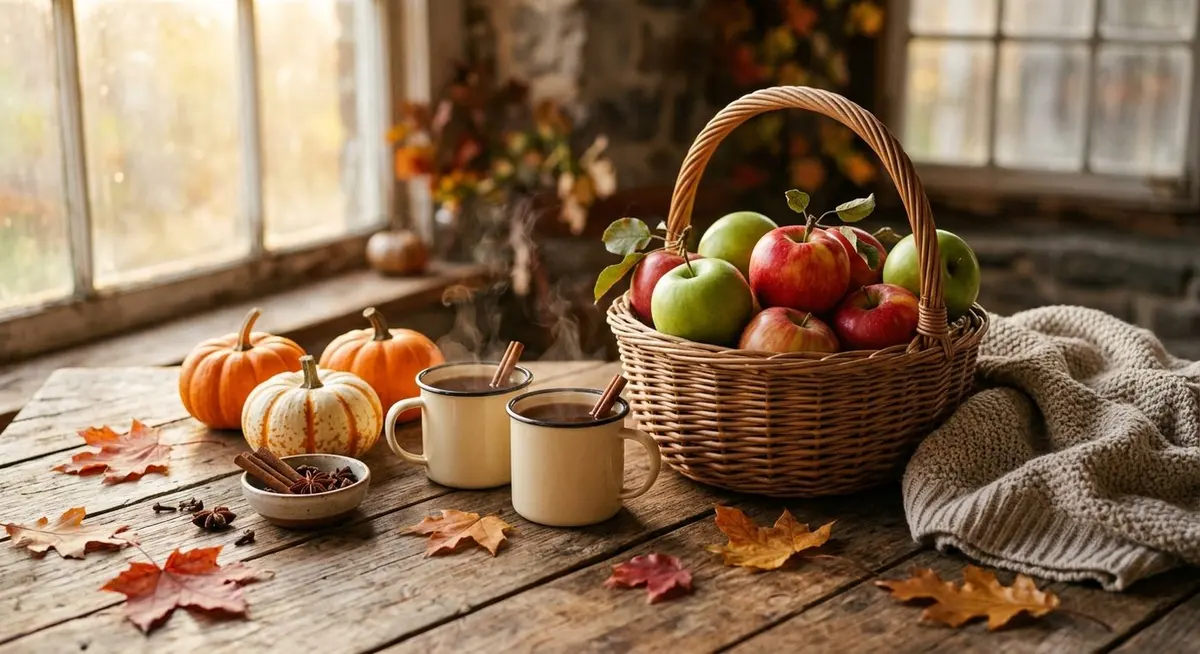
Hot chocolate, spiced apple juice or soup in a thermos for the walk home
10 min
Something to decorate
Plain biscuits and a bowl of icing; the decorating is the activity
30 min
Something to share
A tray of one thing, cut small, for a party table
20 min
The decorating is the point, not the baking. A packet of plain biscuits and a bowl of orange icing keeps four children busy for half an hour and produces something they will actually eat. If you want a bake that is worth the effort, the spiced pumpkin loaf is the one that gets requested again in November.
The allergy rule for a party table: keep every sweet in its wrapper until it is on a plate, and keep one bowl of wrapped, nut-free sweets separate from everything else. It takes two minutes and it means every child at the table can eat something.
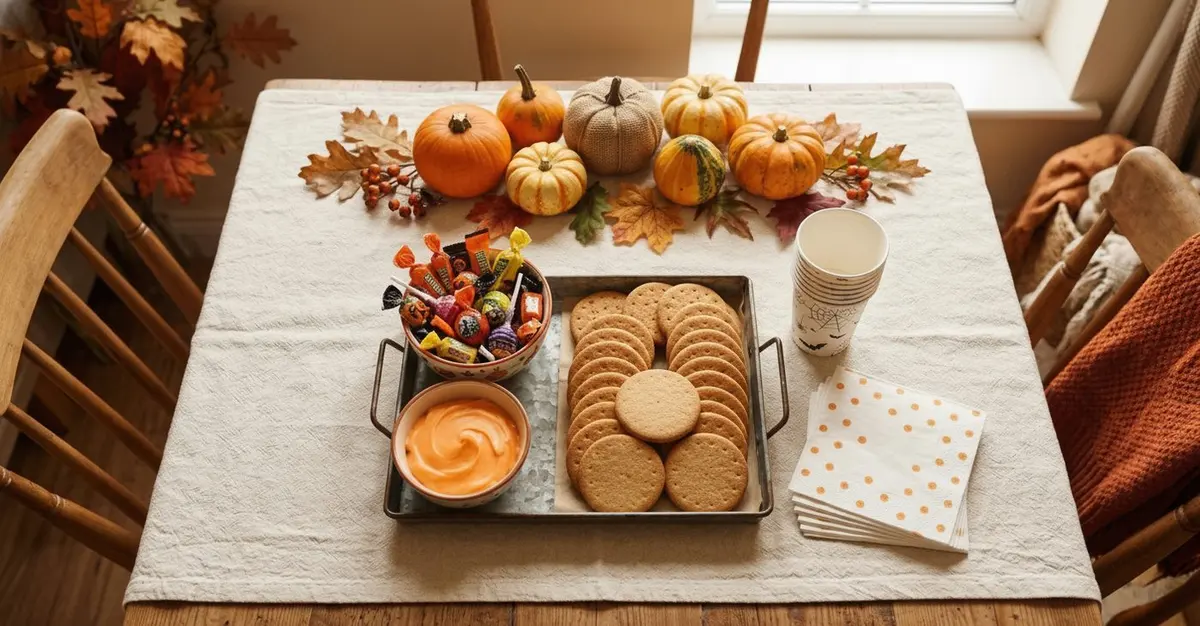
One tray of plain biscuits and a bowl of icing keeps four children busy for half an hour — and the decorating is the activity, not the baking.
For the Youngest: Under Five
Under five, Halloween is about texture, repetition and being allowed to make a mess. The activities that work are the ones where the material does the entertaining and there is no correct result. Skip anything with a finished product in mind.
Paint a pumpkin — one pumpkin, one brush, one colour. They will paint the whole thing and then their own hand.
Handprint ghosts — the paint is the fun; the ghost is a bonus for you.
Toilet-paper mummies — wrapping and unwrapping is a game in itself at this age.
A short candy hunt — five sweets in one room, not thirty in a garden.
Dance party — thirty minutes of music and no tidying up at all.
Torch play — a torch in a dark room is genuinely thrilling and costs nothing.
The choking rule, stated plainly: anything that fits inside a toilet roll tube is a choking risk for a child under three. That includes most wrapped sweets, small plastic spiders, googly eyes and beads. Keep the small parts for the older children and give the little ones something they can hold with a whole hand.
For Older Kids: Eight and Up
Older children want a rule, a challenge and something to win. The same activities that delight a four-year-old will bore a ten-year-old within minutes, so change the framing rather than the activity. Add a clock, a score or a job.
Make the hunt a race — two teams, a list of clues and a time limit.
Give them the camera — put an older child in charge of photographing the evening, then let them edit it.
Let them run the party — hand over the games, the music and the invitations.
Carve rather than paint — with a proper pumpkin saw and an adult nearby, carving is the version that feels grown-up.
Build the haunted house — give them the sheets and the design, and let them charge admission.
Learn a magic trick — one trick, practised until it works, performed at the end.
The best thing you can hand an eight-year-old in October is a job. Running the candy bingo, holding the torch on the walk, or being in charge of the playlist turns a passive evening into one they own. It also gives you a spare pair of hands.
Hosting a Party Without Losing the Evening
A children’s Halloween party does not need a theme, a menu and a schedule. It needs a start time, an end time and three things to do. Here is the order that works.
Set the times and put them on the invitation. Ninety minutes is right for under-sixes, two hours for older children. An end time is what keeps the party from collapsing into tears.
Plan three activities and no more: one that moves (a hunt or a dance), one that makes (painting or decorating), and one that is quiet (bingo or a film).
Feed them once, in the middle, with something simple and cut small. A tray of one thing beats a table of five.
Keep every sweet in its wrapper until it is on a plate, and keep one nut-free bowl separate.
Have a bag by the door for coats, and hand out the party bags as they leave rather than during the party.
Write the end time on the wall. When it arrives, stop. The last ten minutes of a party are where the trouble lives.
The one thing people forget: a party for children under five needs one adult per two children, and that adult cannot also be the host. Ask for help before the day, not on it.
Safety, Costumes and the Walk Round the Block
Trick-or-treating is the part of Halloween that carries the most risk and the least planning. Ten minutes of preparation before you leave the house covers almost all of it.
Costumes are short enough to walk in and bright enough to be seen — add reflective tape or a torch if the route is dark.
Masks come off at crossings. A mask that covers the eyes is a trip hazard on a pavement.
An adult walks with anyone under ten, and older children go in a group with an agreed route and a return time.
Every sweet is checked at home, in the light, before anything is eaten. Anything unwrapped or homemade from a stranger goes in the bin.
The route is agreed before you leave, and the youngest child carries a name and number card in a pocket.
Pumpkins with candles are never left where a costume can brush against them, and never near a doorway where children queue.
The dog stays home on the busiest night of the year. It is the kindest thing you can do for it.
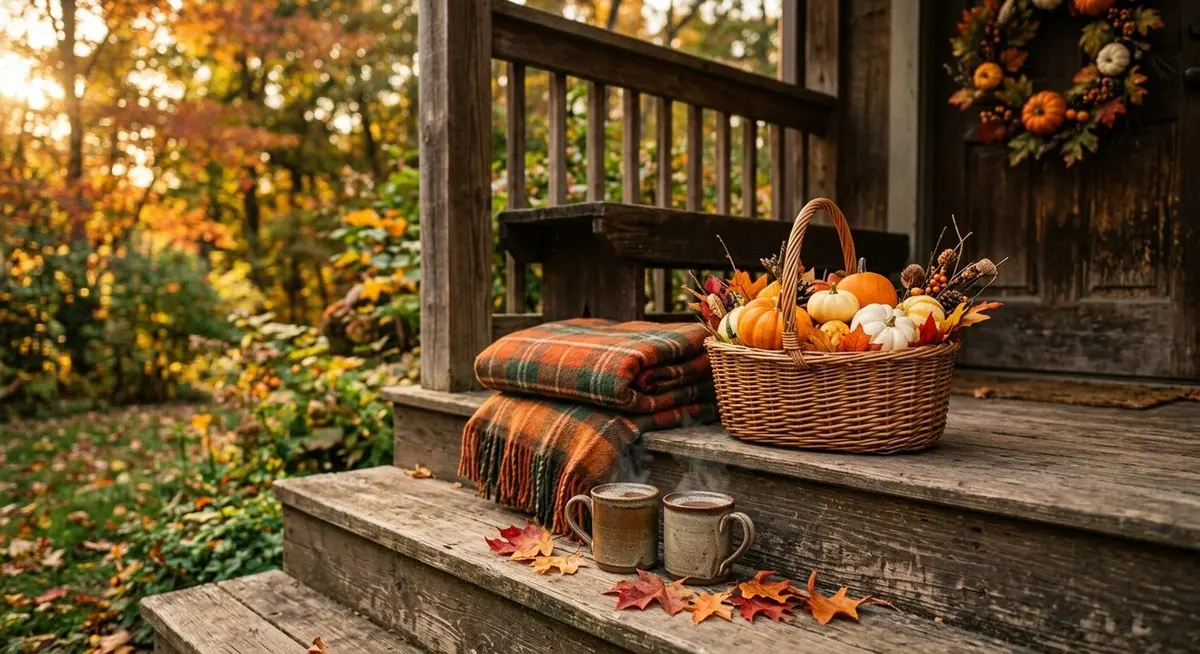
The teal pumpkin idea, if you want to do one good thing this October: put a teal pumpkin on the step and offer a non-food treat alongside the sweets. A small toy, a sticker or a pencil means a child with a food allergy gets to take part in the same ritual as everyone else.
Doing All of This on a Small Budget
Halloween is one of the cheapest holidays if you let it be, and one of the most expensive if you buy the whole aisle. The activities that children remember are almost always the free ones.
Where the money goes, and what to do instead
Usually costs
Cheaper version
Saves
Shop-bought costumes
A cardboard box, a black bin bag and face paint
Most of it
Carved pumpkins
One pumpkin per child, painted rather than carved
Half
Party decorations
Black paper silhouettes on the windows
Nearly all
Party food
One tray of biscuits to decorate, plus a bowl of warm soup
Half
Sweets for a hunt
A bag of wrapped sweets split across two hunts
Half
Pumpkin patch entry
A farm shop pumpkin and a walk in the park
All of it
Party bags
One small toy and one wrapped sweet per child
Most of it
The one thing worth spending on is the pumpkin, because it is the object the whole season is built around. Buy it early, keep it cool, and let each child choose their own. Everything else on this list can come out of the recycling box.
Buy the sweets after Halloween. If you are planning a hunt for the first weekend of November, the wrapped sweets are half price on the first of the month. It is the single easiest saving in the whole season.
The Four-Week Countdown
October goes quickly, and the good events sell out before you have thought about them. This is the order that keeps the month calm.
What to do, and when
When
Do this
Why now
First week of October
Book the pumpkin patch, the zoo event and any hay ride
These sell out first
First week of October
Buy the pumpkins and the paint
Pumpkins keep well in a cool room
Second week
Make the costumes, or at least decide them
Leaves time for a second attempt
Second week
Text the neighbours about a costume parade
People need a week’s notice
Third week
Run the at-home activities: painting, craft night, movie night
The evenings are still light enough
Third week
Bake and freeze anything you are making ahead
Frees up the last weekend
Fourth week
Carve or finish the pumpkins
Any earlier and they rot before the 31st
Fourth week
Check the trick-or-treat route and the costume visibility
Ten minutes that prevents a problem
31 October
Do the walk, then come home and count the sweets together
The counting is half the fun
Leave one evening empty. Whatever you plan, keep one night in the last week with nothing in it. That is the evening you will need when something runs late, someone is tired, or the weather cancels the plan.
Questions Parents Ask
These are the questions that come up every October. Most of them come down to time, age or weather, and all three are easier to plan for than to fix on the night.
What is a good Halloween activity for a two-year-old?
Painting a pumpkin, a handprint ghost or a short candy hunt in one room. At two, the material is the activity — there is no finished product to aim for. Keep anything small enough to fit inside a toilet roll tube well out of reach.
How do I keep older kids interested in family activities?
Give them a job rather than an activity. Put them in charge of the camera, the playlist, the bingo calling or the haunted house design. An eight-year-old who is running something will stay engaged far longer than one who is being entertained.
How many activities should we actually plan?
Three or four across the whole month, plus trick-or-treating. The families who enjoy October most are the ones who do a few things properly rather than trying to tick off a list of thirty.
What do we do if it rains on the night we planned?
Have one indoor backup ready before the day: a blanket-fort haunted house, a movie night or a craft table. Decide the backup in advance so the change of plan does not become a disappointment.
Is trunk-or-treat better than trick-or-treating?
For children under six, usually yes. The walking is short, the cars are stationary and the whole thing is over in an hour. For older children, the walk round the neighbourhood is part of the fun.
How do I handle the sweets afterwards?
Let them eat a few on the night, then put the rest in one container and ration it over the following week. Counting and sorting the sweets together is a good activity in itself, and it gives you a chance to check every wrapper in the light.
What if my child is scared of Halloween?
Skip the decorations and the masks entirely and do the quiet activities instead: baking, painting, a film with the lights on. A child who is frightened at four is often the one asking to carve a pumpkin at six. There is no rush.
Do we need to buy costumes?
No. A cardboard box, a black bin bag and a pot of face paint will make a robot, a cat or a ghost in an afternoon. Homemade costumes photograph better, cost less and are the ones children remember making.
Free Printable: The Family Halloween Activity Kit
A printable companion to this guide — the full 30-activity planner with a tick box for each, an age-and-time reference card, a four-week countdown calendar, a party run-sheet, a trick-or-treat safety checklist and a set of window-silhouette templates to cut out.
Elowen Thorn I cook, photograph and re-test every recipe in an ordinary home kitchen before it goes up, so what you make matches what you see. Savory Discovery is where simple weeknight cooking, seasonal ideas and the odd bit of kitchen craft sit side by side — written plainly, and worth cooking twice.