I have a confession, friend. There was a long stretch where I thought “chicken florentine” belonged to restaurant menus and special-occasion dinner parties. It sounded fancy. It sounded fussy. It sounded like something I’d only order out and then quietly overpay for. Have you ever done that too — talked yourself out of a recipe before you even tied your apron?
Then my youngest brought home a college roommate for Sunday dinner, and I had about forty minutes to make something warm and a little bit impressive. I almost reached for the takeout menu. Then I remembered a pan, a wedge of parmesan, a handful of baby spinach, and the rest is the plate in front of you. The sauce comes together while the chicken rests. The spinach wilts in the cream in under a minute. The whole thing is ready in the time it takes to set the table and pour the water. Why don’t you come along and I’ll show you exactly how I do it?
Why Creamy Chicken Florentine Pasta Works Every Time
The trick to this recipe isn’t one secret ingredient — it’s the order of operations. You sear the chicken first, and that golden crust on the bottom of the pan becomes the flavor base for the entire sauce. We deglaze with white wine, which lifts every caramelized bit off the skillet. Then cream, garlic, a whisper of Italian seasoning, and finally the spinach, which wilts down to almost nothing and turns that creamy sauce the prettiest pale green at the edges.
Most home cooks skip the dredge. Please don’t. A light coating of flour on the chicken does two things at once: it gives you that beautiful golden crust, and it gently thickens the pan sauce later, so you don’t have to reach for a slurry. Have you ever noticed how restaurant sauces coat the back of a spoon so beautifully? That’s the flour doing its quiet work. My grandma called it “the handshake between the pan and the cream” — a little old-fashioned, but she wasn’t wrong.
Best-Ever Creamy Chicken Florentine Pasta
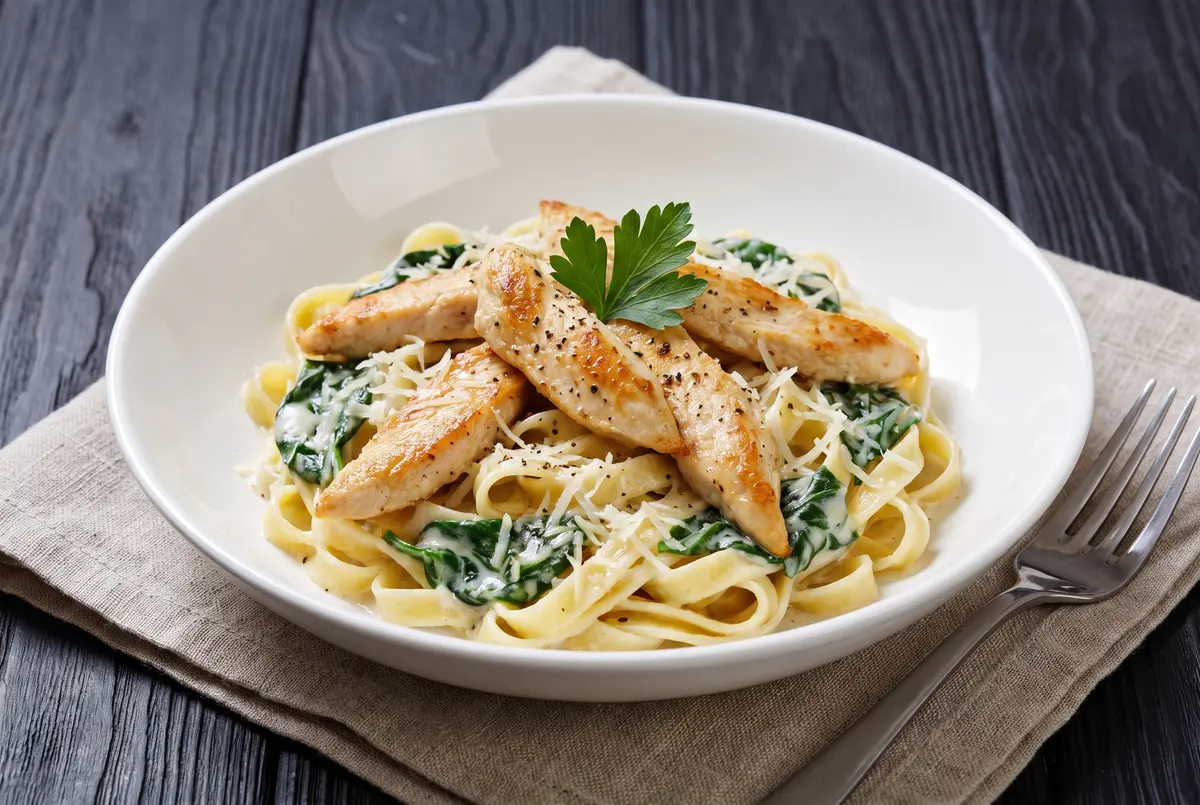
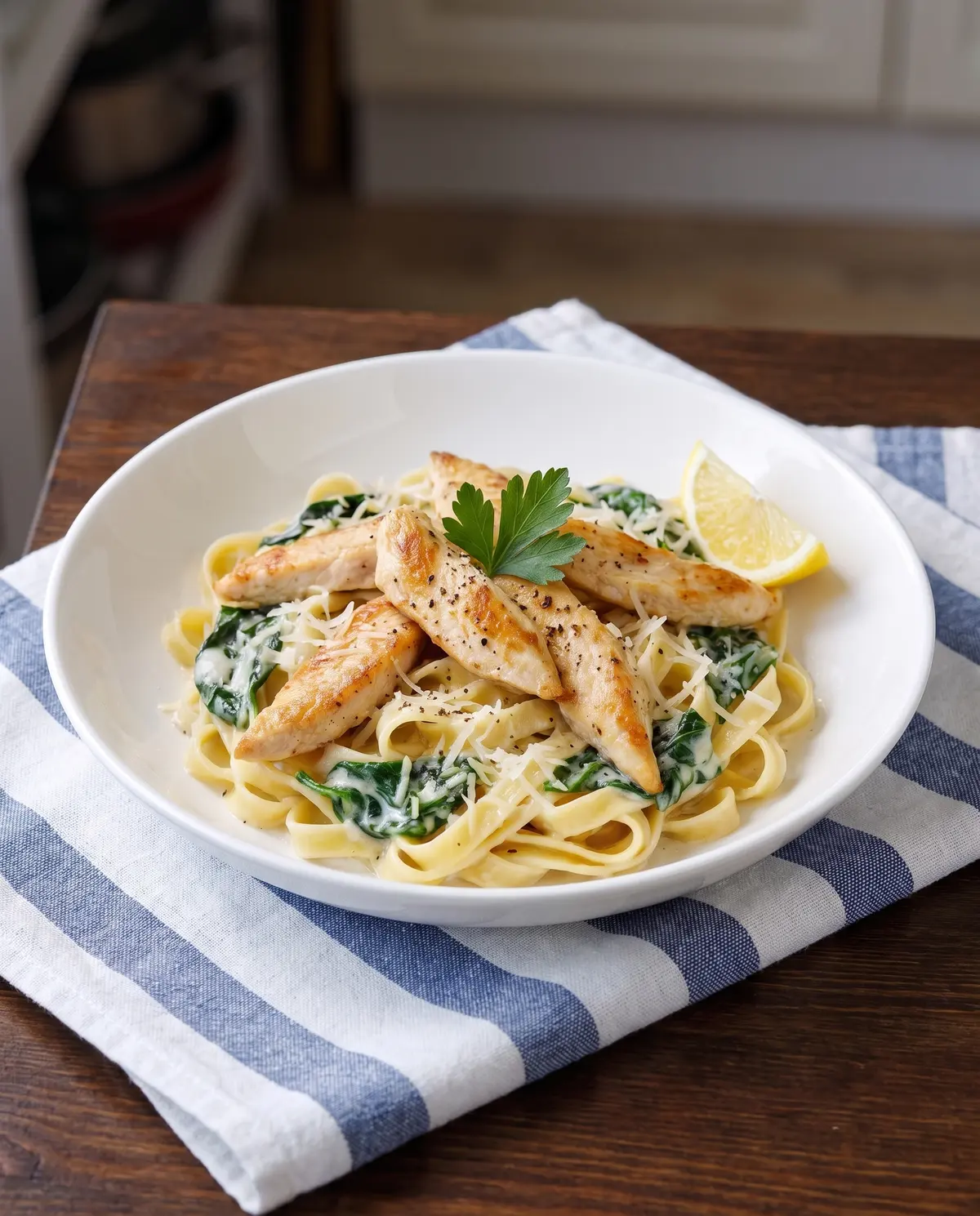
This is the weeknight version of the dish that used to scare me. Pan-seared chicken, glossy white wine cream sauce, and just enough spinach to make us feel like we tried. It tastes like a hug and looks like something you’d serve to company. Which one would you try first — the chicken, or the sauce? Honestly, I’m still deciding myself.
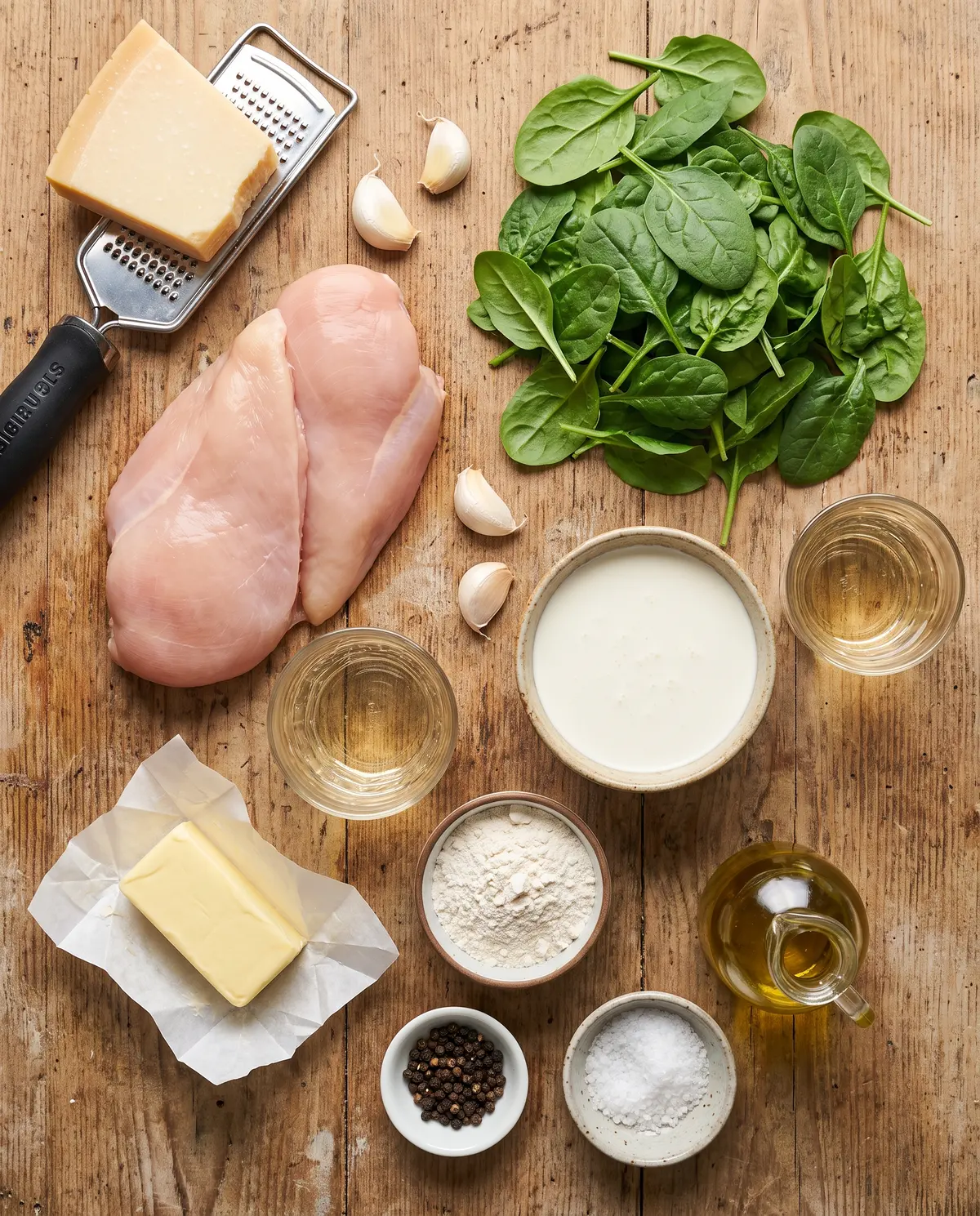
Ingredients
2 large chicken breasts
1/2 teaspoon garlic powder
Salt and pepper, to taste
1/3 cup all-purpose flour, for dredging
1 tablespoon olive oil
2 tablespoons butter, divided
3 cloves garlic, minced
1/2 cup dry white wine
1/4 cup chicken broth
1/4 teaspoon Italian seasoning
1 cup heavy cream
2 cups loosely packed fresh baby spinach
1/2 cup freshly grated parmesan cheese
8 ounces fettuccine or linguine pasta
From Pot to Plate: My Step-by-Step Method
Step 1: Prep and season the chicken. Slice each chicken breast in half horizontally so you end up with four thinner cutlets — they cook faster and more evenly that way. Pat them dry with a paper towel (this is the real secret to a golden crust, friend), then season both sides with garlic powder, salt, and pepper. Dredge lightly in flour, shaking off the excess.
Step 2: Sear the chicken. Heat the olive oil and one tablespoon of the butter in a large skillet over medium-high heat. When the butter stops foaming, lay the chicken in the pan in a single layer. Don’t crowd it — work in two batches if you need to. Cook for 4 to 5 minutes per side until deeply golden. Transfer to a plate and let it rest.
Step 3: Build the sauce base. Drop the heat to medium and add the remaining tablespoon of butter to the same pan. Toss in the minced garlic and stir for about thirty seconds — just until fragrant, not browned. Pour in the white wine and chicken broth, sprinkle in the Italian seasoning, and let it bubble for 3 to 5 minutes until it reduces by about a third. This is where the flavor concentrates, so don’t rush it.
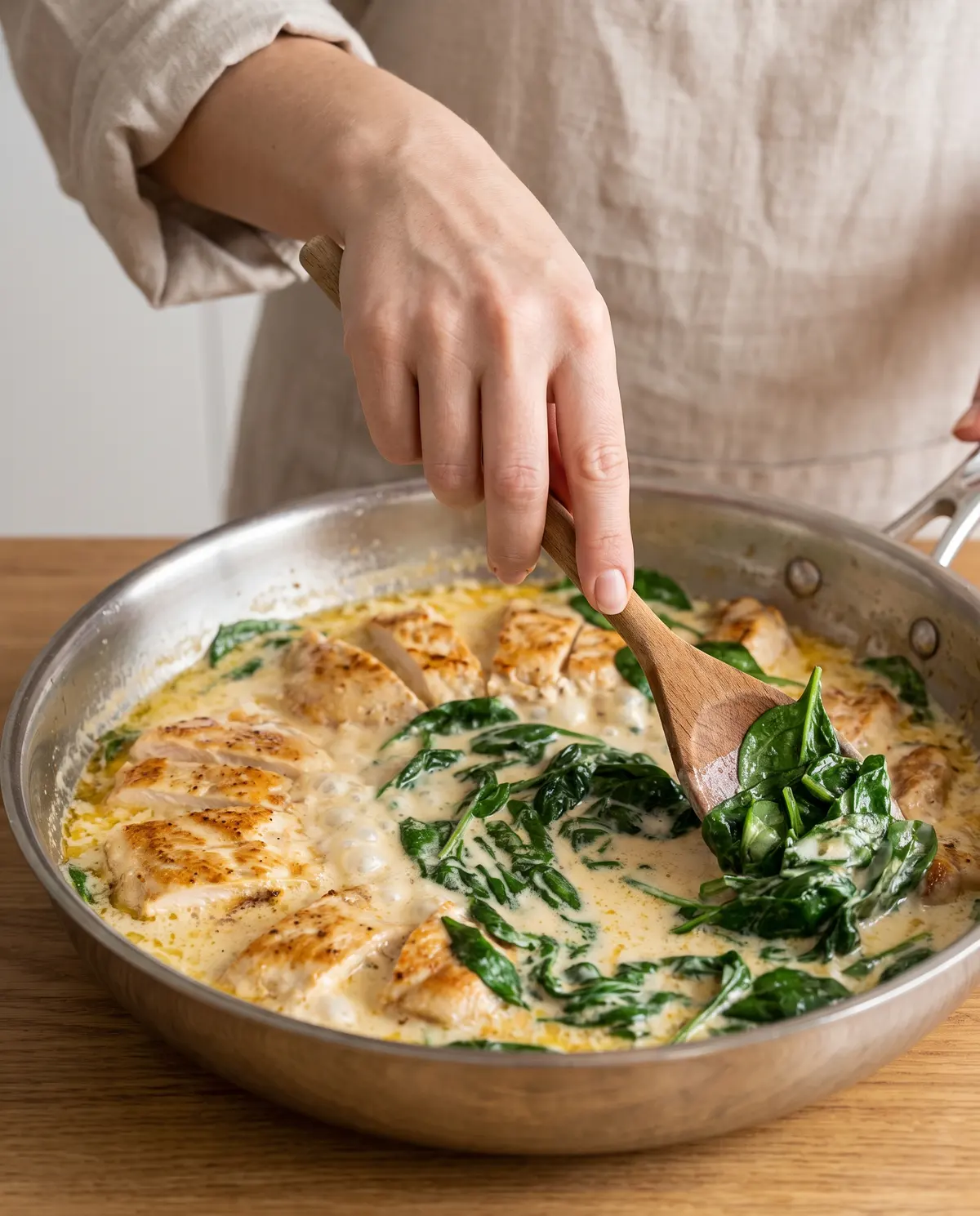
Step 4: Add the cream and spinach. Pour in the heavy cream and let it come to a gentle bubble for 2 minutes — it should coat the back of a spoon. Add the baby spinach and stir until it wilts down, which honestly takes about a minute. The sauce will turn a soft, almost sage green around the edges. Isn’t that beautiful?
Step 5: Cook the pasta. Meanwhile, bring a big pot of well-salted water to a boil and cook your fettuccine or linguine until just shy of al dente — about one minute less than the package says. The pasta will finish in the sauce and soak up all that flavor. Reserve a cup of pasta water before draining, because you never know when you’ll need to loosen the sauce.
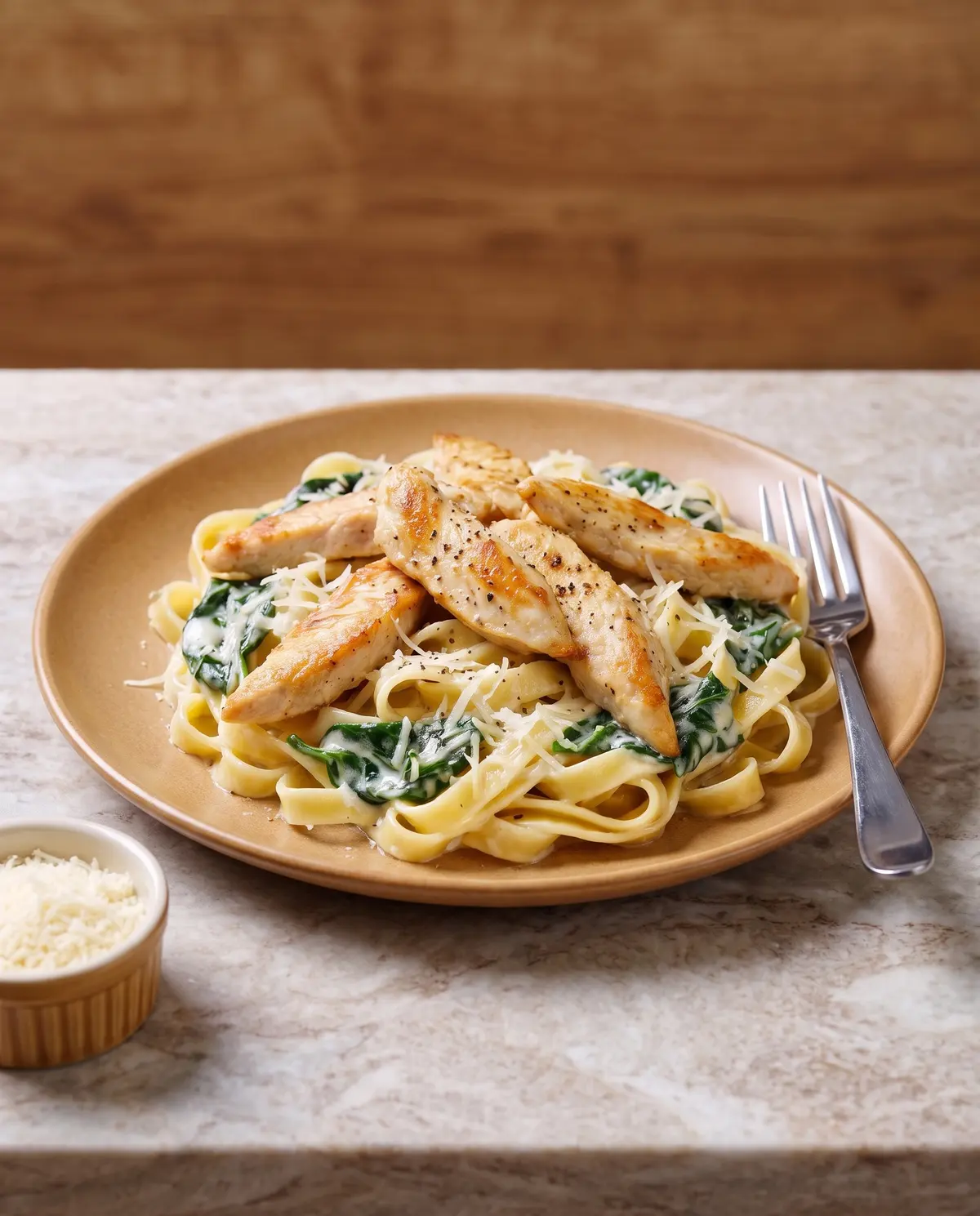
Step 6: Bring it all together. Slice the rested chicken into strips. Add the drained pasta to the skillet along with the chicken and any juices on the plate. Toss gently over low heat for a minute, splashing in a little pasta water if the sauce looks tight. Off the heat, sprinkle in the parmesan and fold until creamy and glossy. Taste for salt and pepper. Serve right away in warm bowls.
Creative Twists
Once you’ve made this once, you’ll start seeing all the ways you can play with it. Here are the variations my family asks for again and again:
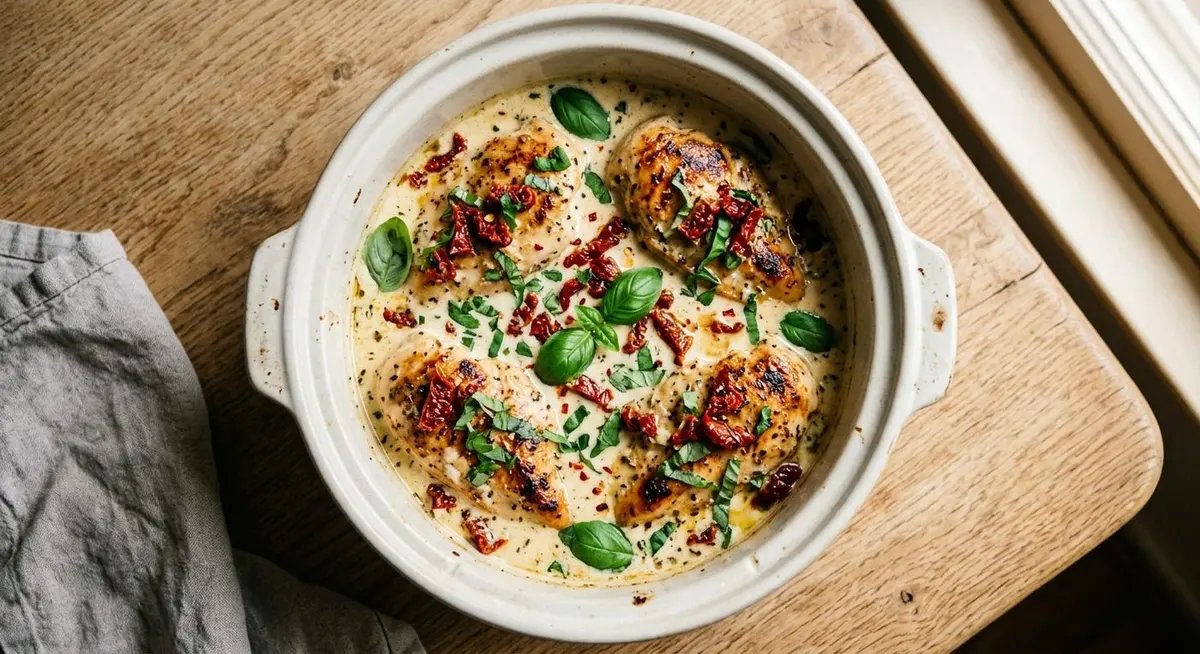
Sun-dried tomato florentine: Stir in a third of a cup of chopped oil-packed sun-dried tomatoes with the cream. The sweet-tangy pop against the cream is unreal.
Mushroom and spinach: Add 8 ounces of sliced cremini mushrooms right after the garlic. They’ll soak up the wine and turn the sauce almost meaty.
Lemon-pepper florentine: Add the zest of one lemon with the cream and finish with a squeeze of fresh juice. Bright, lighter, very spring.
Cajun florentine: Swap the Italian seasoning for a teaspoon of Cajun or Creole seasoning on the chicken. The gentle heat plays so well with the cream.
Bacon-laced: Cook four slices of chopped bacon first, then use the rendered fat to sear the chicken. Crumble the bacon over the top at the end. You didn’t hear this from me.
Serving & Pairing Ideas
What should I serve alongside creamy chicken florentine pasta? Anything that can sop up that sauce. A warm, crusty baguette is non-negotiable at my table. A simple arugula salad with lemon and shaved parmesan cuts through the richness. Roasted asparagus or broccolini with a little garlic and olive oil works beautifully too. For wine, the same dry white you used in the sauce — a Sauvignon Blanc or Pinot Grigio — pours generously. If you’re cooking for kids, a fizzy lemonade is honestly perfect.
For a heartier spread, try pairing this with a side like my Buffalo Chicken Pasta Bake for a chicken-pasta duo everyone will remember, or balance the plate with something zippy like the Creamy Harissa Pasta on the side for the spice-lovers at your table. The flavors are different but the comfort level is the same.
Why I Love This Recipe
This is the kind of recipe that makes weeknights feel like a small occasion. The sauce is restaurant-level, but the steps are forgiving — you can chop your spinach while the chicken sears, and the pasta water is already boiling by the time you deglaze. There’s no finicky technique, no specialty equipment, no ingredient you’ll only use once. Just good, warm, creamy food that fills the kitchen with the smell of garlic and butter and the kind of quiet that means everyone’s already hungry.
It also scales beautifully. Double the recipe for a dinner with friends, halve it for a quiet Tuesday. Use chicken thighs if that’s what you have on hand. Toss in extra spinach if you’re trying to sneak greens past a suspicious eater. The bones of this dish are sturdy enough to take whatever you throw at it, and tender enough to still feel like a treat.
Storage and Batch Cooking
Leftovers keep in the fridge for up to three days in an airtight container. The sauce will thicken as it chills — that’s normal. Reheat gently in a skillet over low heat with a splash of milk, cream, or chicken broth to loosen it back up. The microwave works too, but go in 30-second bursts and stir in between so the cream doesn’t break.
I don’t recommend freezing the finished dish — cream sauces tend to separate when thawed. But you can absolutely prep ahead: cook and slice the chicken up to two days in advance, store it in the sauce, and reheat when you’re ready to boil pasta. Or freeze the raw seasoned chicken in a zip-top bag and thaw overnight in the fridge for an even faster weeknight dinner.
Troubleshooting Your Creamy Chicken Florentine Pasta
My sauce is too thin. Let it bubble gently for a few more minutes before adding the pasta — cream reduces and thickens as it cooks. If it’s still loose, mix a teaspoon of cornstarch with a tablespoon of cold water and stir it in.
My sauce broke or looks grainy. The heat was probably too high when you added the cream, or it boiled too hard. Take it off the heat, whisk in a tablespoon of cold cream, and it usually comes back together. Next time, keep the cream at a gentle bubble, not a rolling boil.
My chicken is dry. Two likely culprits: the breasts were too thick, or the pan wasn’t hot enough. Always halve the breasts horizontally for even cooking, and let the pan preheat fully before adding the chicken — that sizzle on contact is what gives you the golden crust without overcooking the inside.
The spinach turned slimy or watery. You probably added it before the cream had a chance to thicken, or you used frozen spinach (which holds way more water). Stick with fresh baby spinach and add it at the end — it wilts in under a minute.
Your Quick Questions, Answered
Can I use chicken thighs instead of breasts? Absolutely. Boneless, skinless thighs stay juicier and don’t dry out as easily. Pound them gently to an even thickness and follow the recipe the same way. They need about a minute longer per side.
What can I substitute for the white wine? Use an extra 1/4 cup of chicken broth plus a small squeeze of lemon juice. The wine adds brightness and depth, but the broth-and-lemon combo is a solid swap if you don’t cook with wine or prefer to skip it.
Is there a dairy-free version? Yes — swap the butter for olive oil, the cream for full-fat coconut milk or a cashew cream, and use a vegan parmesan. The flavor will be a little different but still very satisfying.
Can I make this gluten-free? Use a gluten-free all-purpose flour blend for dredging the chicken, and your favorite gluten-free pasta. Everything else in the recipe is naturally gluten-free.
A Few Last Thoughts
I’ve made this dish on busy weeknights, on quiet Sundays, and once for a neighbor who just needed somebody to bring over a warm plate. It never fails. The sauce always comes together. The chicken always turns out golden. The spinach always wilts down to exactly the right amount. And every single time, somebody at the table asks for the recipe before they finish their bowl.
If you try this creamy chicken florentine pasta, will you leave me a note and let me know how it turned out? I love hearing which twist you tried, which side you served, and which family member demanded seconds. Cooking is a conversation, friend, and I always want to hear what your kitchen is saying. Until next time — take care of yourself, and let the pan do the work.
Happy cooking!
—Elowen Thorn
Looking for more cozy pasta inspiration? My Pappardelle with Chicken uses a similar sear-and-sauce method with a heartier, slow-simmered twist. Or browse the full pasta category for more weeknight-friendly dishes your family will ask for again.
Pan-seared chicken in a white wine garlic cream sauce with baby spinach and parmesan, tossed with fettuccine. Weeknight-friendly and ready in 30 minutes.
Ingredients
Instructions
Slice each chicken breast in half horizontally so you end up with four thinner cutlets. Pat dry, season both sides with garlic powder, salt, and pepper. Dredge lightly in flour, shaking off the excess.
Heat olive oil and 1 tablespoon of butter in a large skillet over medium-high heat. Cook the chicken 4-5 minutes per side until golden. Transfer to a plate to rest.
Reduce heat to medium. Add remaining butter and minced garlic to the same pan. Stir 30 seconds. Pour in wine and broth, add Italian seasoning, and simmer 3-5 minutes until reduced by a third.
Pour in the heavy cream and let it bubble gently for 2 minutes until it coats the back of a spoon. Stir in the baby spinach until wilted, about 1 minute.
Meanwhile, boil salted water and cook the fettuccine or linguine 1 minute less than package directions. Reserve 1 cup of pasta water before draining.
Slice the rested chicken. Add drained pasta, chicken, and any juices to the skillet. Toss gently over low heat, splashing in pasta water as needed. Off heat, fold in the parmesan. Season to taste and serve immediately.
Notes
Pat the chicken dry before dredging for the best golden crust. Reserve pasta water — it’s the secret to a silky sauce. Sauce thickens as it sits; loosen with a splash of cream or broth when reheating.
Keywords:creamy chicken florentine pasta, chicken florentine, weeknight pasta, spinach pasta
Elowen Thorn I cook, photograph and re-test every recipe in an ordinary home kitchen before it goes up, so what you make matches what you see. Savory Discovery is where simple weeknight cooking, seasonal ideas and the odd bit of kitchen craft sit side by side — written plainly, and worth cooking twice.