By Elowen Thorn · Autumn with a Toddler · 30 activities, ages 1 to 4
Autumn is the easiest season to do things with a toddler, and most parents miss it because they are waiting for the perfect free Saturday. You do not need one. You need a handful of activities that fit the twenty minutes you actually have, matched to what your child can genuinely do at their age. Here are thirty of them, sorted by type, with the set-up, the mess and the clean-up spelled out.
There is a version of autumn activities for toddlers that looks wonderful on a phone screen and falls apart in a real living room. It involves four craft supplies you do not own, a child who sits still for forty minutes, and a parent with a free afternoon. That version is not this one.
The activities below are chosen on three rules. They use things you already have or can buy in one trip. They take between fifteen and forty minutes, which is roughly the length of a toddler’s attention on a good day. And they are matched to what a child can actually do at their age, because the fastest way to ruin an activity is to hand a two-year-old something designed for a four-year-old.
The other thing worth saying up front: the mess is not a side effect, it is the activity. A toddler learns texture by squashing it, colour by smearing it, and weight by dumping it on the floor. If you spend the whole time protecting the carpet, nobody has any fun. Set up so that the mess is contained, then let it happen.
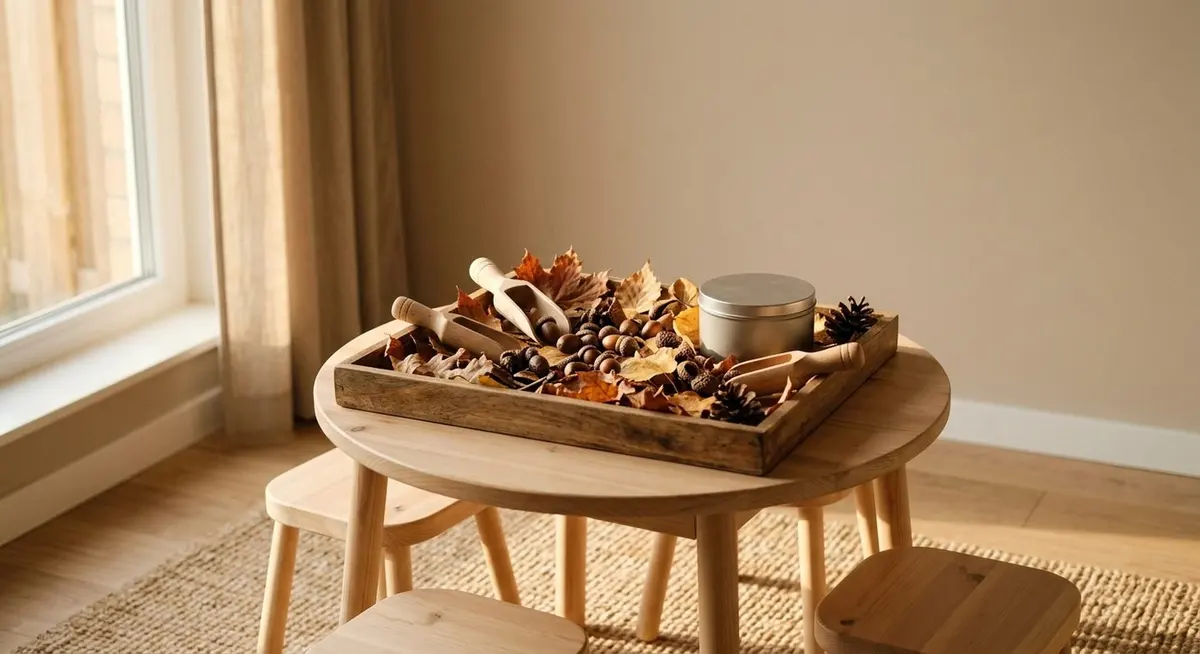
A bowl of autumn finds on the table is already an activity. Toddlers will sort, stack, tip and rebuild it for twenty minutes without any instruction at all.
Start with what is already outside. Before you buy a single craft supply, take a bag into the garden or the nearest park and collect leaves, acorns, pinecones and twigs. Half the activities in this guide run on that one bag, and collecting it is itself the first activity.
Matching the Activity to the Age
The single biggest reason an activity fails is a mismatch between the task and the child. A threading activity given to an eighteen-month-old becomes a frustration exercise. A sensory bin given to a four-year-old becomes boring in four minutes. Use the bands below as a rough guide, and remember that children move between them at wildly different speeds.
What a toddler can actually do, by age
Age band
What they can genuinely do
Activities that fit
12 to 18 months
Mouth everything, sit and grab, dump and fill, watch you closely
Sensory bins with large parts, leaf piles, water and scooping play, simple songs
18 to 24 months
Walk and carry, imitate what you do, scribble, follow one instruction
Nature walks, finger painting, playdough, scooping and pouring, leaf collecting
2 to 3 years
Sort and stack, thread with help, follow two-step directions, name colours
Collage, lacing, name boards, simple baking, dot-to-dot counting
3 to 4 years
Plan ahead, pretend, use child scissors with supervision, take turns
Building challenges, dreamcatchers, cookie decorating, scavenger hunts with a list
The two-minute test
Before you set anything up, ask whether your child could do the hardest single step of the activity on their own, or with one hand from you. If the answer is no, the activity is for an older child and you will spend the whole time doing it for them. That is not a failure of your child, it is a mismatch, and it is worth waiting a few months.
Age labels on craft kits are optimistic. A box marked three-plus usually means three with an adult sitting right there. Treat the number as the age at which a child can do it with help, not alone.
Outdoor Activities
Outdoor activities are the best value in this whole guide. They need almost no preparation, they tire a child out properly, and the clean-up is a hand wash. Autumn is the ideal window because the ground is full of interesting things and it is not yet cold enough to cut the trip short.
The nature scavenger hunt
This is the one to do first. Give your child a bag or a small bucket and a list of things to find, and let them lead. It does not need to be a real hike; a garden, a park edge or a tree-lined street works. The point is that the child is looking rather than being carried.
What to look for: a red leaf, a yellow leaf, an acorn, a pinecone, a twig shaped like a letter, a spider web, a mushroom, a bird, something orange, something that crunches underfoot.
For the very young: drop the list and just collect. A one-year-old is doing the same activity by picking things up and putting them in a bucket.
For older toddlers: let them carry the list and tick items off. That turns a walk into a game with a finish line.
Take a photo of the haul when you get home. It becomes the record of the trip and a prompt for talking about it later.
Leaf piles, raking and leaf angels
Raking is the rare chore that a toddler will happily help with, because the reward is a pile they are allowed to destroy. Give them a small rake or let them use their hands, build the pile together, then let them jump, bury themselves and throw handfuls in the air. If you have a leaf blower, the pile it makes is even better.
A lawn full of dry leaves is a free play structure. Ten minutes of jumping in it does more for a toddler than most toys.
Dress for the mess, not the photo. Wellies, an old coat and a spare pair of trousers in the car. A child who is told not to get dirty will not explore, and exploring is the entire point of going outside.
Sensory Play
Sensory play is the work of early childhood. Scooping, pouring, squashing and burying build the hand control and concentration that later become writing and drawing. It is also the messiest category here, which is why it is worth setting up properly rather than avoiding.
The three layers of a sensory bin
Layer
What it does
Autumn options
Base
The bulk material the child scoops, pours and buries in
Rolled oats, dried rice, dried lentils, cornmeal, shredded paper
Filler
The interesting objects that add texture and surprise
Scoops, spoons, small cups, tongs, a funnel, a muffin tin
Building the bin
Keep it shallow. Two to three inches of base is plenty. A deep bin is hard for short arms to reach into and much harder to tidy.
Use a tray with a lip or a shallow plastic tub, and put it on a mat or an old sheet. The mat is what saves you twenty minutes of sweeping.
Change one layer at a time. Swapping the filler from acorns to dried corn makes the bin feel brand new without rebuilding it.
Add a hiding game. Bury five small objects and ask the child to find them. This is the single easiest way to extend a bin’s life by ten minutes.
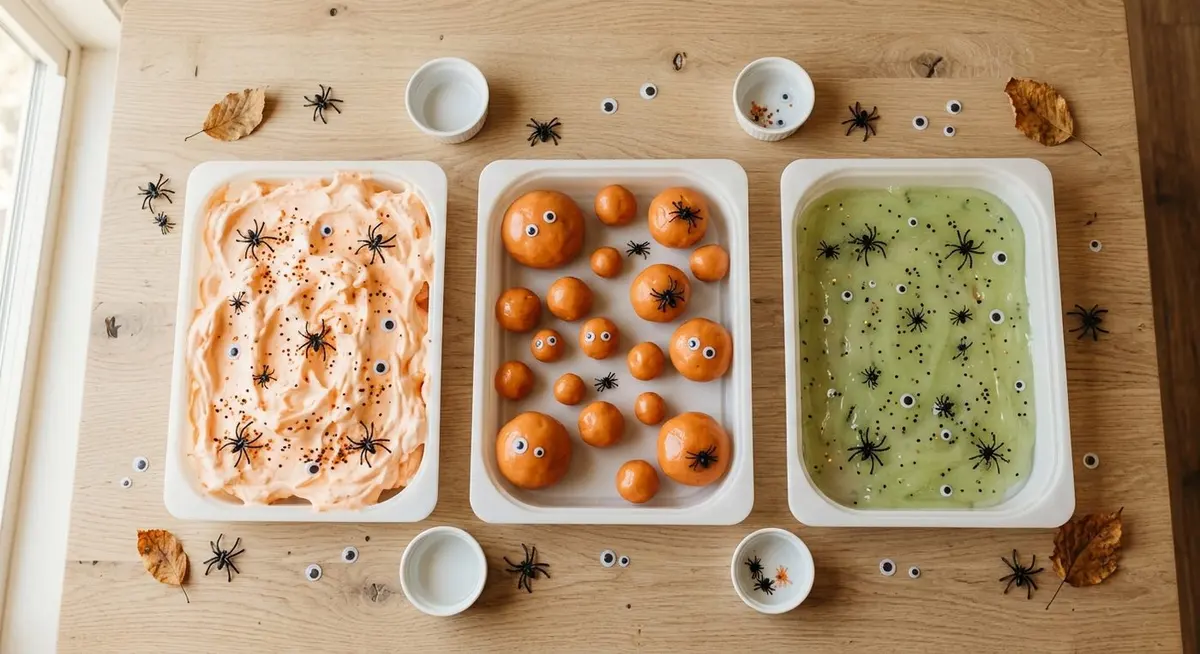
Oats as a base, autumn finds as filler, a scoop and a muffin tin as tools. That is a complete sensory bin in three minutes.
The miniature autumn forest. Take the bin one step further by standing cardboard tubes and plastic bottles upright in the base as tree trunks, then letting your child plant the leaves and acorns around them. It is the same materials, arranged as a small world to play in rather than a pile to scoop.
Art and Craft
Craft with a toddler is not about the finished object. It is about the process: the feel of paint, the stickiness of glue, the surprise of a colour mixing into another. If you can let go of what the result is supposed to look like, this becomes the most enjoyable category on the list.
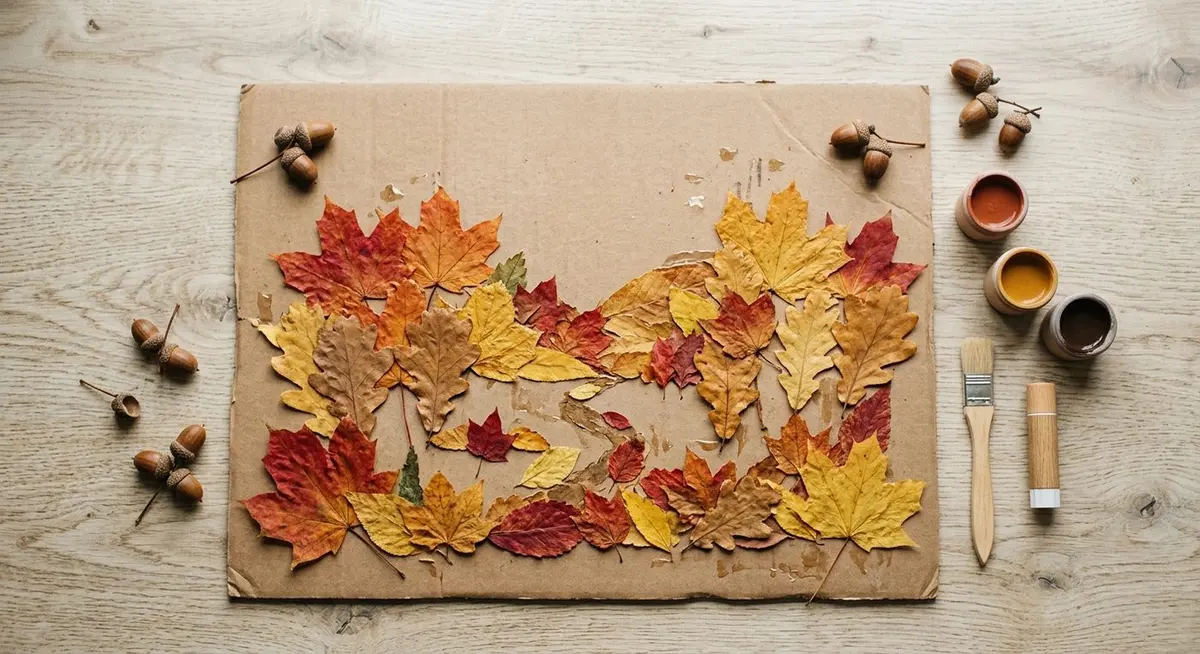
Leaf collage on cardboard
Give your child a large piece of cardboard, a pot of glue and the leaves you collected. Let them arrange and rearrange before anything is stuck down, then glue the final arrangement. Cardboard is better than paper here because it does not buckle under the glue and it survives being carried around the house for a week.
Finger painting an autumn landscape
Finger painting is the classic first art activity and it needs almost nothing: paint, paper, and an old shirt. Autumn gives it a theme, so suggest a landscape with pumpkins, trees and a big orange sky. For the youngest children, skip the theme entirely and just let them cover the paper. The point is the sensation, not the picture.
Painted pumpkins: a real or craft pumpkin plus washable paint and a brush. Faces, stripes, dots, or one enormous smear of orange. No carving knife involved, which makes it safe for the smallest children.
Corn cob rolling: roll a dried corn cob through paint and then across paper to make a printed pattern. It is a genuinely different mark from a brush, and toddlers find the rolling motion satisfying.
Leaf rubbings: put a leaf under a sheet of paper and rub over it with the side of a crayon. The vein pattern appears like magic, and it works with even the most impatient child.
Autumn crown: a strip of cardstock sized to the child’s head, stapled into a ring, then covered in leaves and glue. Ten minutes, and they will wear it all afternoon.
Let them arrange the leaves first and glue second. Rearranging is where most of the thinking happens.
Hang it up. A toddler who sees their own work on the wall will make more of it. A length of string and a few wooden pegs above a doorway turns the kitchen into a gallery, and it costs nothing.
Fine Motor and Learning
These activities look like play and are quietly doing the work of school readiness. Threading, pinching, sorting and counting all build the small hand muscles and the concentration that a child will need for holding a pencil. Autumn gives them a natural theme, which makes them far more appealing than a worksheet.
Five activities and the skill each one builds
Activity
Skill it builds
What you need
Macaroni leaf necklaces
Threading, colour naming, counting
Yarn, tube pasta, paint in autumn colours
Paper plate apple lacing
Hand-eye coordination, patience
Paper plate, yarn, sticky tape, a hole punch
Pumpkin seed name board
Pincer grip, letter recognition
Cardboard, glue, dried and dyed pumpkin seeds
Apple dot-to-dot
Counting, number order
Cardboard, a marker, paint or coloured paper
Candy corn towers
Balance, planning, fine grip
Soft candy and toothpicks
How to run them
Threading: paint tube pasta in reds, oranges and yellows, let it dry, then thread it onto yarn with a taped end. Name the colours as they go on, and count them out loud.
Lacing: punch holes around the rim of a paper plate, tape one end of the yarn to the back, and let your child sew in and out. It is the same motion as shoelaces, years early.
Name boards: write the child’s name in glue on cardboard and let them press dried pumpkin seeds onto the lines. Save the seeds from a pumpkin you carve, wash them, and dry them on a tray.
Dot-to-dot: draw numbered circles in a loose apple shape and have your child join them in order. It teaches number order without feeling like a lesson.
Towers: soft candy and toothpicks make surprisingly sturdy structures. Let them build as high as it will go, then let them eat one piece at the end.
Keep the pieces big. Anything that fits through a toilet roll tube is a choking risk for a child under three. For the youngest children, use large pasta shapes, chunky beads and thick yarn, and stay within arm’s reach the whole time.
In the Kitchen
Cooking with a toddler is slower, messier and worth it. It teaches measuring, sequencing and patience, and it ends with something the whole family eats. The trick is to pick a recipe with a forgiving margin for error and to give your child one real job rather than a decorative one.
What to make together
Leaf and autumn shaped cookies: any roll-and-cut sugar cookie dough, cut into leaf shapes and decorated with a smear of icing. The decorating is the part a toddler can genuinely own.
Cinnamon playdough: flour, salt, water, oil and a heavy spoonful of cinnamon. Warm it on the hob until it comes together, cool it, then let them knead and shape it. It smells like the whole season.
Pumpkin bread: a one-bowl quick bread is ideal because there is no mixer and no waiting for a rise. A toddler can pour, dump and stir, and the loaf is forgiving of a heavy hand.
Slow-cooked apple butter: the child helps peel and drop the apples in, then the pot does the rest for hours. It is a good lesson in patience with a very good smell attached.
Making it work at the counter
Get them up to height. A sturdy stool at the counter beats a chair at the table, because they can see what you are doing and reach the bowl.
Pre-measure into small bowls. Then the child’s job is to tip each one in. It feels like real work and it keeps the measuring accurate.
Accept the spill. Flour on the floor is part of the deal. Put a mat down and sweep afterwards.
Give them the last step. Sprinkling, decorating, or pressing the final piece in place. That is the step they will remember.
Not every autumn activity happens at the kitchen table. Some of the best ones are a short drive away, and a few of them are the kind of evening a child talks about for weeks.
Pumpkin patches, farms and vineyards
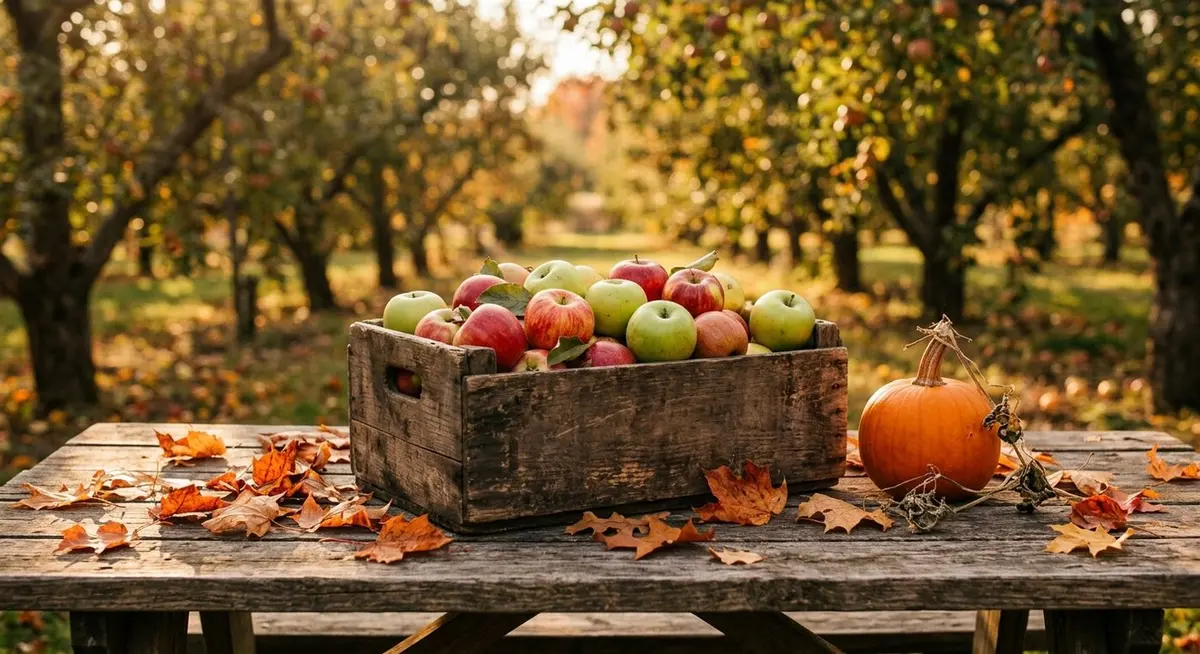
A pumpkin patch is a full afternoon of activity in one trip: a wagon ride, animals, a maze, and a pumpkin to choose and carry. Many farms add games, food and music in October. Go early in the day if you can, because a tired toddler and a busy car park is a bad combination.
A backyard movie night
Autumn is still warm enough in most places for one last outdoor film. A sheet on a wall, a projector, blankets, pillows and a bowl of popcorn. Pick something gentle and short, and expect the children to spend more time under the blankets than watching the screen. That is fine. The point is the event.
Pumpkin picking: let the child choose their own, even if it is small and lopsided. Carrying it back to the car is a genuine achievement.
Pumpkin gutting: scooping the seeds out is a superb sensory activity, and the seeds become the name-board craft above. Wash hands well afterwards.
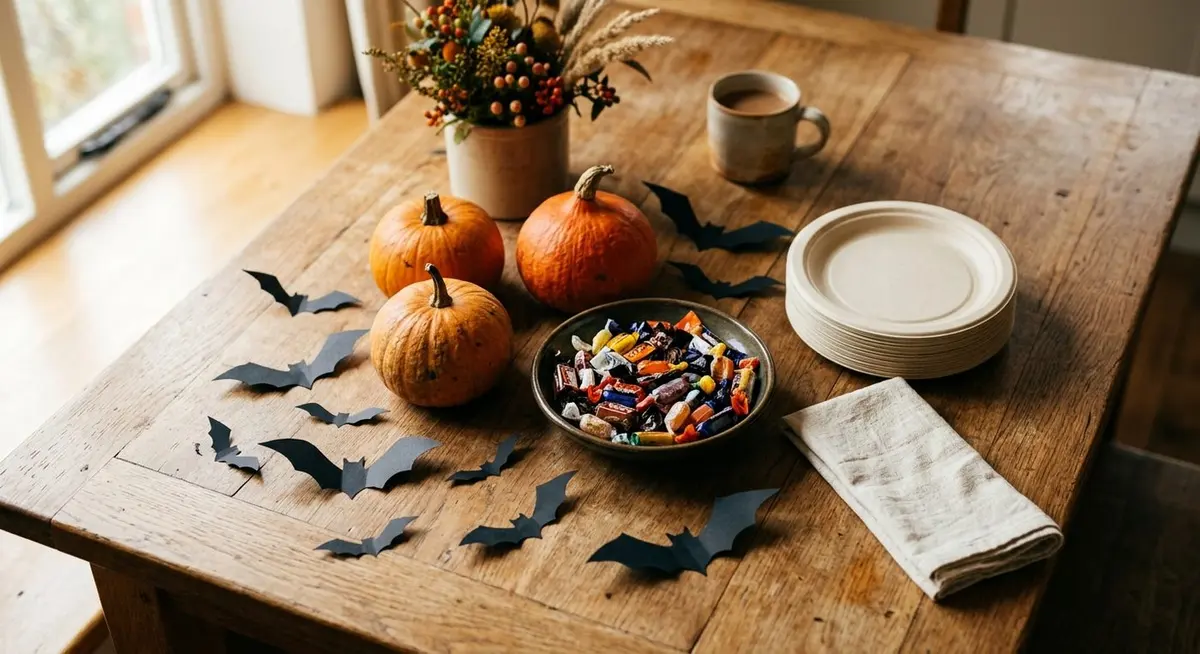
Halloween at home: if you want more ideas for the end of October, there is a whole set of Halloween activities for kids that work indoors on a wet afternoon.
A photo walk: give the child a camera, even an old phone, and let them photograph what they find. Print four of the pictures and make a small album together.
One outing a week is plenty. Toddlers do not need a full calendar. A single trip they can anticipate and remember beats four they are too tired to enjoy.
Setting Up Without the Stress
Almost every activity that goes wrong went wrong in the two minutes before it started. The child was already at the table when the paint was still in the cupboard, or the wipes were in the other room, or the activity was chosen for the parent’s mood rather than the child’s. A short set-up routine fixes most of it.
Everything is out of its packaging and within arm’s reach before the child sits down.
The floor under the work area is covered with a washable mat or an old sheet.
An old shirt or an apron is already on the child, not waiting on a hook.
Wipes or a damp cloth are on the table before the paint comes out.
Anything sharp, hot, or small enough to swallow is out of the room.
The activity is matched to today’s mood, not to the plan you made last week.
You have decided in advance where the finished thing will dry.
You have set a timer for the length you actually have, not the length you wish you had.
The five-minute rule
If an activity is not working within five minutes, stop it. A toddler who is frustrated at minute five will be in tears at minute ten, and the memory they keep is of the tears rather than the leaves. Put it away, do something else, and try again in a fortnight. Nothing here is worth a meltdown.
Keep a grab box. One lidded tub with the basics: washable paint, glue sticks, a roll of paper, crayons, a mat and a pack of wipes. When the moment is right, the box comes out and you are set up in ninety seconds. This single habit is what turns autumn activities from a plan into a habit.
Clean-Up That Actually Works
Clean-up is the part nobody puts in the photographs, and it is the part that decides whether you do the activity again next week. The goal is not a spotless room. It is getting from finished to tidy in under five minutes, so that the whole thing still feels worth doing.
What each mess level actually costs you
Mess level
What to expect
How to contain it
Low
Crumbs, a few leaves, nothing sticky
A quick sweep and a wipe of the table
Medium
Paint on hands, glue on the table, glitter in the cracks
Cover the table, dress the child in an old shirt, wipe hands before they leave the chair
High
Oats on the floor, paint in hair, water everywhere
Washable mat underneath, a bath or a full change planned for afterwards, and a bin with a lid
The habits that save the most time
Clean as you go, with the child. A toddler who helps sweep is occupied for the length of the sweep. Hand them a dustpan and the tidy-up becomes the last activity.
Keep a bin with a lid in the room. Most of the mess is packaging, offcuts and used wipes, and all of it can go straight in.
Store the sensory base in a zip bag. Oats and rice keep for months if they are sealed, and reusing them means the next bin takes two minutes to set up.
Do the bath straight after. If the activity was high-mess, plan the bath as part of it rather than as a separate battle later.
The best five pounds you will spend. A cheap plastic shower curtain under the table catches paint, oats, glue and water, and it folds away in seconds. It has saved more carpets than any other single item in this guide.
Safety, Honestly
None of this is dangerous, but a few things are worth being deliberate about, especially with children under three who still put everything in their mouths.
Every loose part is bigger than a toilet roll tube, or the child is past mouthing.
Acorns, seeds and dried corn are kept away from children under three.
Raw pumpkin and squash are washed before a child handles them.
Paint, glue and playdough are labelled non-toxic and age-appropriate.
Scissors are child-safe and used with an adult sitting alongside.
An adult stays within arm’s reach near water, roads and open fires.
Anything foraged is checked for mould, animal droppings and insects.
The child is dressed for the actual temperature, not the forecast.
Foraged food is not food. Berries, mushrooms and seeds found on a walk are for looking at and collecting, never for eating. Wash hands after handling anything from outside, and keep the collecting bag away from the kitchen counter.
Building Your Autumn Plan
You do not need thirty activities. You need a rhythm that survives a normal week. The one that works best is three activities a week: one outdoors, one messy, and one quiet. That mix gives a toddler variety without exhausting the adult, and it leaves room for the days when nothing goes to plan.
A four-week rhythm you can actually keep
Week
Outdoor
Messy
Quiet
1
Nature scavenger hunt
Finger-painted landscape
Leaf rubbings
2
Leaf pile and raking
Sensory bin
Macaroni necklaces
3
Pumpkin patch trip
Painted pumpkins
Name board
4
Photo walk
Cookie decorating
Story basket
Making it stick
Write it on the fridge. A plan you can see is a plan you will do. The printable below has a four-week grid with space to fill in your own choices.
Keep a running list. If you are building a longer list of things to do before the season ends, a fall bucket list is a good place to start, and a printable fall scavenger hunt covers the outdoor half of it.
Plan the food too. The weeks when dinner is already sorted are the weeks you have the energy for a craft. A fall casserole or a slow-cooker chicken takes the pressure off the evening.
Let some weeks be empty. A blank week is not a failure. It is the reason the other three work.
Do the same activity twice. Toddlers learn by repetition, and the second time is usually better than the first because they know what is coming. You do not need thirty new ideas. You need six good ones, done five times each.
Questions Parents Ask
These are the questions that come up most often, usually at nine in the evening after a long day. Most of them come down to the same answer: match the activity to the child, and let the mess happen.
What age can a toddler start doing these activities?
Around twelve months, with the simplest ones. At that age the activity is really sensory play: a shallow bin of oats, a pile of leaves, a bowl of water and a scoop. The craft and threading activities are better from about two, and the building and baking ones from three. Watch what your own child can do rather than the number on the box.
How do I stop the mess getting out of control?
Contain it rather than prevent it. A cheap plastic shower curtain or an old sheet under the work area, an old shirt on the child, and wipes on the table before anything starts. For sensory bins, keep the base shallow and put the whole thing on a tray with a lip. Then accept that some oats will reach the floor, and sweep at the end with the child helping.
My child will not sit still for a craft. What should I do?
Stop trying to make craft work and go outside instead. A child who cannot sit is telling you they need to move, and outdoor activities like a scavenger hunt, a leaf pile or a walk give them the movement and still count as the activity. Come back to the table in a few months.
Are acorns and pinecones safe for a one-year-old?
Not unsupervised. Acorns, seeds and dried corn are all choking hazards for children under three, and acorns are also bitter and mildly toxic if eaten. For a one-year-old, use large leaves, big pinecones and chunky plastic scoops, and keep the small items for the older children or for a bin the little one cannot reach.
What if I do not have any craft supplies at home?
You have more than you think. Cardboard boxes, paper plates, yarn, dried pasta, flour, salt and food colouring cover most of the activities here. The only things genuinely worth buying are washable paint, a glue stick and a roll of paper, and those three will last you the whole season.
How long should an activity last?
Fifteen to forty minutes is realistic, and the younger the child the shorter it will be. If it is not working after five minutes, stop and try something else. A short activity that ends happily is worth far more than a long one that ends in tears, because the happy version is the one you will both want to repeat.
Can I do these activities with more than one child?
Yes, and it often works better because they copy each other. Set up one station rather than several, give each child their own materials where it matters, and expect the older one to finish first. Have a second, quieter activity ready for whoever is done, so nobody is left waiting with nothing to do.
What do I do with all the things we make?
Hang the best pieces up, photograph the rest, and let some of it go. A length of string with wooden pegs above a doorway makes a rotating gallery, and a photo album of the season is easier to keep than a cupboard full of crumbling leaf collages. The doing is the point, not the keeping.
Is it worth doing these if my child will not remember them?
Yes. A two-year-old will not remember the specific afternoon, but they are building hand control, language, patience and the expectation that the world is interesting. Those are the things that last. You are also building the habit of doing things together, which is the part that pays off for years.
What is the single best autumn activity to start with?
A nature scavenger hunt. It needs no preparation, no supplies and no clean-up, it works for almost any age, and it gets everyone outside. Take a bag, walk to the nearest trees, and collect whatever you find. Everything else in this guide can follow from what you bring home.
Free Printable: The Toddler Autumn Activity Planner
A printable companion to this guide: all thirty activities at a glance with age, mess level and time, the set-up checklist, the sensory bin formula, a scavenger hunt to take outside, a four-week plan, a safety checklist and an activity log.
Elowen Thorn I cook, photograph and re-test every recipe in an ordinary home kitchen before it goes up, so what you make matches what you see. Savory Discovery is where simple weeknight cooking, seasonal ideas and the odd bit of kitchen craft sit side by side — written plainly, and worth cooking twice.