Have you ever caught a whiff of chorizo hitting hot olive oil and just lost your train of thought? That is the smell that started this whole pasta in my kitchen. I was halfway through browning the sausage when I remembered the manchego was in the back of the fridge, and I thought, “Well, why not both?” And so this spicy chorizo and manchego pasta was born on a Tuesday night, with paint still drying on the dining room wall, and it’s been on our table every other week since.
I grew up in a house where Spanish food showed up in unexpected places. My grandmother, who could make a meal out of almost nothing, kept a wedge of manchego in the cheese drawer at all times. “For emergencies,” she would say. A bowl of plain pasta with nothing on it was, apparently, an emergency. I think about her every time I grate that salty, nutty cheese over a plate of something simple.
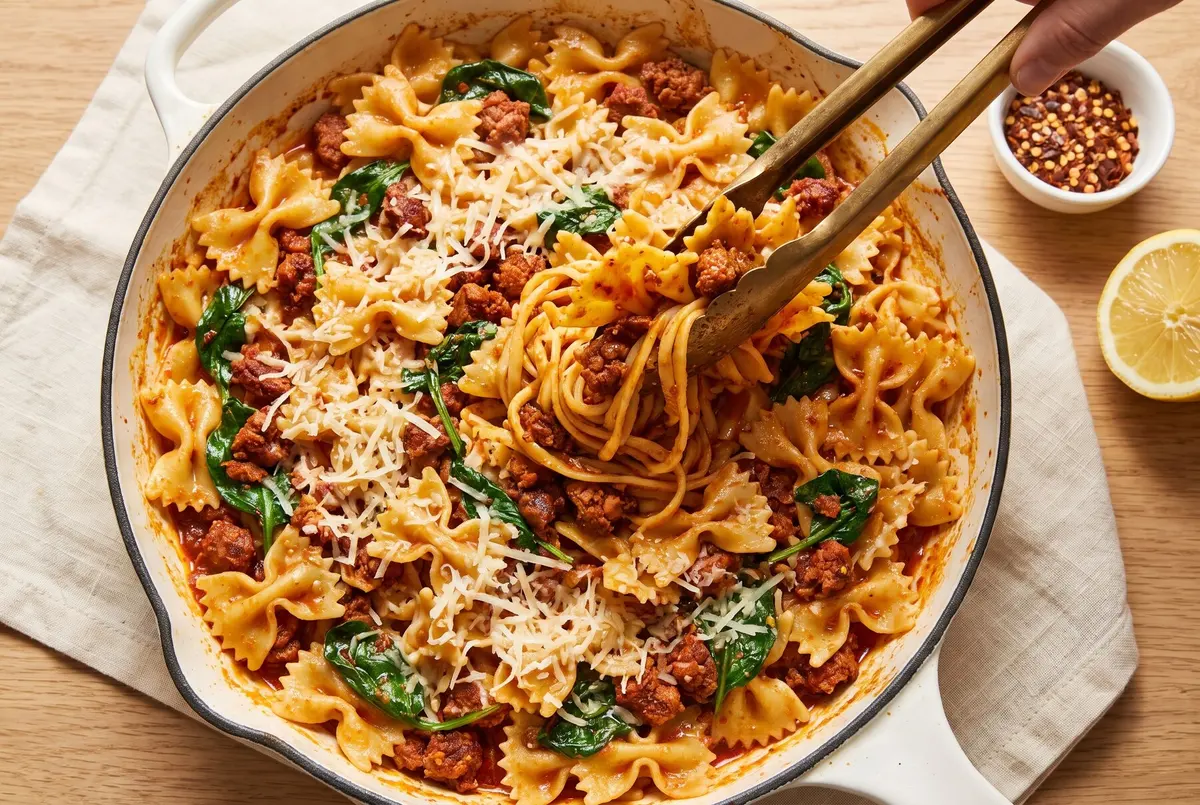
This recipe is for those nights when you want dinner on the table fast, but you don’t want it to taste fast. It’s 30 minutes, start to finish, and it uses one pan (plus a pot for the pasta). The chorizo does most of the work — it releases this gorgeous red-orange oil that basically becomes the sauce. The spinach wilts in, the manchego melts in, and the red pepper flakes at the end wake everything up.
Let me walk you through it the way I made it the first time, with all the little tips I wish someone had told me.
Spicy Chorizo and Manchego Pasta
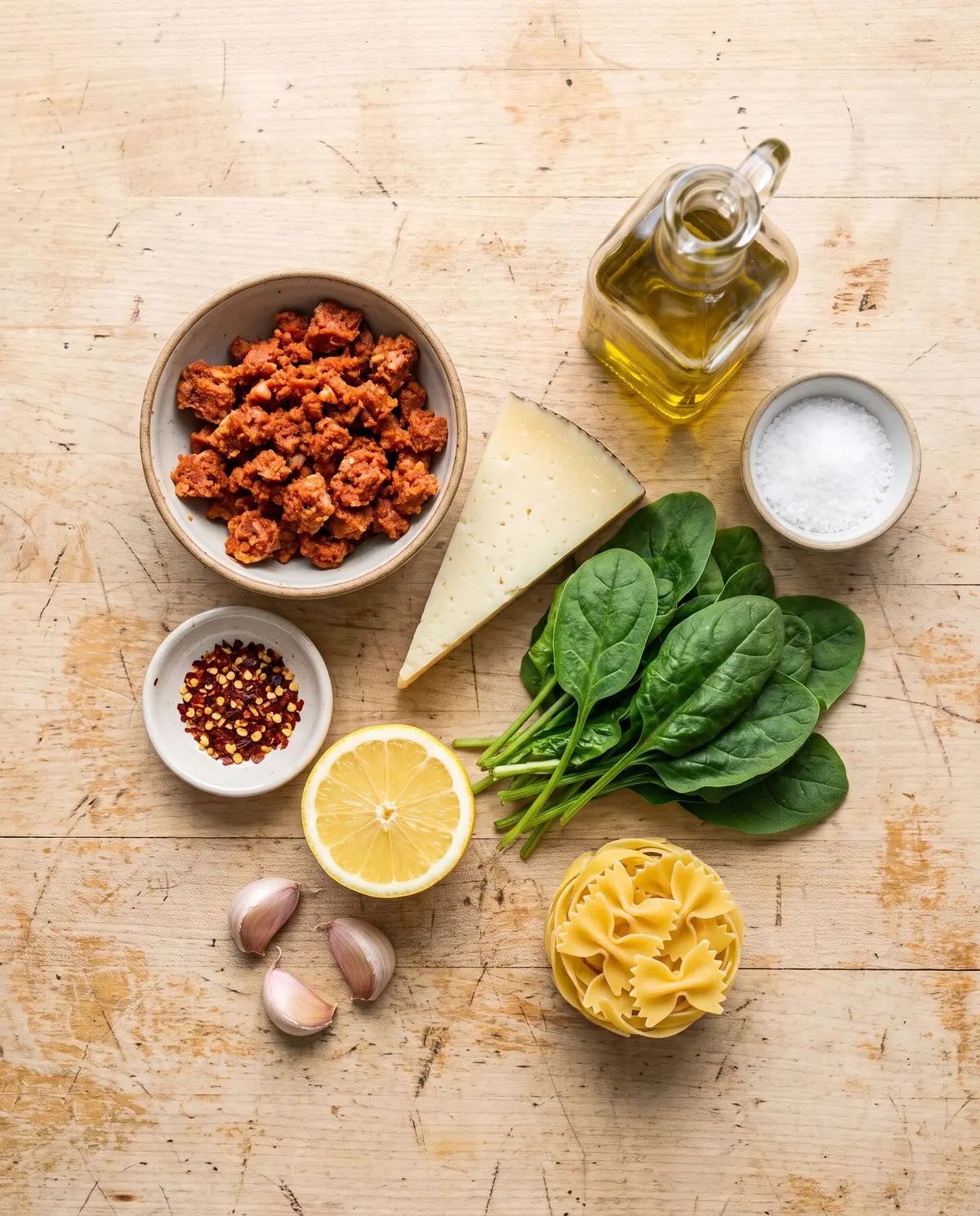
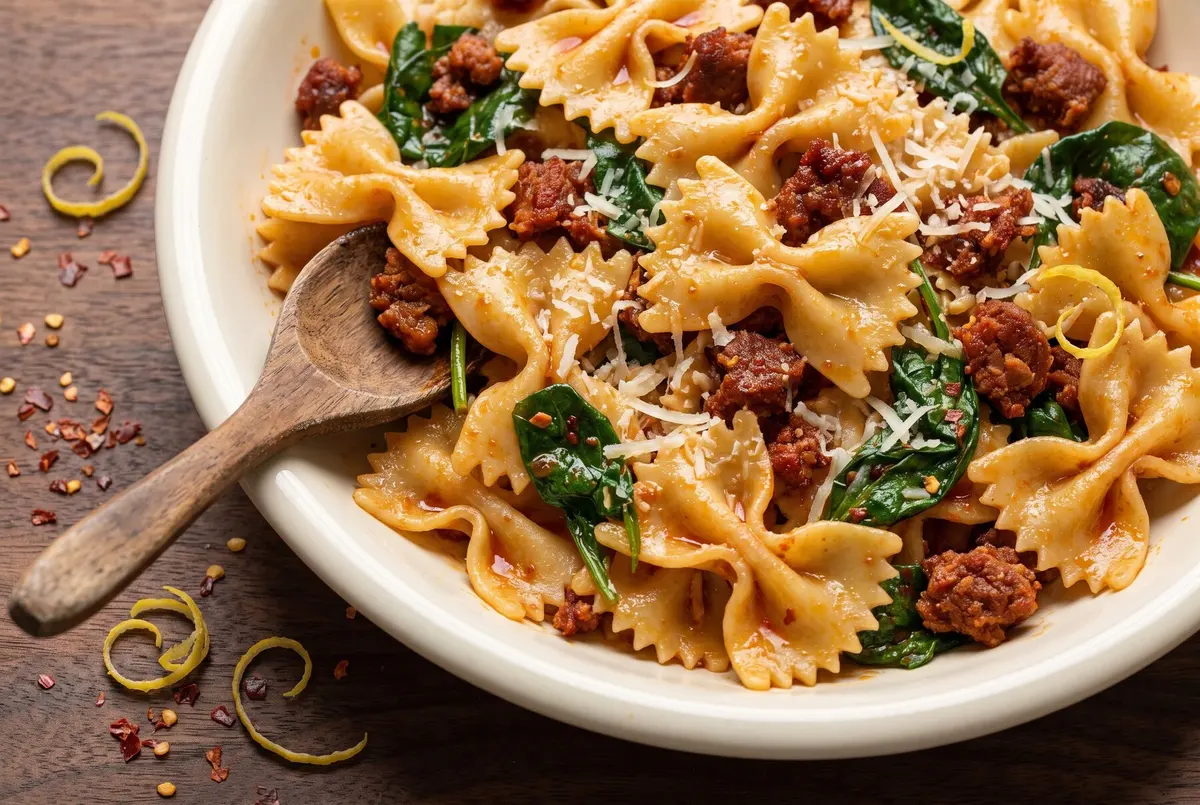
This is one of those pastas that depends almost entirely on the chorizo. Buy the good stuff — fresh Spanish chorizo from a butcher counter, not the pre-cooked cured kind you slice for a charcuterie board. The fresh kind crumbles, renders its paprika-tinted fat, and turns the whole skillet into something you want to eat with a spoon before the pasta even shows up.
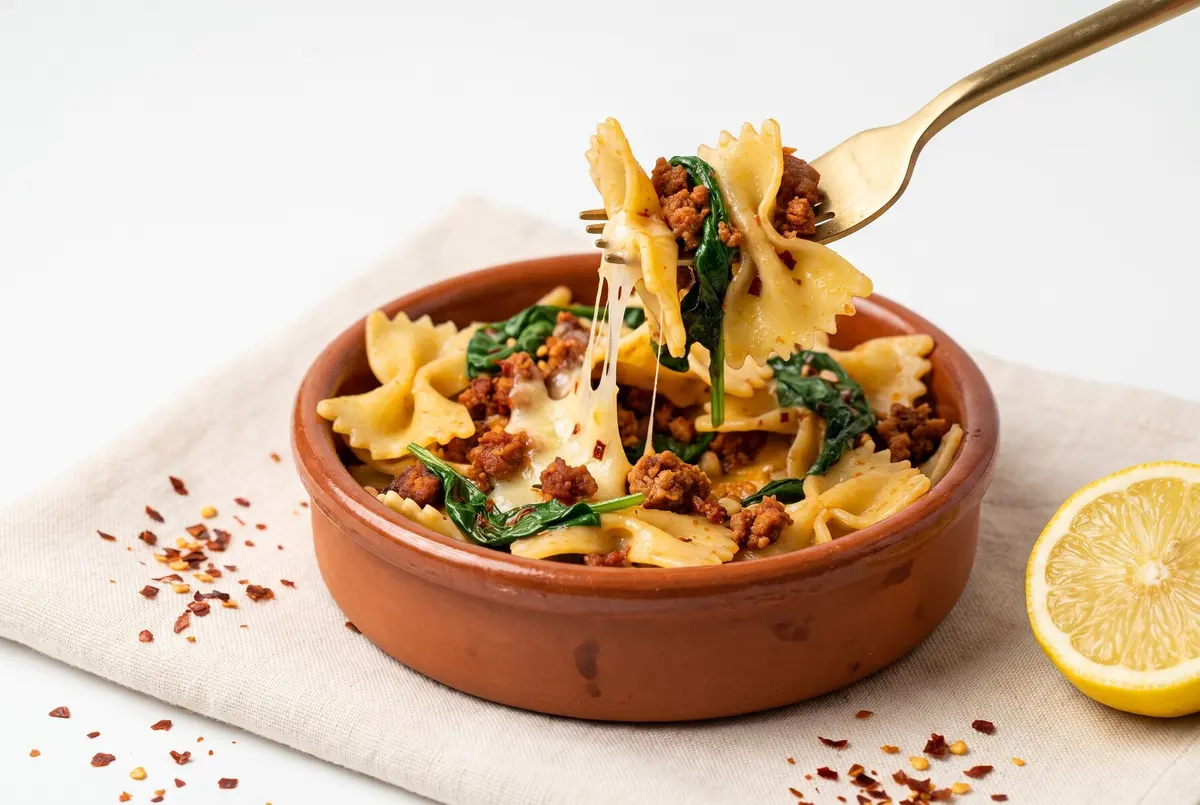
The manchego is the quieter partner. It melts into the pasta water and olive oil and gives the whole dish this creamy, almost-rustic-cheese-sauce vibe without any actual cream. If you can’t find manchego, aged manchego works beautifully. Don’t substitute Parmesan — the flavor is too sharp and the salt balance is different.
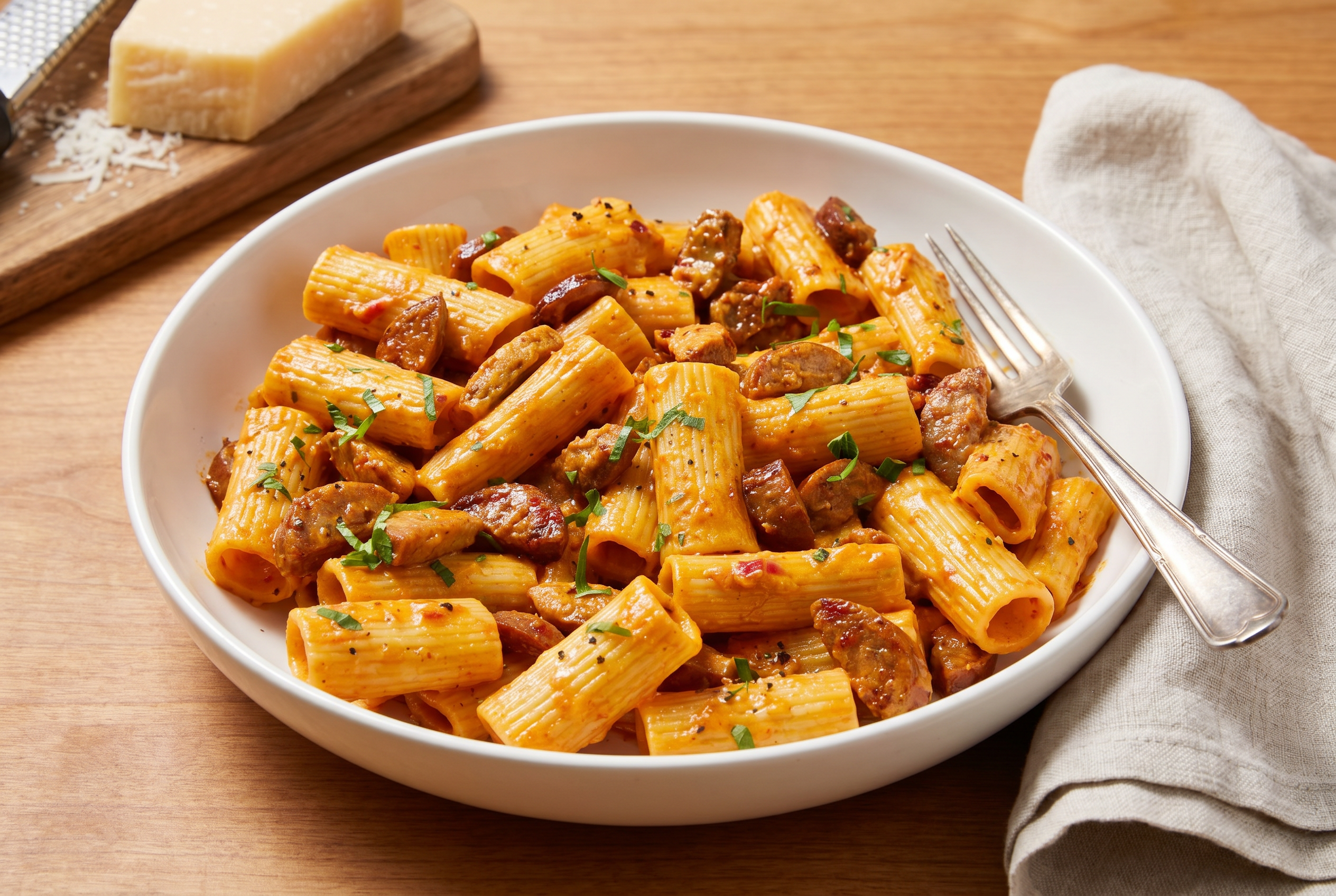
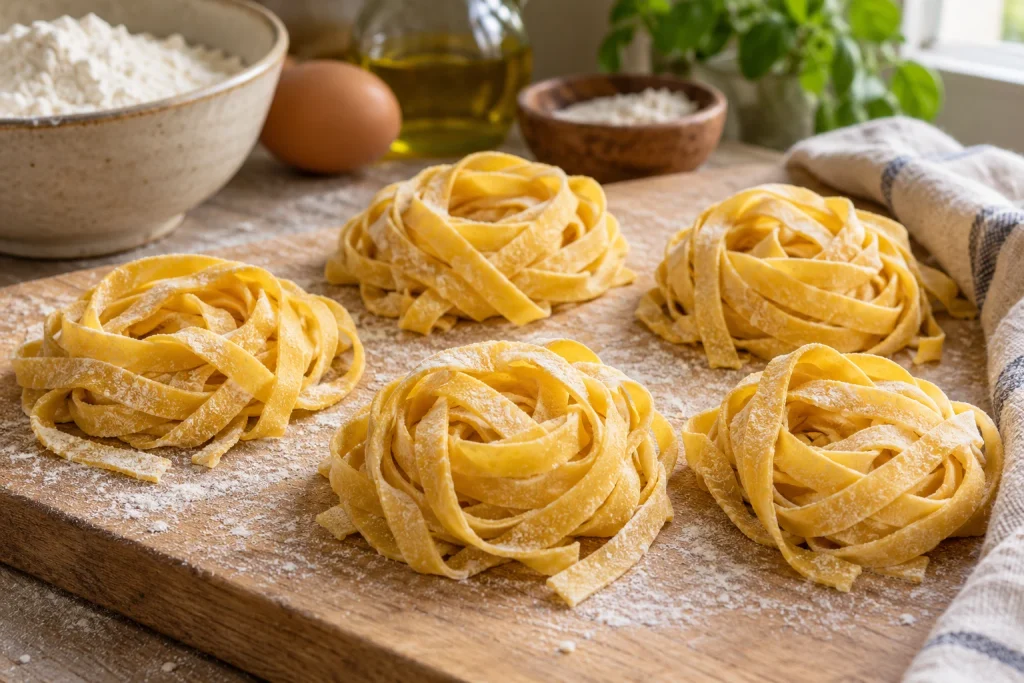
One more thing before we start: this recipe is forgiving. I have made it with farfalle, penne, rigatoni, and once with shells because that’s what was in the pantry. The shape matters less than the size — you want a noodle that holds the chorizo oil in its folds. Long pasta works too; fettuccine or tagliatelle will grab onto the crumbles beautifully.
From Pot to Plate: My Step-by-Step Method
Step 1: Get the chorizo going first. Remove the fresh chorizo from its casing and crumble it into a wide skillet over medium heat. Don’t add any oil yet — the chorizo will release plenty of its own as it cooks. Let it brown without stirring too much; you want some crispy edges, not a uniform crumble. This takes about 8 to 10 minutes. Once it’s deeply browned, use a slotted spoon to transfer the chorizo to a plate and leave that beautiful red oil in the pan.
Step 2: Boil the pasta in well-salted water. Bring a large pot of water to a rolling boil and salt it generously — it should taste like the sea. Cook your pasta one minute shy of the package directions, because it’ll finish cooking in the chorizo oil. Before draining, scoop out about half a cup of that starchy pasta water. That cloudy water is the secret to a glossy, clingy sauce. Drain the pasta and set it aside.
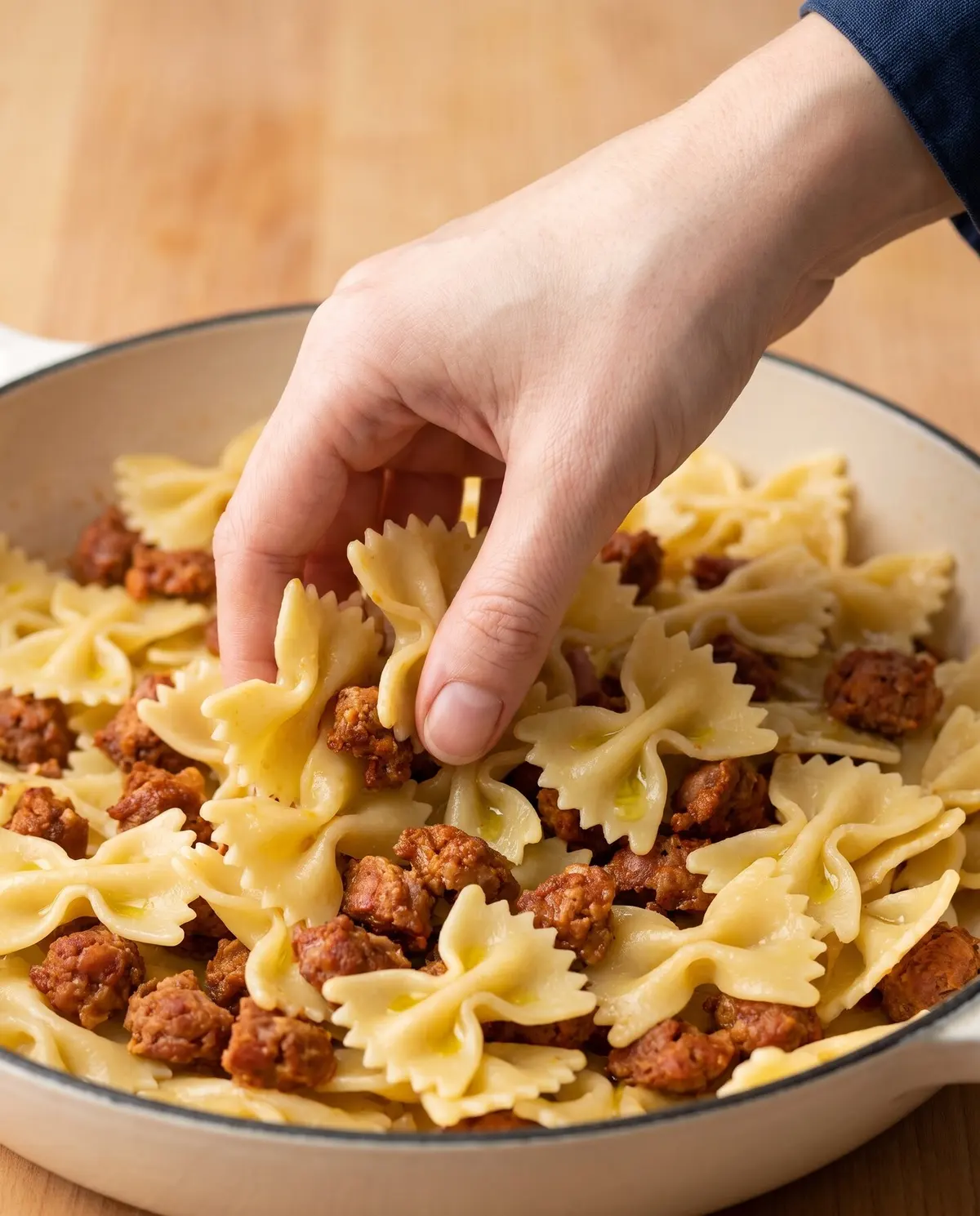
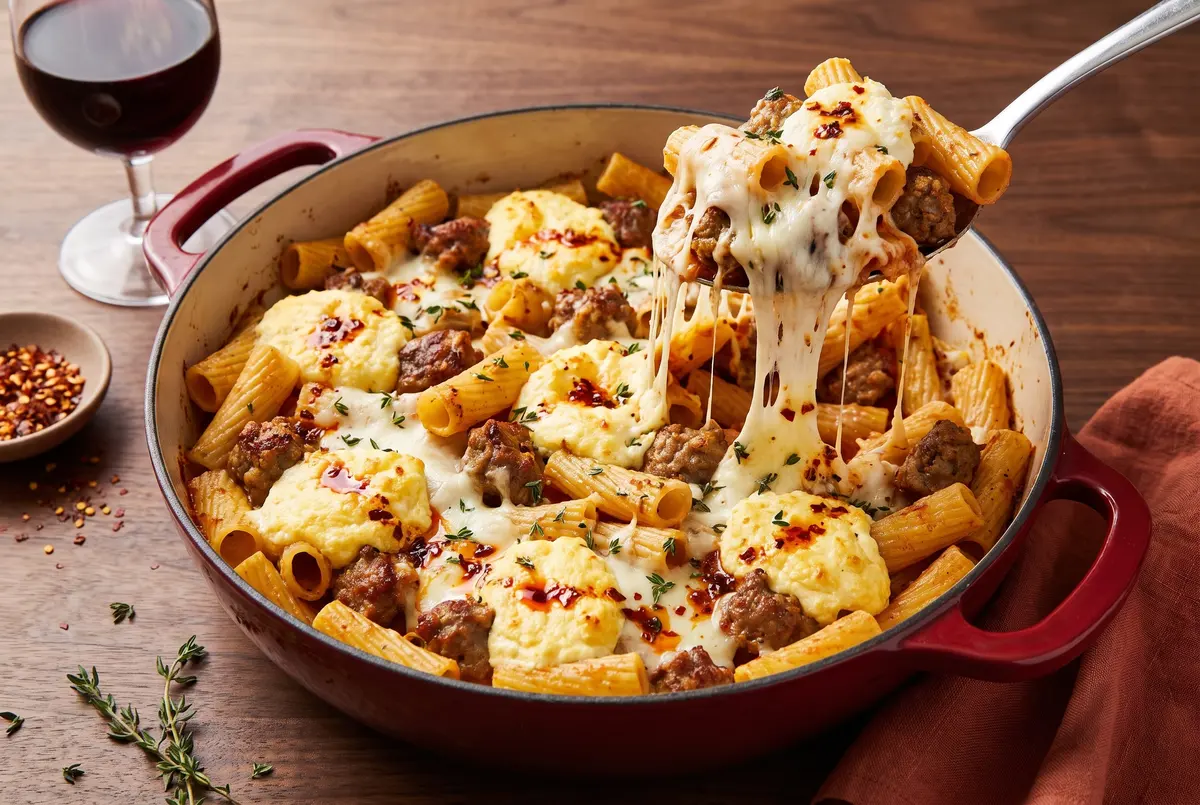
Step 3: Build the sauce in the chorizo pan. Add the drained pasta back to the chorizo oil in the skillet. Pour in the reserved pasta water and toss gently over low heat. The starch in the water will emulsify with the chorizo oil and turn into this silky, paprika-tinted sauce. Add the grated manchego and stir until it just melts. Don’t walk away — manchego can clump if the heat is too high.
Step 4: Wilt the spinach in a separate bowl. Here’s my grandmother’s trick: toss fresh baby spinach with a tablespoon of good olive oil and a pinch of salt and pepper in your serving bowl first. When the hot pasta hits that oiled spinach, the heat from the noodles wilts it just enough without making it sad and soggy. You keep that bright green color and a tiny bit of texture.
Step 5: Combine and finish. Tip the hot pasta and chorizo over the spinach and toss everything together gently. The residual heat will finish wilting the spinach. Taste for salt — manchego is salty, so you may not need any. Finish with another shower of grated manchego, a pinch of red pepper flakes, and a tiny squeeze of lemon if you want to cut the richness.
Creative Twists to Try Next Time
Add a tin of butter beans in the last two minutes of cooking for a heartier, almost-stew-like version. The creamy beans play so nicely with the smoky chorizo.
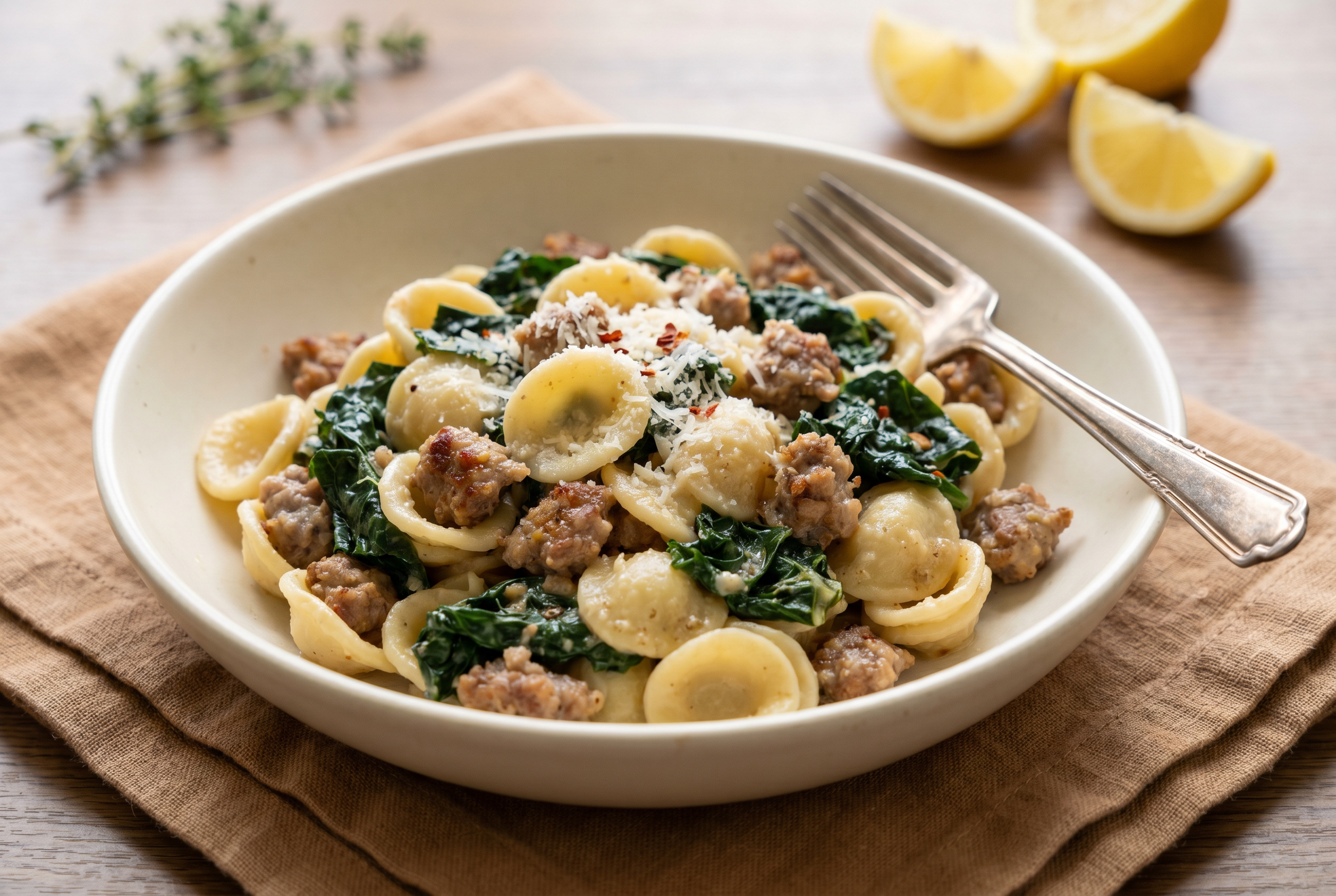
Swap spinach for kale if you have it on hand. Lacinato kale holds its shape better and adds a slightly bitter note that cuts the richness. Just massage the raw leaves with olive oil first.
Stir in a spoonful of tomato paste with the chorizo oil for a redder, deeper sauce. A pinch of smoked paprika on top takes it into romesco territory.
Top with a runny egg if you want this to be a brunch dish. The yolk blends with the chorizo oil and makes everything feel luxurious.
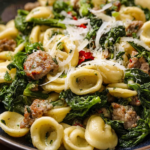
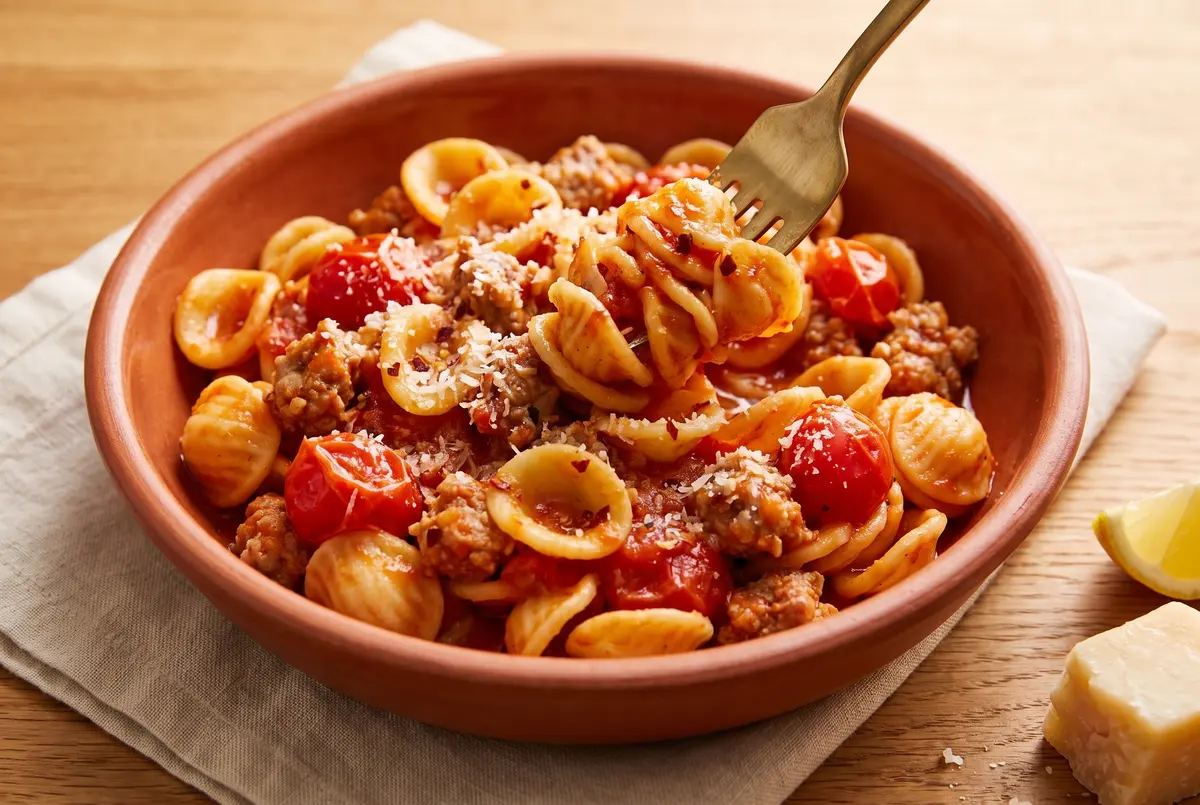
Use orecchiette instead of penne. Those little ears catch crumbled chorizo in their cups and it’s honestly the most satisfying bite.
How Do I Serve This Without Overthinking It?
What should I serve alongside it? Crusty bread, no question. Something with a chewy crust that you can drag through the leftover chorizo oil on your plate. A simple green salad with a lemony vinaigrette cuts the richness beautifully. If you want to round it out, a plate of blistered shishito peppers or some marinated olives would feel very Spanish in the best way.
What wine pairs with this? Reach for a young, fruit-forward red. A Garnacha from Spain is the obvious answer, but a California Zinfandel or a chilled Beaujolais would also be lovely. If you prefer white, an Albariño or a dry rosé handles the paprika beautifully. Honestly though, this is one of those pastas where the leftovers are better than the first bowl — the flavors deepen overnight and the manchego firms up just enough to coat each noodle.
Why This Pasta Earned a Permanent Spot in My Rotation
I love this recipe because it doesn’t ask me to be a chef. It asks me to brown some sausage, boil some pasta, and let the ingredients do the work. The chorizo carries so much flavor that I don’t need a long list of aromatics or a complicated sauce. It’s the kind of meal that feels humble but tastes like you thought about it, and that’s the best kind of weeknight cooking in my book.
It also scales beautifully. I have made this for two on a random weeknight and for ten people on a Saturday with a big salad. The only adjustment is to use a wider skillet so the chorizo can brown properly without steaming. Beyond that, the recipe holds its own at any size.
Storage and Reheating Without the Sadness
How long does it keep? Up to three days in the fridge in an airtight container. The pasta will absorb the sauce as it sits, so you may want to loosen it with a splash of hot pasta water or a drizzle of olive oil when you reheat.
Can I freeze it? You can, but the texture of the manchego changes a bit when thawed. If you’re going to freeze it, undercook the pasta by a full two minutes and skip the final cheese shower — add that fresh when you reheat. Thaw overnight in the fridge and warm gently in a skillet with a splash of water.
Can I make it ahead? Absolutely. Cook everything through but stop before the final assembly. Store the chorizo oil, the cooked pasta, and the spinach separately in the fridge. When you’re ready to eat, rewarm the chorizo oil in a skillet, add the pasta and a splash of pasta water, then toss with the spinach. Fresh-grated manchego on top and you’re done in five minutes.
Troubleshooting When Things Go Sideways
My sauce looks dry and clumpy. You probably didn’t reserve enough pasta water, or the heat was too high when you added the cheese. Add a quarter cup of warm water at a time, tossing gently, until the sauce loosens up and coats the noodles. Lower the heat and let it sit for a minute so the cheese can melt properly.
The chorizo didn’t get crispy, it just kind of steamed. Your skillet wasn’t hot enough or you crowded the pan. The chorizo needs direct contact with a hot surface to brown. Use a wider skillet, work in two batches if you have to, and resist the urge to stir it constantly. Let it sit for 3 to 4 minutes between stirs.
It tastes flat even after I added salt. A tiny squeeze of lemon juice almost always fixes this. The acid brightens everything without making it taste like lemon. If you don’t have lemon, a splash of sherry vinegar works too.
Your Quick Questions, Answered
Can I use dried chorizo instead of fresh? You can, but the result will be quite different. Cured Spanish chorizo (the kind you slice for a cheese board) is much saltier and firmer. If that’s all you can find, slice it thin and crisp it in a little olive oil before adding the pasta. You’ll want to reduce the added salt in the recipe.
Is there a good vegetarian swap for the chorizo? A mixture of smoked paprika, crumbled firm tofu, and a pinch of cumin can mimic the smoky-spicy thing chorizo does, but it won’t be quite the same. If you’re open to it, a couple of sliced Spanish smoked paprika sausages like Beyond or Field Roast chorizo-style links work surprisingly well.
Can I make this gluten-free? Yes — use your favorite gluten-free short pasta. Just watch the cooking time because GF pasta can go from al dente to mushy fast. I’d also recommend adding the manchego a touch earlier so it has time to melt into the sauce before the pasta gets too soft.
How spicy is this really? On a scale of 1 to 5, with 5 being “you’ll need a glass of milk,” this is about a 3. Spanish chorizo has a warm, smoky heat rather than a sharp chili heat. The red pepper flakes at the end are optional, so you can dial it down to a 1 by skipping them, or up to a 4 by adding more.
What if I don’t have manchego? An aged manchego is the classic choice, but Pecorino Romano or aged Asiago will both work in a pinch. Just taste before adding extra salt because these cheeses vary in salinity. You won’t get the exact flavor, but the dish will still be very good.
Can I use baby kale instead of spinach? Yes, but baby kale is heartier and will need a few extra minutes to wilt. Massage it with the olive oil and salt first to break down the fibers, then let the hot pasta do the rest.
A Few Last Thoughts Before You Cook
I hope this pasta becomes one of those recipes you make without thinking. The kind where you know the chorizo is browned when the kitchen smells like a tapas bar and the manchego is melted when the sauce turns glossy. It’s the recipe I lean on when I want something honest and satisfying without a lot of fuss, and I think you’ll find the same comfort in it.
If you make it, I’d love to know how it turned out for you. Did you stick with the spinach or swap in something green and leafy from your own fridge? Did the chorizo oil splatter all over your stovetop like mine always does? Tell me everything. And if you have a family member who insists they don’t like “spicy food” — this is the recipe that converts them. The heat is gentle, the cheese is soothing, and the leftovers somehow taste even better the next day.
You can find more quick weeknight pastas like this one over on the pasta section of the site. Thanks so much for being here, and happy cooking.