By Elowen Thorn · Fall Dinners · Makes one 9 x 13 casserole
Twenty casseroles is a list. This is the thing the list is missing: the four-part structure underneath every good one, the ratios that make it work, and the reason yours came out watery last week. Learn the formula once and a cold Tuesday stops being a question about what to cook.
What you actually want on a cold evening is not a list of twenty dinners. It is one page that tells you how to build your own, so that whatever is already in the fridge becomes dinner instead of a decision. That is what this is.
Every casserole worth making — the cheesy pasta bake, the layered ground beef one, the one with the cracker crumbs on top — is the same four-part structure with the ingredients swapped out. Once you can see the structure, twenty recipes stop being twenty recipes and become twenty examples of four moving parts. That is a much smaller thing to remember.
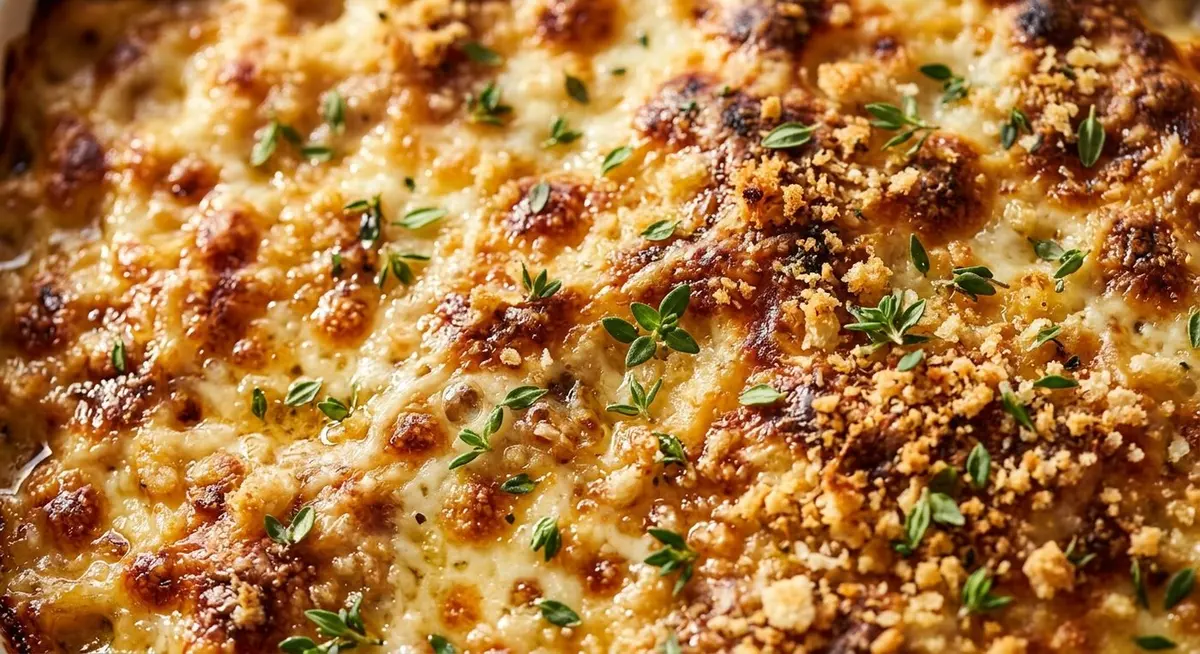
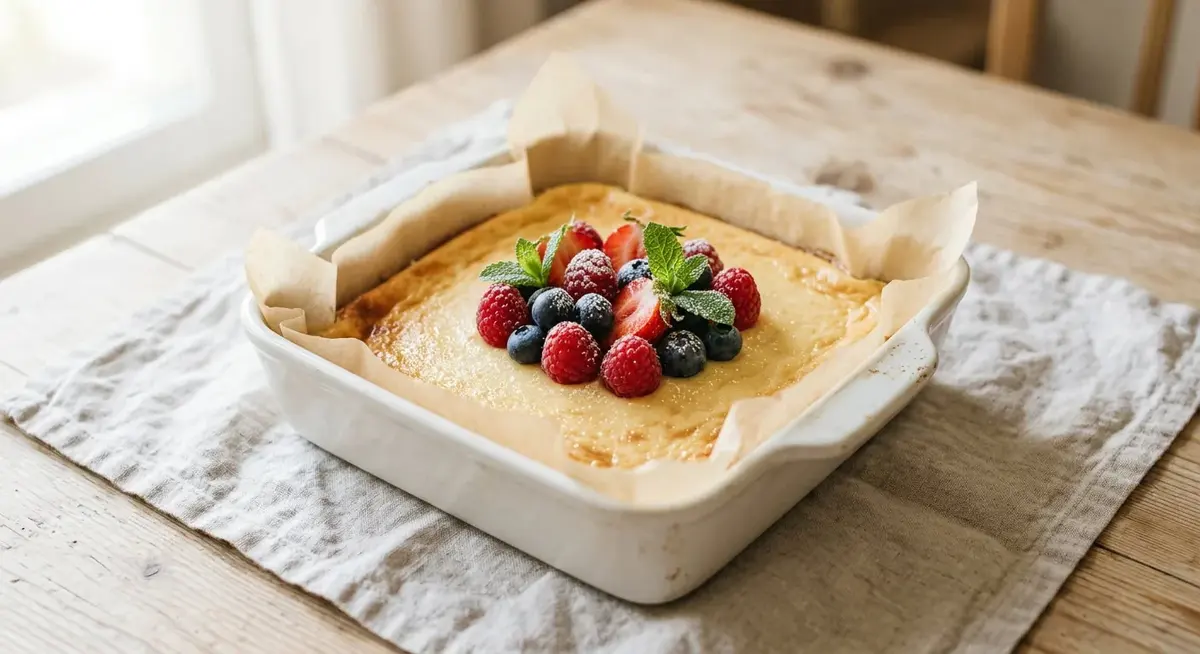
A complete golden crust across the whole surface is the sign the bake was hot enough and the sauce underneath was thick enough to hold it.
The idea in one line. Base, protein, sauce, topping. Get the proportions right and the casserole works. Get them wrong and no amount of extra cheese rescues it — you simply end up with a wet dish that has cheese on top.
The Four Parts of Every Casserole
Casseroles fail for a small number of predictable reasons, and almost all of them trace back to these four parts being out of balance. A bake goes soupy when the sauce outnumbers the base. It goes dry when the base outnumbers the sauce. It goes bland when the protein went in unseasoned and the sauce is only dairy. And it goes soft and shapeless when there is no topping to give the spoon anything to push against.
Texture, browning, and contrast against the soft middle
None at all and the dish eats like porridge
Notice which one people skip. The topping is the part that most changes how the dish reads at the table, and it is the part most often left off. A casserole with a proper crumb topping tastes finished. The same dish without one tastes like an assembly step got forgotten.
Season the protein as if it were the whole dish. Most recipes say brown the beef and stop there. Salt it, and add onion, garlic and a spice or two while it is still in the pan. The sauce is nowhere near strongly flavoured enough to season the meat after the fact, so whatever you do here is the ceiling for the entire casserole.
The Ratios That Make It Work
This is the part worth writing on the inside of a cupboard door. For one 9 x 13 inch baking dish — the size most recipes mean when they say a casserole — the proportions below hold across almost any combination of ingredients you can think of.
The working ratios for one 9 x 13 inch dish
Part
Amount
Notes
Base
4 cups cooked
Pasta measured after cooking; rice, potatoes and bread measured as they go in
Protein
1 pound
Or 3 cups shredded. Beans count, but use 3 cups and add a little more sauce
Sauce
2 1/2 cups
Thin enough to pour, thick enough to coat the back of a spoon
Topping
1 1/2 cups
Measured loose, never packed — a packed cup is nearly twice as much
Those four numbers produce a dish that fills the pan, slices cleanly, and does not swim. Swap the base for something that drinks more liquid — rice, or stale bread — and add half a cup of sauce. Swap it for something already wet, like frozen vegetables tipped straight from the bag, and take that same half cup back out.
The surface is where a casserole earns its keep: a complete browned crust with the sauce still bubbling through the crumbs underneath.
The tilt test. Before the dish goes in the oven, tilt it gently. The sauce should sit level and move as one slow mass. If it runs to the low corner straight away, the bake will be soupy — stir through a spoonful of cornstarch or a handful of grated cheese. If nothing moves at all, loosen it with a splash of milk.
What to Layer, and in What Order
Order matters more than most recipes admit. The point of layering is to put the wettest things where they can safely give up their water, and the driest things where they can absorb it. Get that right and the dish slices into clean squares instead of collapsing onto the plate.
Sauce first, always. Spread about half a cup across the bare bottom before anything else goes in. It keeps the base from welding itself to the pan and gives the whole bake something to sit in.
Then the base, half of it, spread level. Do not press it down. You want the sauce to be able to move up through the gaps.
Then the protein in an even layer. If you are using a cheese that melts into strings, half of it goes here, underneath the next layer, where it becomes a soft seam rather than a crust.
Then sauce again, then the rest of the base, then the rest of the sauce. Two thin layers beat one thick one every time, because heat reaches the middle faster and the whole dish sets evenly.
Topping last, and only at the end. Crumbs that go on at the start bake into the sauce. They should go on in the last ten minutes, so they stay crisp.
If your dish has tortillas or sliced bread in it, keep both away from the bare bottom of the pan. They stick and scorch faster than anything else here, and they are the usual reason a layered bake comes out in one piece for one cook and in fragments for another. A thin film of sauce underneath solves it completely.
Two layers, not three. It is tempting to build a tall casserole with several repeats of base, protein and sauce. Resist it. Every extra layer is another barrier between the oven’s heat and the centre of the dish, and the outside over-bakes long before the middle is warm.
The Formula, as a Recipe
Here is the whole thing written out as a single recipe you can cook tonight, using the most forgiving combination there is: pasta, ground meat and a tomato-cream sauce. Everything after it shows how to swap any of the parts without breaking the structure.
The Fall Casserole Formula
Yield
One 9 x 13 inch casserole, 6 to 8 servings
Prep
25 minutes
Cook
35 to 45 minutes
Total
About 1 hour 10 minutes
Ingredients
4 cups cooked pasta, rice or potatoes (about 12 oz dry pasta)
1 lb ground beef, Italian sausage or shredded chicken
1 onion, finely chopped
3 cloves garlic, minced
1 tsp fine salt, plus more to taste
1 tsp dried oregano
1/2 tsp cracked black pepper
2 1/2 cups tomato-cream sauce: 2 cups marinara loosened with 1/2 cup cream or whole milk
1 1/2 cups grated mozzarella or sharp cheddar, divided
1 1/2 cups fresh breadcrumbs
3 tbsp melted butter
2 tbsp grated Parmesan
Instructions
Heat the oven to 350 F (175 C) and butter a 9 x 13 inch baking dish, or a 3 quart dish of similar size.
Brown the protein in a wide pan over medium-high heat, breaking it up as it cooks, about 6 minutes. Add the onion, garlic, salt, oregano and pepper and cook 4 minutes more, until the onion has softened. Taste it and salt again if it needs it.
Stir the sauce into the pan with the meat and bring it just to a simmer, then take it off the heat. The sauce should coat the back of a spoon and hold a line drawn through it. If it is thin, simmer it two minutes longer; if it is stiff, add a splash of milk.
Spread half a cup of the sauce across the bottom of the baking dish. Add half the base in an even layer, then all of the meat mixture, then half the grated cheese. Add the remaining base, then pour the rest of the sauce over the top and spread it level.
Tilt the dish to check the sauce: it should sit level and move as one slow mass rather than running to one corner. Cover the dish with foil and bake 25 minutes.
Meanwhile, toss the breadcrumbs with the melted butter and the Parmesan.
Uncover the dish, scatter the topping evenly over the surface, and bake a further 10 to 15 minutes, until the crumbs are golden and the sauce bubbles at the edges. The centre should read 165 F (74 C) on an instant-read thermometer.
Rest the casserole 10 minutes before serving. It slices cleanly at that point and pours out of the dish if you cut it straight away.
Notes
Salt the protein while it is still in the pan. The sauce cannot season the meat afterwards, so this is where the flavour of the finished dish is decided.
Cook the base and drain it properly before it goes in. Pasta carrying its cooking water is the most common reason a casserole comes out watery at the bottom.
Measure the topping loose. A packed cup of breadcrumbs is nearly twice a loose one, and too much topping steams itself soft.
The dish can be assembled two days ahead with the topping kept separate, or frozen unbaked for three months. Bake a frozen casserole at 325 F, covered, and add about 25 minutes.
The Sauce Is the Whole Game
Ask ten people why their last casserole disappointed them and nine will say it was dry, watery or bland. All three of those are sauce problems, which is good news, because the sauce is the easiest part of the dish to fix. You are only ever adjusting two things: how thick it is, and how strongly it is seasoned.
Sauce styles, and how each behaves in the oven
Style
How to make it
Best with
Watch out for
Cream and cheese
White sauce with 2 cups grated cheese stirred in off the heat
Pasta, potatoes, chicken
Splits if you boil it after the cheese goes in
Tomato-cream
Marinara loosened with a splash of cream
Ground beef, sausage, tortillas
Too much cream and it bakes thin and pink
Gravy
Pan drippings, flour, stock
Leftover turkey, beef, potatoes
Salts fast — taste it before you season it
Salsa and sour cream
Equal parts, stirred together cold
Chicken, beans, tortillas
Curdles above 350 F; keep the oven low
Cream of mushroom or chicken
One can plus half a can of milk
Anything, in genuine haste
Tastes of the can unless you add garlic and pepper
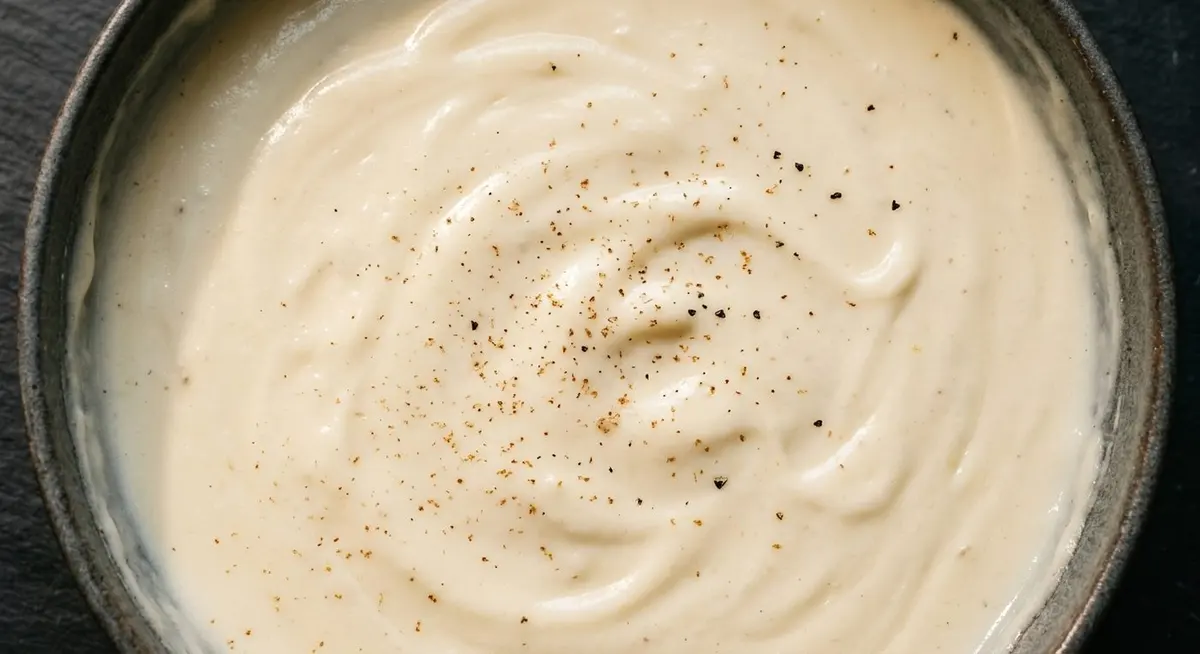
Whichever style you pick, the test is identical. A sauce ready for the oven coats the back of a spoon and holds a line drawn through it with a finger. Thinner than that and it separates in the heat; thicker and the bake comes out dense and pasty, because there is no loose liquid left for the base to draw in.
This is the texture to aim for: glossy, slow-moving, and thick enough that the swirls hold their shape.
Season the sauce twice. Once on the stove, and again after it has been mixed through the base, because pasta and rice both dilute salt noticeably. If the second tasting still tastes heavy, do not reach for more salt — a teaspoon of vinegar or a spoonful of sharp cheese does more for a flat, sweet casserole than anything else in the cupboard.
The Topping, and Why It Matters More Than You Think
A casserole is a soft food. Everything inside it is designed to give way under a spoon, which is exactly why it needs one firm thing on top. The topping is not decoration. It is the contrast that makes the rest of the dish read as creamy rather than as mush.
Toppings, and what each one brings
Topping
How much
Note
Buttered fresh breadcrumbs
1 1/2 cups
Toss 3 parts crumbs with 1 part melted butter; the crispest option
Grated cheese
1 1/2 cups
Sharp cheddar or Gruyere; add for the last 15 minutes only
Crushed buttery crackers
1 1/2 cups
Salty and rich; needs no extra butter at all
Potato chips, crushed
2 cups
The crunchiest topping on this list, and the first to disappear
Fried onions
1 1/2 cups
Add in the last 5 minutes or they scorch
Toasted nuts or seeds
1 cup
Best over a vegetable bake, where the dish is already rich
Whichever you choose, two rules hold. A topping goes on late, and it goes on dry. Anything wet sitting on the surface steams itself and goes soft within minutes, and any topping that spends the whole bake in the oven will have absorbed sauce by the time it reaches the table. If a recipe has the crumbs going on at the start, it is asking them to soak, which is a different dish entirely.
If you want a casserole that leans on its topping rather than its sauce, the technique behind a chicken stuffing casserole is worth studying — the bread is doing structural work there as well as flavour. The same idea in a smaller format is what makes cranberry turkey stuffing balls work so well as a way of using up a holiday bird.
Pans, Temperatures and Timing
Casseroles are forgiving, but they are not indifferent. The wrong pan turns a good formula into a dry one, because the same volume spread thinner bakes faster and loses its moisture to the oven while you are still setting the table.
Which pan, and what it does to the bake
Dish
Volume it holds
Oven
Time
9 x 13 inch (3 quart)
The whole formula
350 F / 175 C
35 to 45 min
8 x 8 inch (2 quart)
Two thirds of the formula
350 F / 175 C
40 to 50 min
2 quart oval gratin
Two thirds of the formula
375 F / 190 C
30 to 40 min
4 quart deep dish
One and a half times the formula
350 F / 175 C
50 to 60 min
Six individual ramekins
One third of the formula
375 F / 190 C
20 to 25 min
Cast iron skillet
The formula, no bottom sauce needed
400 F / 205 C
25 to 35 min
Two rules cover nearly all of it. Deeper dishes need a lower oven and more time, because the heat has further to travel to the middle. Shallow dishes need a hotter oven for less time, because there is no middle — and a hot oven is what gives you the browned edges that people actually want to spoon off the side of the pan.
Cover, then uncover. Foil for the first two thirds of the bake keeps the surface from drying out before the middle is hot, and the last third without it is what browns the top. A casserole that is covered the whole way through comes out pale and soft, which is the single most common way a well-built dish ends up looking unappetising.
Make-Ahead: Fridge and Freezer
The reason to cook a casserole at all is usually that you would rather not cook later. Most of these can be assembled two days ahead, and a few are genuinely better that way, because the base absorbs the sauce and the whole dish bakes more evenly from cold.
How far ahead you can go, and how long it keeps
Stage
What to do
Keeps
Assembled, unbaked, covered
Sauce, base, protein and cheese; topping kept separate
2 days in the fridge
Assembled and frozen, unbaked
Wrap tightly and bake from frozen at 325 F
3 months
Baked, cooled, covered
Cool within 2 hours of leaving the oven, then refrigerate
4 days
Baked and frozen in portions
Freeze single servings flat so they stack
3 months
Reheating
Covered at 325 F to 165 F in the middle, or 2 minutes per portion in the microwave
Once
Always keep the topping off until the end. Crumbs and crushed chips stored against a wet surface for two days will be soggy before they ever see the oven, and you will have lost the one element that gives the dish its texture. Add it after reheating, or in the last ten minutes of a bake from cold.
Bake from frozen, but lower and slower. A frozen casserole pushed into a hot oven cooks at the edges while the middle is still a solid block, which is exactly how you end up with an overcooked rim around a lukewarm centre. Use 325 F, keep it covered, and add roughly 25 minutes to the original time. Uncover for the last 15 minutes to brown the top.
If planning ahead is the part you struggle with, the monthly meal plan is a good place to slot two assembly evenings a month, and a slow cooker can carry the protein half of the work on a day you know will run late — these slow cooker pasta recipes are a useful bridge between the two habits.
Cooking for Four or for Fourteen
Doubling a casserole is not simply doubling the dish. Volume grows faster than surface area, so a bigger bake needs a lower oven and more time, and the sauce has to end up looser than feels right in order to still reach the middle.
The formula scaled, from four people to a crowd
Serves
Pan
Base
Protein
Sauce
Topping
Oven and time
4
8 x 8 inch
3 cups
12 oz
2 cups
1 cup
350 F, 40 min
6 to 8
9 x 13 inch
4 cups
1 lb
2 1/2 cups
1 1/2 cups
350 F, 35 to 45 min
10 to 12
4 quart deep dish
6 cups
1 1/2 lb
3 1/2 cups
2 cups
350 F, 50 to 60 min
14 or more
Two 9 x 13 inch dishes
8 cups
2 lb
5 cups
3 cups
350 F, 40 to 50 min
Two shallow dishes always beat one deep one. A wide, shallow bake browns across a much larger surface, which is where most of the flavour lives, and it sets in the middle before the outside has given up its moisture. If you are feeding a crowd and own only a deep dish, drop the oven to 325 F and plan on leaving it covered for the first half of the bake.
Casseroles also make excellent potluck food precisely because they scale in a straight line, and the same logic applies to the other one-dish dinners people bring — a one pot chili mac or a one pot cheesy beef and macaroni scale the same way, as does a sheet pan chicken fajita if you would rather not use the oven for an hour.
Six Casseroles From One Formula
Every one of these uses the same four-part structure. Nothing changes except the parts themselves, and each is built to the same ratios you read earlier.
One formula, six dinners
Casserole
Base
Protein
Sauce
Topping
Cheesy pasta bake
4 cups penne
1 lb Italian sausage
Tomato-cream
Buttered crumbs and mozzarella
Ground beef and noodles
4 cups egg noodles
1 lb ground beef
Tomato with garlic and oregano
Sharp cheddar
Chicken and stuffing
4 cups cubed bread
3 cups shredded chicken
Gravy
Herb stuffing and butter
Zucchini and beef
3 cups sliced zucchini, salted and drained
1 lb ground beef
Marinara
Mozzarella
Sweet potato and black bean
4 cups roasted sweet potato
3 cups black beans
Salsa and sour cream
Crushed chips
Baked feta pasta
4 cups rigatoni
1 block feta with cherry tomatoes
The roasted pan juices
Torn basil and breadcrumbs
The zucchini version is the one that teaches the most, because zucchini is mostly water and will flood a dish if you let it. Salt the slices, leave them in a colander for twenty minutes, then squeeze them dry in a clean towel before they go anywhere near the pan. That single step is the difference between a firm, sliceable bake and a puddle with cheese on it.
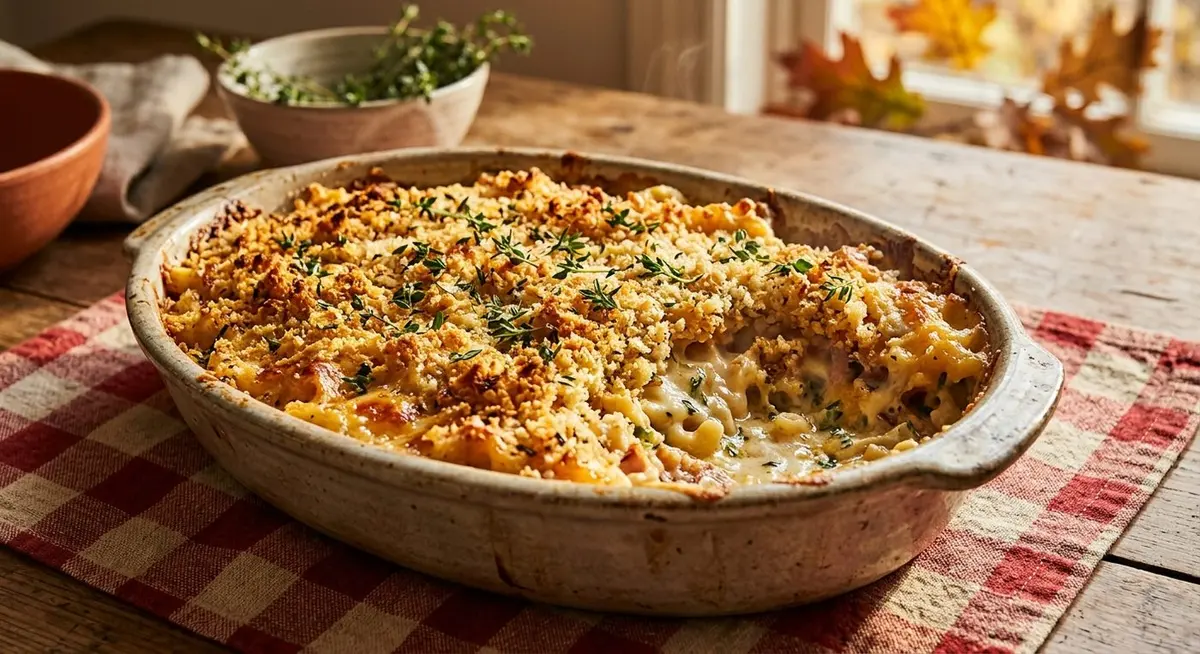
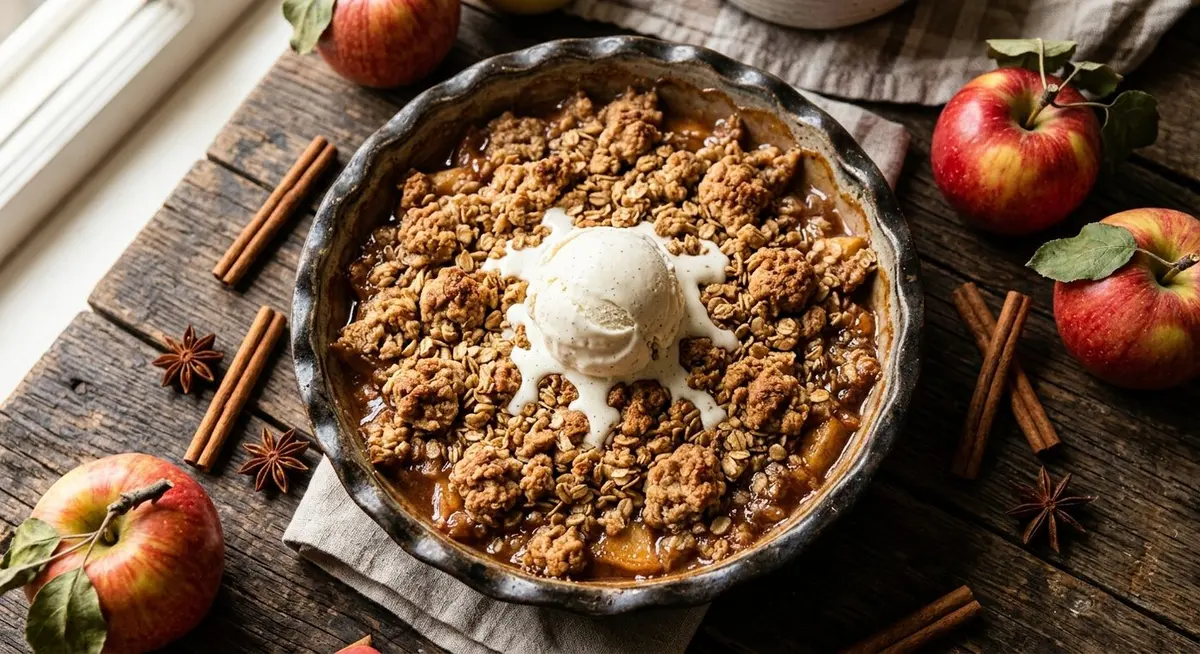
A crumb topping like this one is doing the same job in every variation: giving a soft dish one firm edge to play against.
What you see, why it happened, what to change next time
What you see
Why
What to change next time
Watery at the bottom
Wet base, or sauce too thin
Drain pasta properly; add half a cup of sauce only after the tilt test
Dry and stiff
Too much base, or no cover during the bake
Hold to 4 cups of base for a 9 x 13; cover for the first two thirds
Bland all the way through
Protein went in unseasoned
Salt the meat in the pan and taste it before the sauce goes in
Curdled or grainy sauce
Dairy sauce boiled, or oven above 375 F
Add cheese off the heat; bake salsa and sour cream versions at 350 F
Topping soggy
It went on at the start, or over a wet surface
Add in the last 10 minutes; keep it separate if storing ahead
Soupy after freezing
Frozen and thawed without re-baking
Bake from frozen at 325 F; do not thaw first in the fridge
Burnt edges, cold middle
Deep dish in a hot oven
Lower to 325 F, cover for the first half, and check the centre temperature
Slides apart when served
Cut too soon
Rest 10 minutes before cutting; the sauce sets as it cools
Almost every one of these comes back to two things: how much water went into the dish, and how evenly the heat reached the middle. Fix those and the rest stops mattering. If a bake has already gone watery, do not throw it out — spoon off the excess liquid, reduce it in a pan with a knob of butter, and pour it back over before serving. It is the same sauce, just finished properly.
Questions People Actually Ask
These are the ones that come up most, and most of them turn out to be questions about water and heat wearing a costume.
What is the basic formula for a casserole?
Four parts, in a fixed proportion for one 9 x 13 inch dish: 4 cups of cooked base, 1 pound of protein, 2 1/2 cups of sauce, and 1 1/2 cups of topping measured loose. Those numbers produce a dish that fills the pan, slices cleanly and does not swim. Swap the ingredients freely, but keep the proportions.
Why was my casserole watery?
Almost always because water came in with an ingredient rather than from the sauce. Pasta that was not drained properly, frozen vegetables straight from the bag, or zucchini that was never salted and squeezed are the three usual culprits. The sauce being too thin makes it worse. Try the tilt test before baking: if the sauce runs to one corner immediately, thicken it first.
Should I cover a casserole with foil?
Cover it for roughly the first two thirds of the bake, then uncover for the rest. The foil stops the surface drying out before the middle is hot, and the uncovered final third is what browns the top. A casserole covered the whole way through comes out pale and soft, which is the most common reason a properly built dish still looks unappetising.
Can I make a casserole ahead of time?
Yes, and most are better for it. Assemble up to two days ahead and keep it covered in the fridge with the topping stored separately, or freeze it unbaked for three months. A frozen casserole should go into a 325 F oven straight from the freezer, covered, with about 25 minutes added to the original time. Never put the topping on before storing it, or it will be soggy before it bakes.
How do I know when a casserole is done?
The centre should read 165 F (74 C) on an instant-read thermometer, and the sauce should be bubbling at the edges of the dish. If you are baking from cold or from frozen, go by temperature rather than the clock, because the time can shift by twenty minutes in either direction depending on how deep your dish is and how cold it started.
Do I have to cook pasta before putting it in a casserole?
Yes, in a standard bake, and undershoot the cooking time by two minutes so it finishes in the oven rather than turning to mush. The exception is a no-boil baked pasta, where the sauce is deliberately made thin and the pasta absorbs liquid as it bakes. That works, but it needs more sauce than the formula above, not the same amount.
What can I use instead of cream of mushroom soup?
A quick white sauce does the same job with better flavour: melt 3 tablespoons of butter, whisk in 3 tablespoons of flour, cook it a minute, then whisk in 1 1/2 cups of milk and season it. Add a handful of grated cheese off the heat and you have something close to a cheese sauce. Canned soup is a shortcut, not a requirement.
How do I stop the topping going soggy?
Put it on dry, and put it on late. Crumbs, crushed crackers and chips should go on in the last 10 to 15 minutes of the bake, never at the start. If you are assembling ahead, store the topping in a separate bag and add it just before it goes in the oven. Anything wet sitting on the surface steams itself within minutes.
Can I double a casserole recipe?
You can, but use two shallow dishes rather than one deep one. Volume grows faster than surface area, so a single deep dish takes far longer to heat through its middle and overcooks at the edges while it does. Two 9 x 13 dishes at the standard temperature and time are far more reliable than one 4 quart dish.
What is the best cheese for a casserole?
A sharp melting cheese does the most work: sharp cheddar, Gruyere, or a mozzarella and Parmesan mix. Mild cheese disappears into the sauce and reads as fat rather than flavour. Whatever you use, add it in two places — half under the middle layer as a soft seam, and the rest on top for the last 15 minutes.
Free Printable: The Fall Casserole Planner
A printable companion to this formula: the ratio card, the recipe card itself, a shopping list, the sauce and topping charts, pan and bake-time tables, a make-ahead timeline, a scaling grid and freezer labels to cut out.
PDF · 5 pages · prints on letter or A4 · subscribe to unlock the download
If you want somewhere specific to point this formula first, a marry me chicken sauce over pasta is one of the best uses of it, and the same creamy pan-sauce logic shows up in marry me beef. For a cold night when you would rather the slow cooker did the work, crock pot BBQ beef brisket and ground beef and dumplings both feed the same table. And if the season has you reaching for squash, stuffed acorn squash and smashed Brussels sprouts are the two sides that go with almost any bake on this page.
Savory Discovery · By Elowen Thorn · Last updated September 2026. Internal temperatures and proportions are kitchen-tested guidelines, not food-safety advice; cool leftovers within two hours and refrigerate anything containing meat or dairy.
Elowen Thorn I cook, photograph and re-test every recipe in an ordinary home kitchen before it goes up, so what you make matches what you see. Savory Discovery is where simple weeknight cooking, seasonal ideas and the odd bit of kitchen craft sit side by side — written plainly, and worth cooking twice.