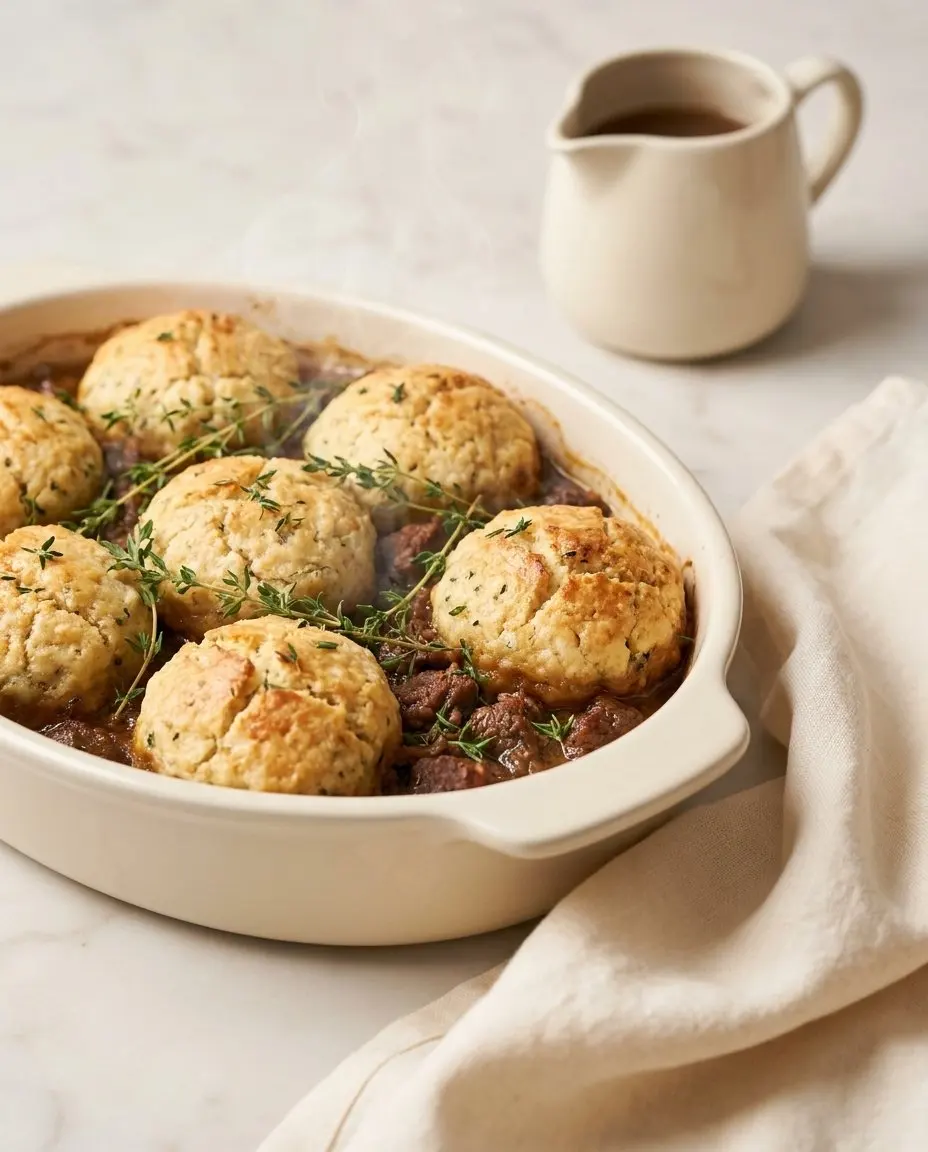
Some dishes don’t just feed you — they wrap themselves around you. Minced beef and dumplings is one of those. A bubbling skillet of slow-simmered mince, eight soft golden pillows rising through it, the kind of meal that fills the kitchen with a smell you’ll remember on a cold evening twenty years from now.
I make this when the weather turns, when the week has been a long one, when I want something honest on the table in under an hour. It’s the British answer to chicken and dumplings — beefier, deeper, kissed with tomato and a splash of red wine if you’ve got a glass open. The dumplings bake on top of the mince, so they catch the heat from above and soak up the steam from below, and they come out golden, fluffy, and just slightly crisp on the crown.
If you’ve never made dumplings before, please don’t be put off. They are essentially a quick biscuit dough, dropped by the spoonful, and they do nearly all the work themselves once they’re in the oven. The reward is wildly out of proportion to the effort, and that’s exactly the kind of cooking I want more of in my life.
What You’ll Need
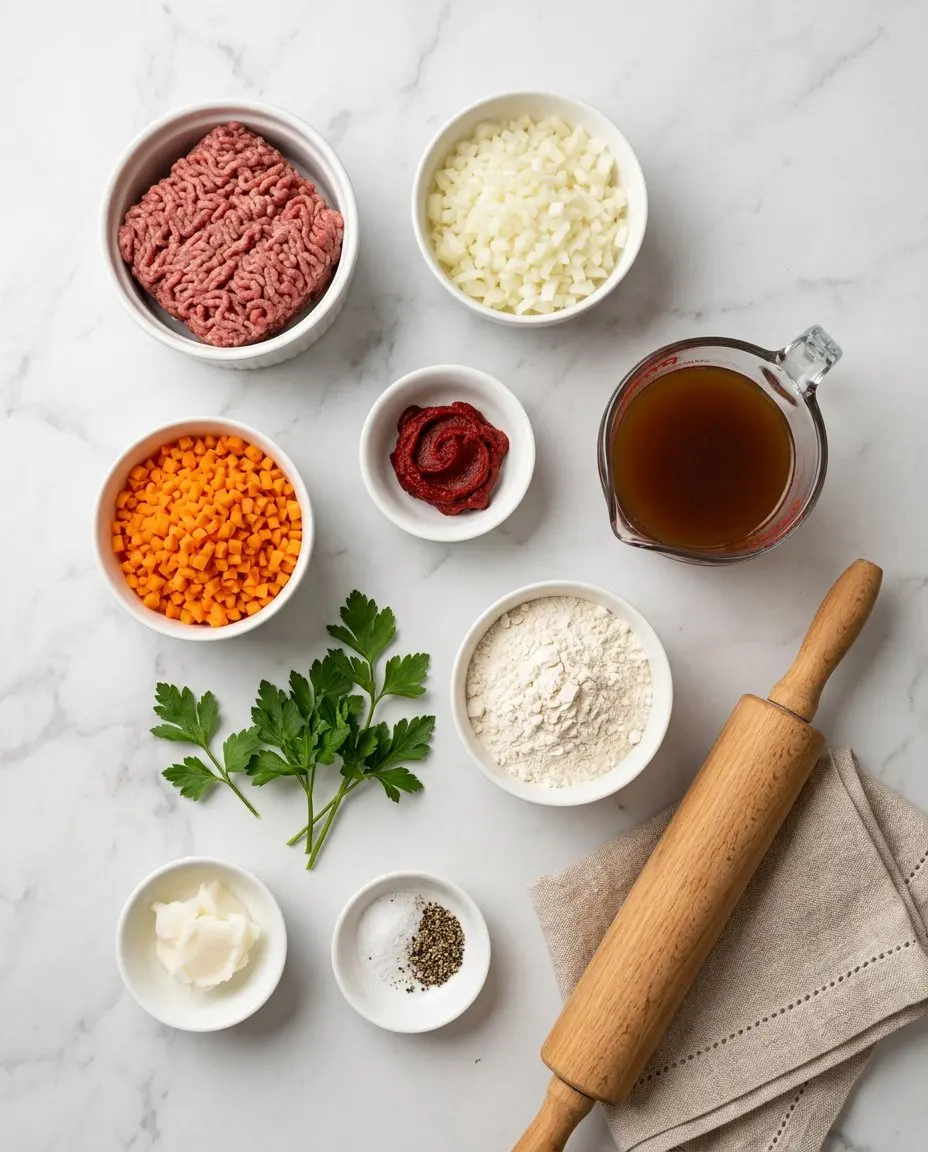
Nothing fussy, nothing exotic. Most of this is already in your kitchen, and the dumplings come together in one bowl with a fork. If you can get beef suet, use it — it gives the dumplings a lighter, more traditional texture. If not, vegetable shortening is a perfectly good stand-in.
For the minced beef base
1 tbsp vegetable oil
1 lb (453 g) ground beef
1 small yellow onion, finely chopped (about ¾ cup)
1 medium carrot, peeled and finely diced (about ½ cup)
3 tbsp tomato paste
2 tsp Worcestershire sauce
½ cup red wine (optional, but lovely)
1 tbsp plain flour
1½ cups beef stock, low-sodium if possible
½ tsp fine sea salt, plus more to taste
¼ tsp freshly ground black pepper
For the dumplings
1 cup (130 g) plain flour
1 tsp baking powder
½ tsp fine sea salt
1½ tbsp fresh parsley, finely chopped (or swap in thyme)
5 tbsp vegetable shortening or shredded beef suet
½ cup cold water
How To Bring It All Together
You’ll need an oven-proof skillet or a small baking dish — cast iron is ideal because it goes from hob to oven without a peep. Preheat the oven to 400°F (200°C) before you start so it’s ready when the dumplings go on.
Step 1 — Brown the beef. Heat the oil in your skillet over medium heat. Add the ground beef and break it up with a wooden spoon. Let it cook, undisturbed, for a couple of minutes so it actually browns instead of just steaming. You’re after deep, caramelised edges here — that’s where the flavour lives.
Step 2 — Soften the aromatics. Stir in the chopped onion and diced carrot. Cook for 4–5 minutes, until the onion is translucent and just starting to turn golden at the edges. Don’t rush this step; it’s building the base of the whole dish.
Step 3 — Build the sauce. Push the meat and veg to one side and add the tomato paste to the cleared space. Let it cook for 30 seconds — this deepens its flavour — then stir it through. Add the Worcestershire sauce and the red wine, if using, and let it bubble down for 2 minutes. The smell at this point is going to make you very impatient.
Step 4 — Thicken and simmer. Sprinkle the flour over the top and stir it in well. Cook for 1 minute to take the raw edge off. Pour in the beef stock, add the salt and pepper, and give it a good stir. Let it simmer gently for 5 minutes, until the sauce coats the back of a spoon. Taste and adjust the seasoning — you may want another pinch of salt.
Step 5 — Make the dumpling dough. While the mince simmers, tip the flour, baking powder, salt and parsley into a bowl. Add the shortening (or suet) and use your fingertips to rub it into the flour until the mixture looks like coarse breadcrumbs with no big lumps of fat remaining. Pour in the cold water and mix with a fork just until a soft, slightly sticky dough comes together. Don’t overwork it.
Step 6 — Shape and place. Divide the dough in half, then into quarters, then into eighths. Roll each piece between floured palms into a rough ball, about the size of a walnut. Turn off the heat under the mince and drop the dumplings evenly over the surface — they should sit on top, not sink in. They will puff up as they bake.
Step 7 — Bake. Transfer the skillet to the oven and bake for 20 minutes, until the dumplings are golden on top and cooked through. Resist the urge to open the oven door in the first 15 minutes — they need that steady heat to rise properly.
A Few Tips From My Kitchen
Cold hands, cold water, cold fat. Everything for the dumplings should be cool so the shortening stays solid until it hits the oven. That’s what gives you tender, fluffy dumplings rather than dense biscuits.
Don’t overmix the dough. Stop the moment it comes together. A few dry streaks are fine; they’ll disappear in the oven. Overworked dumplings turn tough.
Use suet if you can find it. It’s the traditional choice and gives a much lighter, almost cloud-like dumpling. Vegetable shortening is the next best thing.
Taste the sauce before topping. A well-seasoned mince makes well-seasoned dumplings — the dough soaks up steam from below as it bakes.
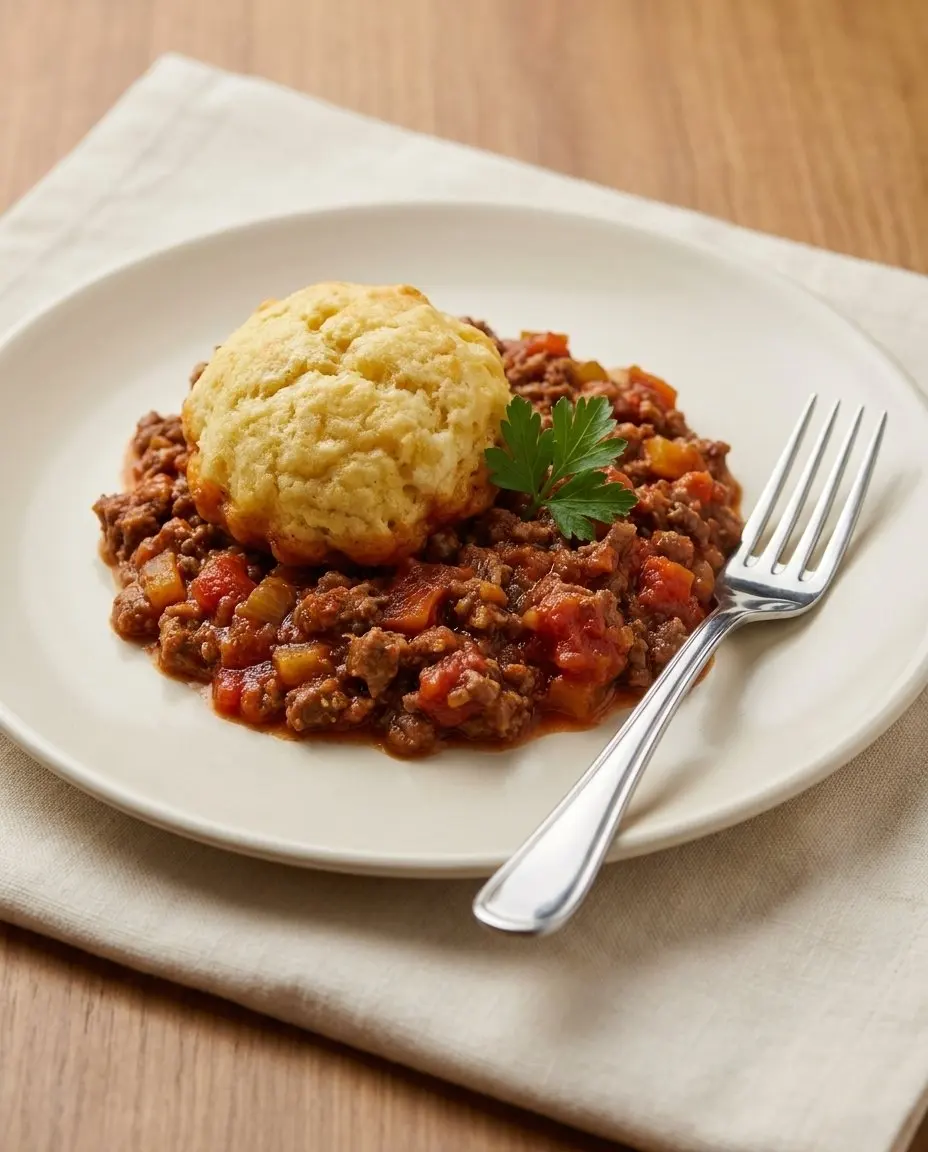
Let it rest 5 minutes before serving. The sauce thickens slightly and the dumplings set, so you can scoop clean portions without the whole thing sliding apart.
How To Serve It
This is a one-pan meal in its own right, but I almost always put something green next to it. Buttered peas, steamed green beans, a pile of mashed potatoes to soak up the sauce, or simply a hunk of crusty bread to mop the plate clean. A small jug of extra hot beef stock on the table is a kindness, especially on a cold night — pour it over the dumplings at the table and watch them drink it up.
Storing & Reheating
Leftovers keep in the fridge, covered, for up to 3 days. The dumplings will lose a little of their fluff but the flavour actually deepens overnight. Reheat gently on the hob over low heat with a splash of extra stock to loosen the sauce, or in a covered dish at 350°F for 15 minutes. You can also freeze the cooked dish for up to 2 months — thaw overnight in the fridge before reheating. I don’t recommend freezing the raw dumpling dough; it doesn’t bake up the same way after.
Easy Variations To Try
Cheesy dumplings. Stir ½ cup of grated mature cheddar into the dry ingredients before adding the water. The dumplings bake up golden and savoury with little pockets of melted cheese.
Swap the beef for lamb. Use ground lamb and lamb stock for a richer, slightly gamey version. A pinch of dried rosemary in the mince is lovely here.
Add mushrooms. Stir 1 cup of sliced chestnut mushrooms in with the onions. They add a deep, earthy note that works beautifully with the red wine.
Make it in a slow cooker. Brown the mince and veg on the hob as in steps 1–4, then transfer to the slow cooker and cook on low for 4–5 hours. Drop the dumplings on top for the final 2 hours, lid on, and let them steam through.
Skip the wine. Just use an extra ½ cup of beef stock in its place. The dish is still deeply savoury and comforting — the wine is a flourish, not a foundation.
A Few Questions You Might Have
Can I use self-raising flour instead of plain flour and baking powder? Yes — use 1 cup of self-raising flour and skip the baking powder. The dumplings will still rise nicely.
Can I make the dumplings ahead of time? You can shape them up to an hour ahead and keep them in the fridge on a floured plate. Don’t leave them longer or the baking powder will start losing its lift.
Why are my dumplings soggy on the bottom? Usually because the sauce was too thin when they went in, or the dumplings were placed too low. The sauce should coat a spoon before the dumplings go on, and they should sit proud on top of the mince, not nestled into it.
Can I use milk instead of water in the dumplings? You can — it’ll give a slightly richer, more tender dumpling. Use the same ½ cup measurement.
Can I make this without alcohol? Absolutely. Just replace the red wine with an extra ½ cup of beef stock and add a small splash of balsamic vinegar at the end for a touch of acidity.
Until Next Time
Minced beef and dumplings is the sort of recipe that asks very little of you and gives back a great deal. It’s not fancy, it’s not fussy, and it doesn’t need a special occasion — though it has a quiet way of turning an ordinary weeknight into something worth remembering. Make it once and I promise it will find its way into your regular rotation.
If you make this, I’d love to hear how it turned out. Leave a note below, or come and find me on the blog — I read every comment. And if you’ve got a favourite twist, drop it in; I’m always looking for the next reason to make this again.
—Elowen Thorn
Homemade Minced Beef and Dumplings — A British Comfort Classic
Author: Elowen Thorn
Prep time:15 minutes
Cook time:30 minutes
Total time:45 minutes
Rest time:5 minutes
Servings:4
Difficulty:Easy
Cooking temp:400°F / 200°C
Ingredients
1 tbsp vegetable oil
1 lb (453 g) ground beef
1 small yellow onion, finely chopped (about ¾ cup)
1 medium carrot, peeled and finely diced (about ½ cup)
3 tbsp tomato paste
2 tsp Worcestershire sauce
½ cup red wine (optional)
1 tbsp plain flour
1½ cups beef stock, low-sodium if possible
½ tsp fine sea salt, plus more to taste
¼ tsp freshly ground black pepper
1 cup (130 g) plain flour
1 tsp baking powder
½ tsp fine sea salt
1½ tbsp fresh parsley, finely chopped (or thyme)
5 tbsp vegetable shortening or shredded beef suet
½ cup cold water
Instructions
1Preheat the oven to 400°F (200°C). Heat the oil in an oven-proof skillet over medium heat. Add the ground beef, break it up with a wooden spoon, and let it brown undisturbed for 2–3 minutes until deeply caramelised.
2Stir in the chopped onion and diced carrot. Cook for 4–5 minutes until the onion is translucent and just turning golden at the edges.
3Push the meat to one side and add the tomato paste to the cleared space. Cook for 30 seconds, then stir it through. Add the Worcestershire sauce and red wine (if using) and let it bubble down for 2 minutes.
4Sprinkle the flour over the top and stir it in well. Cook for 1 minute. Pour in the beef stock, add the salt and pepper, and stir. Simmer gently for 5 minutes until the sauce coats the back of a spoon. Taste and adjust the seasoning.
5Meanwhile, make the dumplings: combine the flour, baking powder, salt and parsley in a bowl. Rub in the shortening (or suet) with your fingertips until the mixture looks like coarse breadcrumbs. Pour in the cold water and mix with a fork just until a soft, slightly sticky dough forms — do not overwork it.
6Divide the dough into 8 pieces and roll each between floured palms into a rough ball. Turn off the heat under the mince and arrange the dumplings evenly on top — they should sit proud, not sink in.
7Transfer the skillet to the oven and bake for 20 minutes, until the dumplings are golden and cooked through. Avoid opening the oven door for the first 15 minutes. Let rest for 5 minutes before serving.
Notes
For the lightest dumplings, keep everything cold — cold water, cold shortening, cold hands. If you can find beef suet, it gives a more traditional, cloud-like texture than vegetable shortening.
Leftovers keep in the fridge for up to 3 days. Reheat gently on the hob with a splash of extra stock, or in a covered dish at 350°F for 15 minutes. The dish can also be frozen for up to 2 months — thaw overnight in the fridge before reheating.
For a slow cooker version, brown the mince and veg on the hob as in steps 1–4, transfer to the slow cooker and cook on low for 4–5 hours. Add the dumplings on top for the final 2 hours, lid on.
Elowen Thorn I cook, photograph and re-test every recipe in an ordinary home kitchen before it goes up, so what you make matches what you see. Savory Discovery is where simple weeknight cooking, seasonal ideas and the odd bit of kitchen craft sit side by side — written plainly, and worth cooking twice.