The Breville Barista Express and Barista Pro share the same appealing idea: grind beans, dose a 54 mm portafilter, extract espresso, and texture milk with one countertop machine. The Pro is not a completely different espresso platform. It is the faster, more digital version of the Express.
Quick verdict: Buy the Barista Express if you want the lower price, a traditional pressure gauge, and do not mind waiting longer between brewing and steaming. Buy the Barista Pro if fast heat-up, quicker workflow, a clearer digital interface, and more grinder adjustment matter every morning.
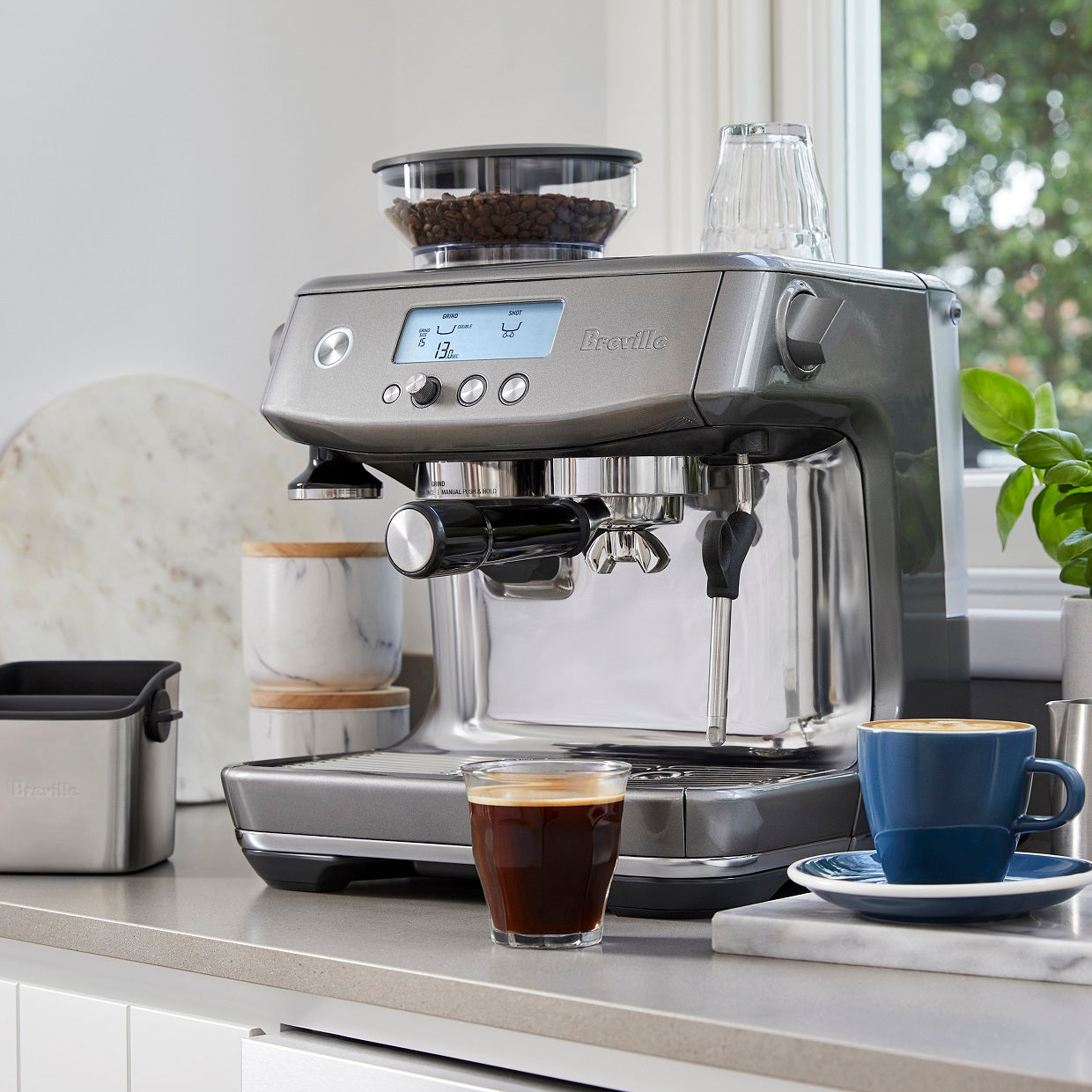
The Barista Express combines grinder, pressure gauge, espresso controls, and steam wand.
Barista Express vs Barista Pro: Main Differences
Feature
Barista Express
Barista Pro
Heating system
Thermocoil with PID control
ThermoJet rapid heating system
Interface
Buttons and analog pressure gauge
Digital display with shot and grind information
Grind settings
16 settings on current US listing
More adjustment and digital guidance
Portafilter
54 mm, 18 g dose
54 mm, 18 g dose
Best for
Value and traditional feedback
Speed and streamlined workflow
Milk steaming
Manual steam wand
Faster transition and manual microfoam
What Both Machines Do Well
Both machines place an integrated conical burr grinder above a 54 mm portafilter and are built around an 18-gram dose. They use low-pressure pre-infusion followed by 9-bar extraction, and both include manual steam wands for creating microfoam.
That means the cup-quality ceiling depends heavily on the same fundamentals: fresh beans, correct grind size, even distribution, a consistent tamp, and suitable milk technique. Buying the Pro does not remove the need to learn espresso dialing-in.
Both also include single- and dual-wall filter baskets. Dual-wall baskets are more forgiving with pre-ground coffee or older beans, while single-wall baskets give experienced users more control with freshly ground coffee.
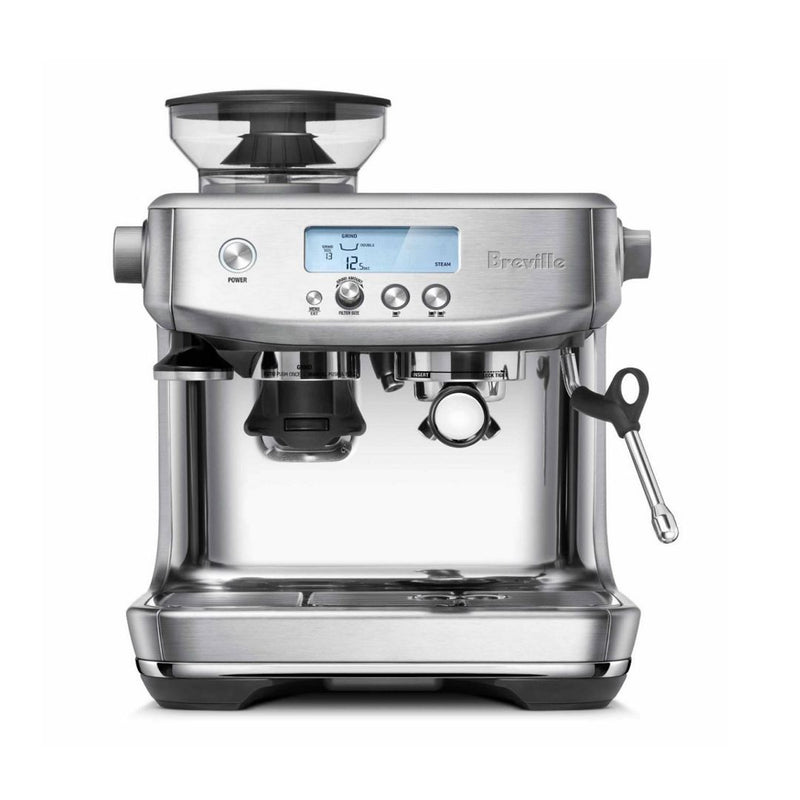
The Barista Pro combines its grinder and digital interface in one countertop machine.
Why Choose the Barista Express?
The Express is the better value when you want a complete beginner-to-intermediate espresso setup without paying mainly for speed and interface upgrades. Its analog pressure gauge gives visible extraction feedback, which many buyers enjoy while learning how grind size and dose affect a shot.
Breville’s current US listing specifies 16 grinder settings, PID-controlled Thermocoil heating, a 54 mm portafilter, volumetric one- and two-shot controls, and a manual steam wand. That is enough hardware to produce balanced espresso and textured milk once your technique is consistent.
The biggest compromise is workflow speed. The Thermocoil system takes longer to reach operating conditions than the Pro’s ThermoJet design, and switching from espresso extraction to strong steam is less immediate. For one or two drinks, that may not matter. For several milk drinks back to back, it becomes noticeable.
The Barista Express provides traditional physical controls and an analog pressure gauge.
Why Pay More for the Barista Pro?
The Barista Pro replaces the analog gauge with a digital interface and emphasizes speed.
The Pro earns its premium through convenience rather than a radically different espresso recipe. Its rapid-heating system gets the machine ready much faster and reduces the delay when moving through a morning drink routine.
The digital display provides grind and extraction feedback in a more structured format than the Express controls. It is useful when you are adjusting grind time or watching shot timing, although some buyers will still prefer the Express’s physical pressure gauge.
The Pro also gives you finer grinder adjustment. That can make dialing-in easier when one setting runs too fast and the next setting runs too slowly. More steps do not automatically improve espresso, but they give you more room to match the grinder to a particular coffee.
The Express remains a complete grind-to-cup setup for learning manual espresso.
Which Machine Is Easier for Beginners?
The Express is easier to understand at a glance: choose a grind amount, watch the pressure gauge, and use the one- or two-shot buttons. The Pro is easier to live with after setup because the display organizes feedback and the machine heats quickly.
A complete beginner can succeed with either. Choose the Express if you enjoy learning from physical controls and want to save money. Choose the Pro if waiting and menu ambiguity are more likely to frustrate you than the higher purchase price.
Espresso Quality: Is the Pro Better?
The Pro can make workflow and dialing-in more consistent, but it does not guarantee better espresso. Both use the same 54 mm format and the same basic low-pressure pre-infusion followed by 9-bar extraction approach. Fresh coffee, grind adjustment, puck preparation, and shot ratio remain more important than the display style.
Milk Drinks and Multiple-Cup Workflow
The Pro is the stronger choice for households making several lattes or cappuccinos. Faster heating and a quicker transition through the workflow reduce the time spent waiting. The Express can still texture good microfoam, but it asks for more patience.
The Pro’s rapid workflow is most valuable for frequent daily use.
Which One Should You Buy?
Buy the Barista Express if: price matters, you like an analog pressure gauge, you usually make one or two drinks, and you prefer simple physical controls.
Buy the Barista Pro if: you make espresso every morning, prepare several milk drinks, want fast heat-up, prefer a digital interface, or value finer grinder adjustment.
Final verdict: The Barista Express remains the better value. The Barista Pro is worth the premium for frequent users because it improves the parts of ownership you experience every day: warm-up, adjustment, and workflow speed.
Does the Barista Pro make better espresso than the Express?
Not automatically. The Pro offers faster heating and more workflow guidance, but beans, grind, dose, preparation, and extraction remain decisive.
Which machine has a pressure gauge?
The Barista Express has the prominent analog pressure gauge. The Barista Pro uses a digital display for timing and adjustment feedback.
Is the Barista Pro worth it for one coffee per day?
It can be, especially if fast startup matters, but the Express is usually the stronger value when you make only one drink and do not mind a slower routine.
Disclosure: As an Amazon Associate, Savory Discovery may earn from qualifying purchases. This comparison is based on current manufacturer specifications and researched buyer guidance; prices and availability can change.
Elowen Thorn I cook, photograph and re-test every recipe in an ordinary home kitchen before it goes up, so what you make matches what you see. Savory Discovery is where simple weeknight cooking, seasonal ideas and the odd bit of kitchen craft sit side by side — written plainly, and worth cooking twice.