By Elowen Thorn · Autumn Activities · Toddlers & Preschoolers
A scavenger hunt is the rare autumn activity that works for a two-year-old and a seven-year-old on the same afternoon. This is the version I run with my own children: twelve things to find, a list written for the ground you actually have, and a rule about stopping while everyone still wants more.
Most autumn activities ask a small child to sit still and follow instructions. A scavenger hunt asks them to do the two things they are already desperate to do: move, and look closely at things. That is why it holds attention when a craft project has been abandoned after four minutes.
There is a second reason it works, and it is the one parents tend to miss. A hunt gives a walk a shape. Without one, a toddler on a pavement is just being steered somewhere and told not to touch things. With a list in their hand, the same walk becomes a job they are in charge of. The behaviour change is not subtle.
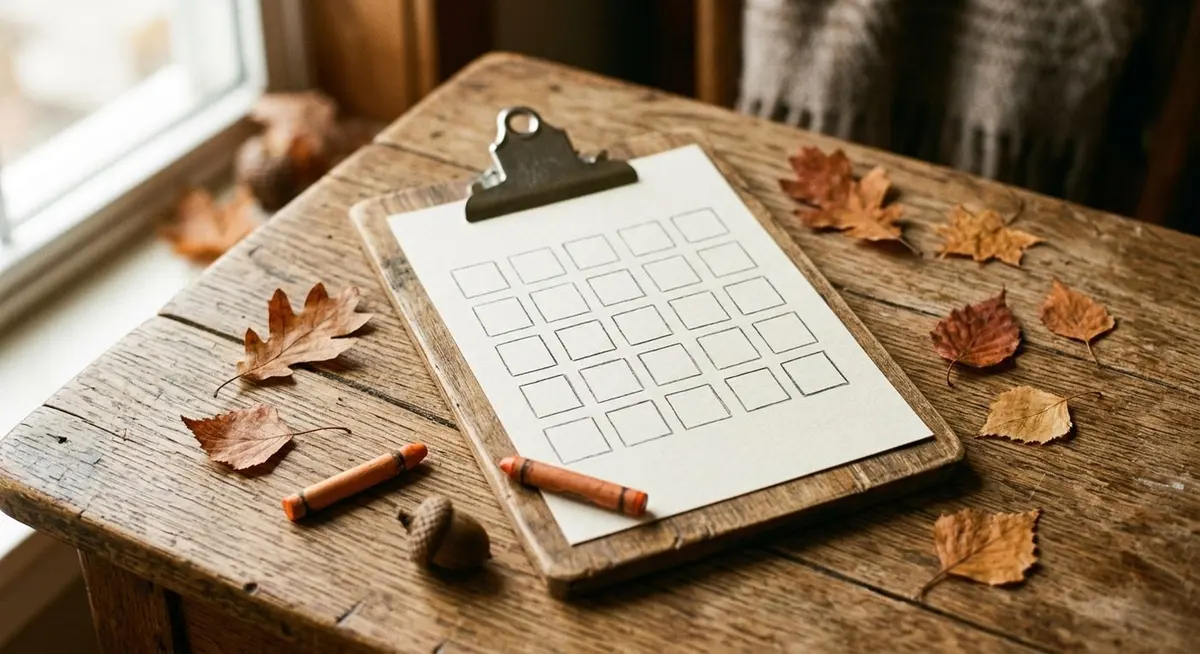
A clipboard is not essential, but it turns a piece of paper into something a small child feels official holding.
The single most useful thing in this guide: write the list for the ground you are actually walking on. A hunt fails far more often because the list was copied from somewhere else than because the child lost interest.
The Twelve Things to Look For
These twelve are chosen because they are findable almost anywhere in autumn, in a city or a suburb or a park, and because a child can spot most of them without help. Nothing on the list is rare, and nothing on it requires going somewhere special.
The hunt list, and where each thing actually is
Find
Where to look
Why it earns its place
A red leaf
Anywhere on the ground, at a small child’s eye level
The easiest win on the list, and the one that starts the game
A yellow leaf
Under the trees that turn first
Teaches colour matching without it feeling like a lesson
A brown leaf
The dry patch by the kerb or the path edge
The one they will find a hundred of, which is its own pleasure
An acorn
Under the oaks, in the grass at the base of the trunk
A proper treasure; small enough to need real looking
A pinecone
Under evergreens, or on the pavement after wind
Heavy and satisfying to hold, and it survives a pocket
A smooth stone
The path edge, a wall, a driveway
The texture contrast to everything else on the list
A twig shaped like a letter
Anywhere; the shape is the game
Turns a stick into a puzzle, and works at any age
A berry on a bush
Hedges and garden shrubs — look, do not pick
The first item that teaches looking without taking
A feather
Grass, pavement, under a tree
Rare enough to feel like a real find when it happens
A seed or a helicopter seed
Under maples and sycamores
Something to spin on the way home
Something orange
Anything at all — this one is wide open
The wildcard that lets a child choose and feel clever
Something that smells like autumn
Bark, a leaf, damp earth, a pinecone
The only item that uses a sense other than sight
What to leave off the list. Anything rare, anything that requires trespassing, and anything you would not want a child to pick up. Skip conkers if there are no horse chestnuts near you, skip anything on private land, and skip litter — a hunt that ends with a child handling rubbish is not the afternoon you wanted.
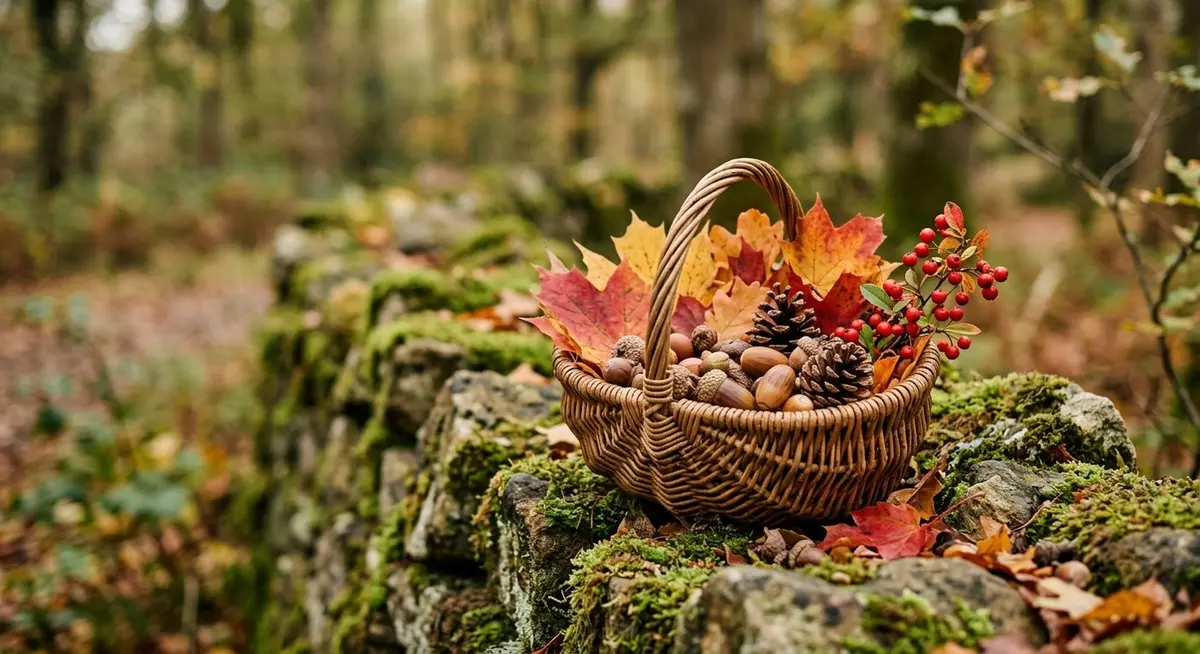
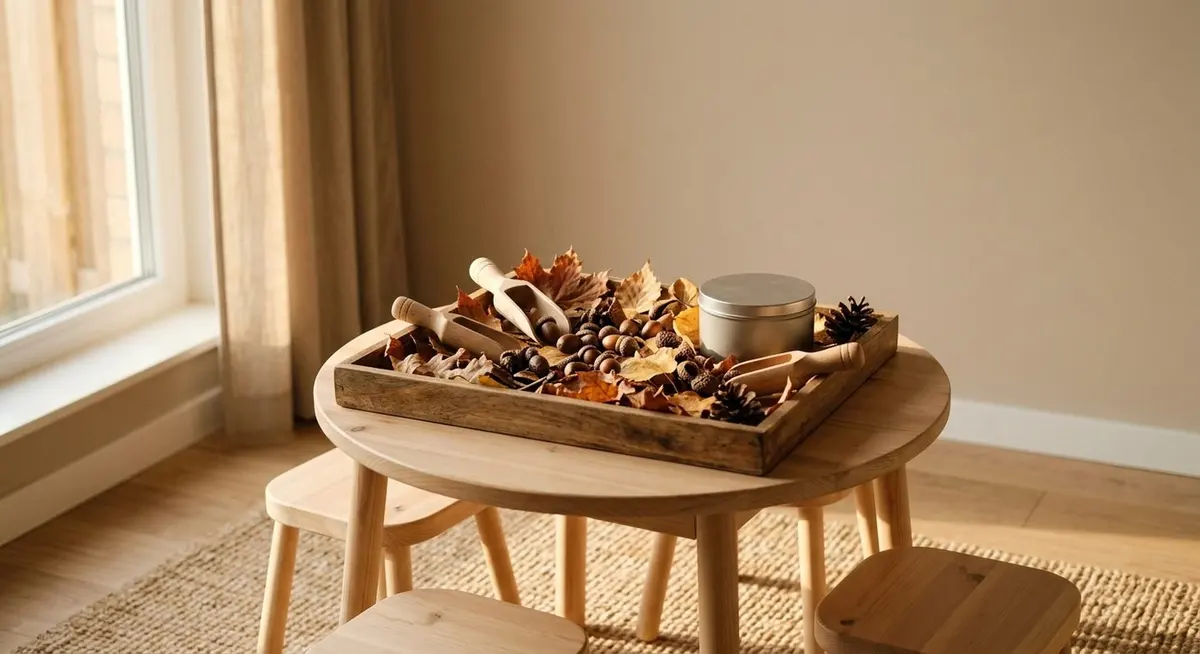
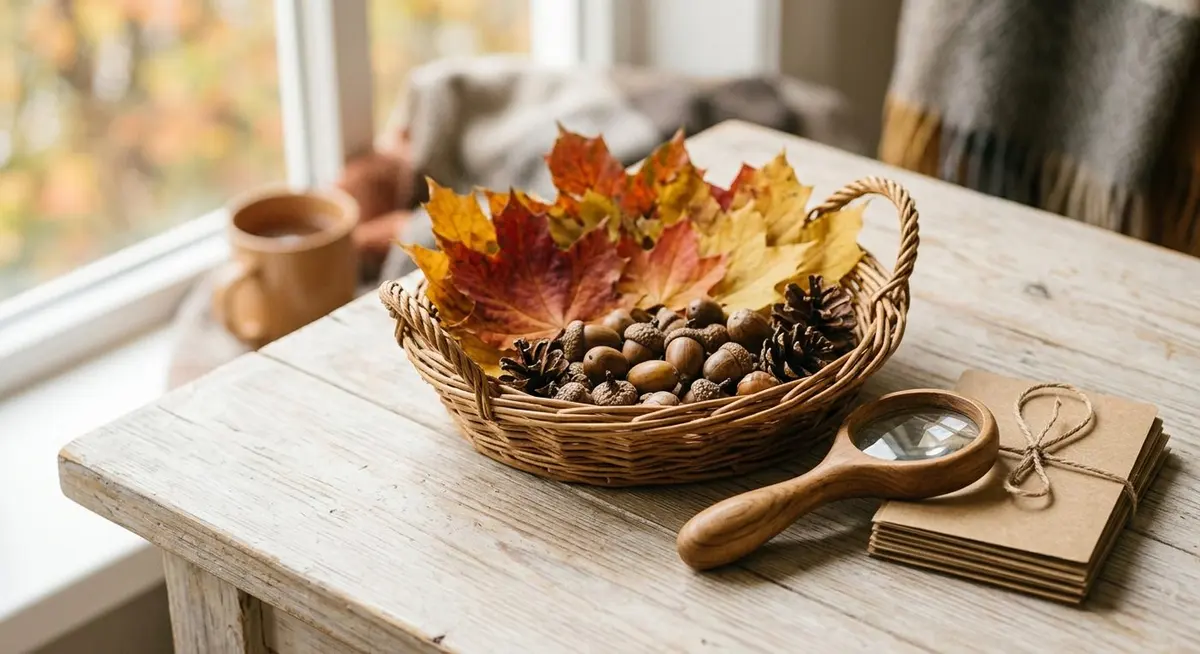
Everything on the list fits in one small basket — which is the point. A hunt that needs a wheelbarrow has stopped being a walk.
Setting It Up in Ten Minutes
The setup is short, but it is the part that decides whether the hunt runs itself or falls apart in the first five minutes. Almost all of it happens before you leave the house.
Walk the route once, on your own, before you take a child on it. You are checking that the things on your list are actually there, and that the route has an obvious end point.
Write the list for that ground. If there are no oaks, there are no acorns — swap in something you saw with your own eyes.
Say the boundary out loud before you open the door, and have your child say it back. “We stop at the corner” is a sentence a three-year-old can repeat and remember.
Print the card, or fold it to pocket size. A clipboard is nice; a folded card is fine.
Take a bag for finds, and agree in advance what stays outside. Berries and anything damp go back.
Decide where the hunt ends, and make it close to where you started. A tired child at the far end of a long loop is how a good afternoon turns bad.
Set the stopping rule now: you will finish while it is still fun, not when the card is full.
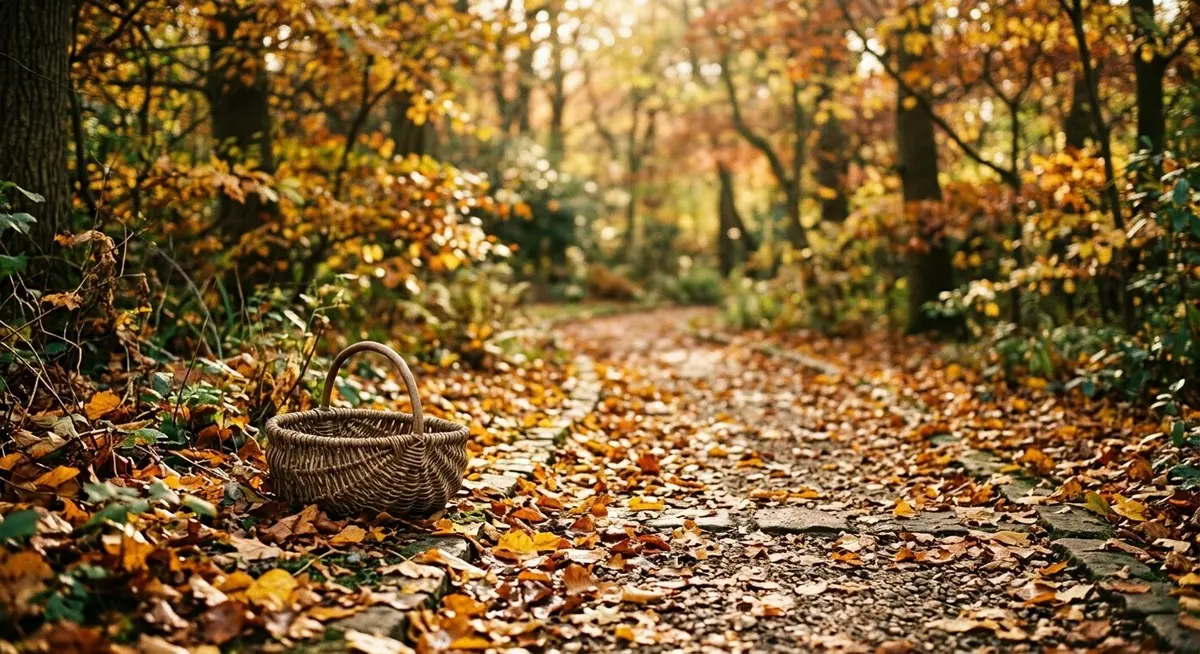
A basket at the end of the path does more for a hunt than any amount of encouragement — there is somewhere for the finds to go.
The ten-minute rule. If the hunt is going well, stop after about ten minutes anyway. Ending on a high is what makes a child ask to do it again tomorrow, and a hunt that runs until everyone is cold and cross does the opposite.
What to Change by Age
The same list works from eighteen months to twelve years, but almost nothing else about the hunt should stay the same. The number of items and who holds the card are the two dials that matter most.
The same hunt, five different ways
Age
How many items
How it runs
What to change
Under 2
3 – 4
Carried, or in the pushchair
You do the finding and the naming; they do the noticing and the pointing
2 – 3
4 – 6
Walking, short loop
One colour at a time, and stop the moment interest drops
4 – 5
6 – 8
Walking, longer loop
Let them hold the card and do the ticking themselves
6 – 8
8 – 12
Walking, or on bikes
Add a time limit, or make it two teams racing the same list
9 – 12
12+
Independent
They write the list and set the route for a younger child
The jump that surprises parents is between three and four. A three-year-old wants to find things and have you confirm them. A four-year-old wants to be the one holding the pencil. Handing over the card is the whole upgrade, and it costs nothing.
If you have children of different ages, give them different lists rather than the same one. The older child gets the harder items and the job of helping the younger one find theirs. That single change removes almost all of the competition that otherwise ends the walk early.
Eight Variations to Keep It Fresh
Run the same list every week and it stops being a game by the third outing. These eight variations change either the goal or the conditions, and between them they will carry you through the whole of autumn.
Change the goal
Colour hunt. Find one thing in each of five autumn colours. Good for a child who is learning colours and does not know it.
Texture hunt. Something smooth, something rough, something soft, something prickly. This one works indoors as well as out.
Shape hunt. A leaf shaped like a hand, a stick shaped like a letter, a stone shaped like a circle. Excellent for four- and five-year-olds.
One-item hunt. Everyone looks for the same single thing and compares what they found. The comparison is the interesting part.
Change the conditions
Sound hunt. Stand still for one minute and name every sound you hear. A good way to end a hunt that has got too exciting.
Torchlight hunt. The same list, after dark, with a torch. This is the version older children ask for again.
Backwards hunt. Walk the route in the opposite direction and see what you missed. It is genuinely a different walk.
Photo hunt. No collecting at all — photograph each find instead. The answer for a child who wants to bring everything home.
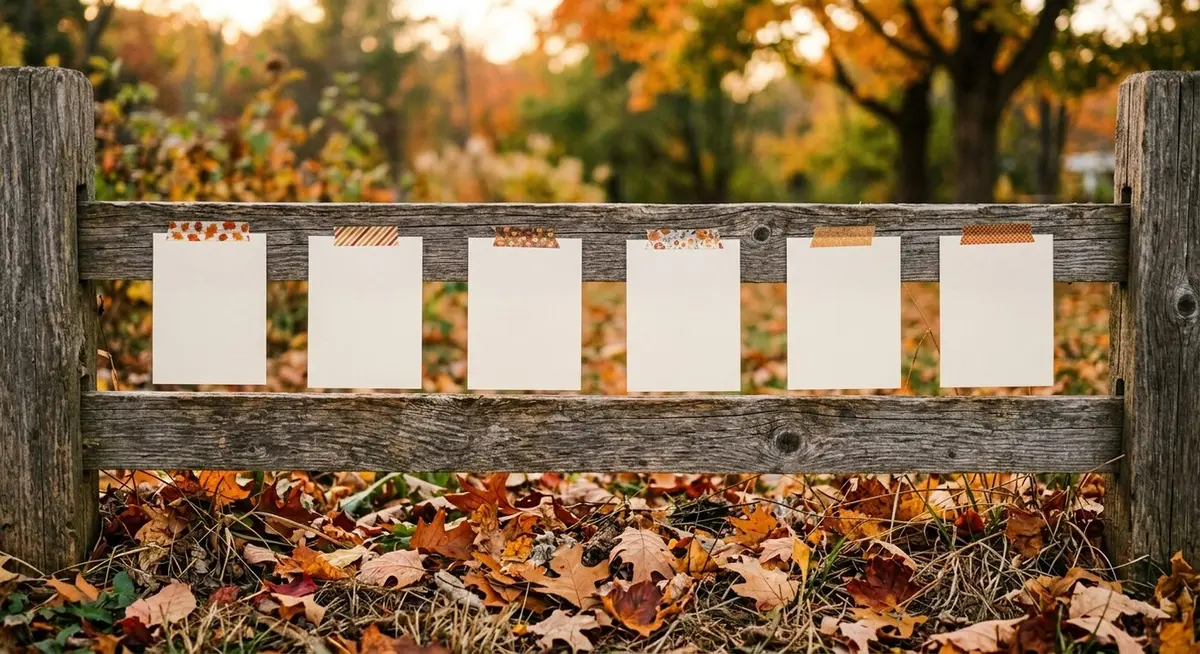
Picture cards turn the hunt into a game you can set up anywhere, including a fence with nothing growing near it.
What to Do About the Weather
Autumn weather changes the hunt far less than you would expect. The only condition that genuinely stops it is heavy rain, and even then there is a version that works.
Weather, verdict and what to change
Weather
Verdict
What to change
Bright and dry
Go
Nothing — this is the day the list was written for
Overcast
Go
The best light of the season for photos, and no squinting
Light rain
Go, shortened
Waterproofs, half the list, and a warm drink waiting at home
Heavy rain
Stay in
Switch to the picture cards and hide them around the house
Windy
Go, carefully
Skip anything under trees, and expect the leaves to be moving anyway
Cold snap
Go, shortened
Gloves on, list cut to four items, and keep moving
The overcast day is the underrated one. Flat grey light is what makes autumn colour photograph properly, and a child who is not squinting into the sun looks at things for longer. If you want pictures of the hunt, this is the day to take them.
Questions to Ask on the Walk
The finding is the easy part. These questions are what turn a walk into a conversation, and they work at any age — the answers just get longer.
What colour is it, and is there anything else outside that colour? Extends the hunt without adding an item.
Is it smooth or rough? Can you show me with your hand? Gets a child to describe rather than just name.
Where do you think it came from before it landed here? The first genuinely interesting question, and it works from about three.
Is it heavy or light? Which hand can hold it longer? A physical comparison a toddler can actually answer.
What does it smell like? Does it smell like anything else you know? The one that produces the best answers.
How many of these do you think we will find if we keep walking? A prediction, which is the beginning of real thinking.
Which one is your favourite so far, and why that one? Ask it at the end, not the start.
What should we look for next? Handing over the choice is what makes them want to come back.
Do not ask all eight. Two or three across a whole walk is plenty. A child who is being interviewed stops looking at the ground, and looking at the ground is the entire point.
The Indoor Version for a Wet Day
When the rain settles in, the hunt does not have to stop — it just changes what you are looking for. The picture-card version is the one to reach for, and it takes about five minutes to set up.
Print the picture cards, or draw six simple shapes on paper: a leaf, an acorn, a pinecone, a pumpkin, an apple and a feather.
Cut them out and tape them around one or two rooms, at your child’s height rather than yours.
Put the first one somewhere obvious, so the game starts with a win rather than a search.
Give your child the hunt card and let them tick each picture as it is found.
When all six are found, hide them again in different places. The second round is always faster and always more fun.
Make it harder for older children by hiding the cards half behind things, so they have to be looked for rather than spotted.
Make it easier for toddlers by leaving a corner of each card visible from the middle of the room.
Add a torch and turn the lights down. The same six cards become a completely new game.
If you want a hunt that works in any weather, the printable version in the companion kit below includes both the outdoor list and the picture cards, so a change in the forecast does not mean a change of plan.
Staying Safe Without Hovering
A hunt only works if a child feels like they are exploring. That means giving them room, which means the safety has to be handled before you leave rather than shouted during the walk.
The boundary has been said out loud, and your child has said it back.
You know which plants to avoid — berries, and anything you cannot identify, are look-only.
Your child knows that nothing goes in the mouth, including things that look like food.
The route stays away from roads, driveways and water.
You have a bag for finds, so hands stay free for walking.
You know where the hunt ends, and it is close to where you started.
You have decided in advance that you will stop while it is still fun.
On berries and unknown plants: the rule that works for small children is simple and absolute — we look at berries, we never pick them. Do not try to teach which ones are safe. A rule with no exceptions is the only kind a three-year-old can hold on to.
Building It Into Your Week
A hunt is at its best when it is a habit rather than an event. One outing a week through September and October is enough to make it something your child expects, and it takes less planning each time because the route is already known.
A four-week rhythm that does not burn out
Week
What to run
Why
Week 1
The twelve-item list, on your nearest route
Establishes the game and the boundary
Week 2
The same route, one variation
Familiar ground plus a new goal keeps it interesting
Week 3
A new route, the same list
The list is known, so the new place is the adventure
Week 4
The indoor picture cards, or a rest week
A deliberate buffer, so the hunt never becomes a chore
The buffer week is the part people skip, and it is the part that matters. A child who has done the hunt every single week for a month is a child who is bored of it by November. Skipping a week is what makes the next one feel like a treat.
Keep the cards. Write the date on each one and keep them in a folder. By the end of autumn you have a record of every walk you took, and the finished cards are the sort of thing children ask to look at again in the middle of winter.
When It Goes Wrong
Almost every hunt that falls apart does so for one of five reasons, and all five are fixable in the moment.
The five things that go wrong, and what to do
What happened
Why
What to do
They lost interest after two minutes
The list was too long, or the items were too hard
Cut it to four items and pick the easiest ones on the route
They cannot find anything
The list was written for different ground
Walk the route first next time; name only what you have seen yourself
They want to keep everything
The bag rule was not agreed in advance
Agree before you leave what stays outside, and stick to it
They are fighting over the card
One card, two children
Print two cards, or give the older child the job of helping
It ended in tears
The hunt ran past the point of fun
Stop at ten minutes next time, even if it is going well
The one that is not fixable in the moment is a list written for the wrong ground. If your child cannot find anything, the hunt is over — no amount of encouragement will rescue it. Walk the route on your own first, and this never happens.
Questions and Answers
These are the questions that come up most often from parents running this hunt for the first time.
What age is a scavenger hunt suitable for?
It works from about eighteen months, with the list cut to three or four easy items and an adult doing the finding. The sweet spot is two to six, when a child can walk the route but still finds the whole thing genuinely exciting. Older children enjoy it too, but they need a harder list, a time limit or a competitive element to stay interested.
How many items should be on the list?
Four to six for a two- or three-year-old, six to eight for a four- or five-year-old, and eight to twelve for anyone older. Twelve is the ceiling rather than the target. A child who finds four things and runs the whole way has had a better afternoon than one who is marched through all twelve.
What if there is nothing to find where we live?
Use the picture-card version instead. Print or draw six simple shapes, tape them around the house or the garden, and hunt for the pictures rather than the real things. It takes five minutes to set up and works in any weather, including a wet afternoon indoors.
How long should a hunt take?
About ten to twenty minutes for a toddler, and up to half an hour for an older child. The important part is stopping while it is still fun rather than when the card is full. Ending on a high is what makes a child ask to do it again tomorrow.
Can we do this in a city or with no garden?
Yes, and it works well. Pavements, street trees, park edges and the grass at the base of a trunk all hold most of the twelve items. Write the list for the streets you actually walk, and keep the route short — a city hunt is about looking closely, not covering distance.
Is it safe to let children pick things up?
With two rules, yes. Nothing goes in the mouth, and berries or anything you cannot identify are look-only. Say both out loud before you leave, and keep the route away from roads, driveways and water. Beyond that, handling leaves, stones and pinecones is part of what makes the hunt worth doing.
What do we do with everything they collect?
Agree before you leave what stays outside — berries and anything damp go back. What comes home can go into a basket on a windowsill, or be pressed between sheets of newspaper for a week and then glued to a card. The collecting is often the part children remember.
Can I use this for a group or a party?
Yes. Print one card per child, give each a different starting item so they spread out, and set a clear boundary and a meeting point. For a party, the two-team version works best: the same list, two teams, and a prize for the team that finds the most rather than the fastest.
Free Printable: The Toddler Fall Scavenger Hunt Kit
A printable companion to this guide — the twelve-item hunt card, a blank card for building your own route, picture cards to hide indoors, the age guide, the weather plan, a find log and a season tracker.
Elowen Thorn I cook, photograph and re-test every recipe in an ordinary home kitchen before it goes up, so what you make matches what you see. Savory Discovery is where simple weeknight cooking, seasonal ideas and the odd bit of kitchen craft sit side by side — written plainly, and worth cooking twice.