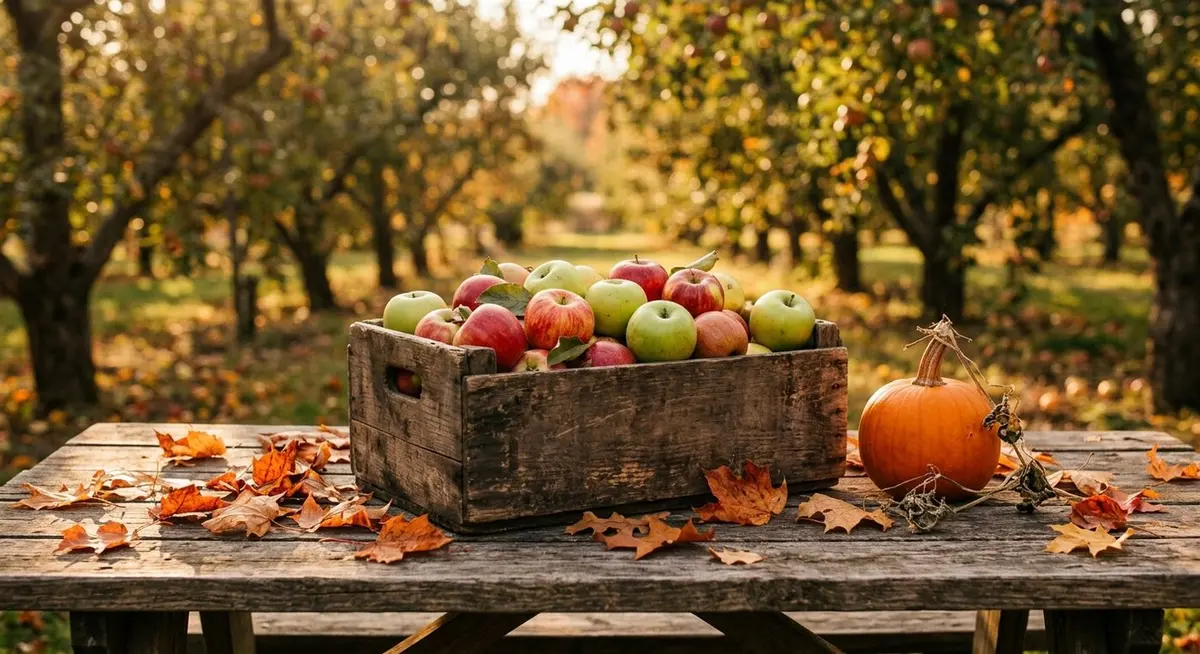
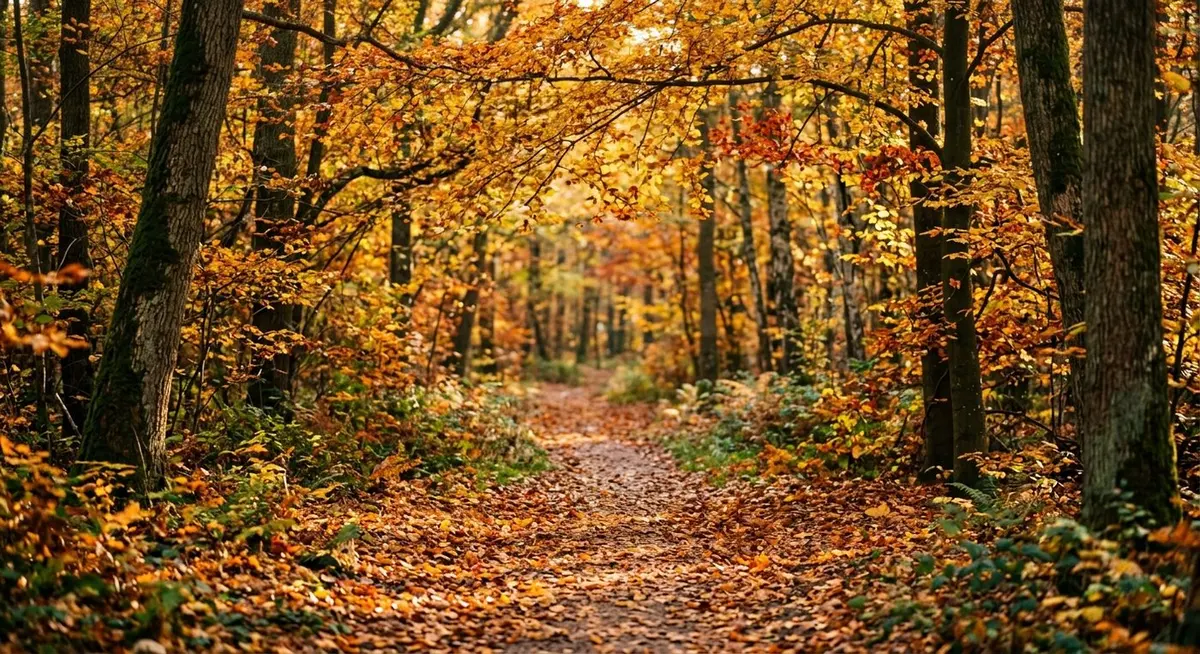
Autumn is the one season that hands a preschooler a whole classroom for free. The leaves change colour, the air smells different, the ground is suddenly full of things worth picking up, and every one of those small discoveries is doing real work — building vocabulary, sorting skills, hand strength and patience. This guide collects the fall activities that genuinely hold a three- or four-year-old’s attention, explains what each one is teaching, and tells you honestly how much mess and set-up to expect.
Between roughly two and five, a child is doing the most intense sensory learning of their life. They are not yet reading, not yet sitting still for long, and not yet able to follow a five-step instruction without help. What they can do, brilliantly, is notice. They notice that this leaf is crisp and that one is soft, that the acorn is smooth and the pinecone is prickly, that the wind moves things and the cold makes their breath visible.
Autumn is built for exactly that. It is the only season that changes visibly week to week, which means the same walk you took in September is a different walk by October. It also produces an endless supply of free, safe, collectable objects — leaves, acorns, pinecones, sticks, seed pods — that are perfect for sorting, counting, stacking and squashing. You do not need to buy a single thing to give a preschooler a rich autumn.
There is one more reason it works, and it is the one parents underestimate: autumn activities are short. A leaf pile is fun for twenty minutes and then it is done. A sensory bin holds attention for fifteen. That matches a preschooler’s attention span almost exactly, which is why these activities tend to go well when a long craft project does not.
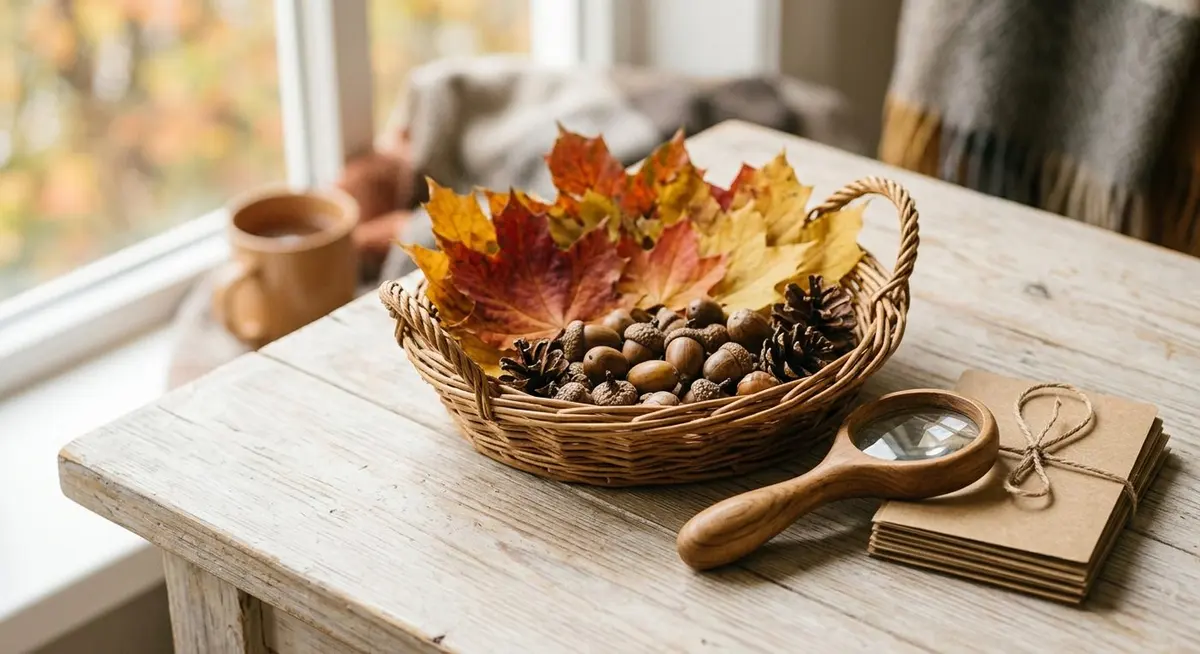
A basket, a magnifying glass and a stack of paper is the entire kit. Everything else comes from the ground.
The twenty-minute rule. Plan every activity to be interesting for twenty minutes and then let it end. Preschoolers disengage fast once the interesting part is over, and pushing past that point is what turns a good activity into a meltdown. Set a timer if it helps you, and stop while it is still fun.
What Your Preschooler Can Actually Do, by Age
Most activity lists fail because they ignore the enormous gap between a two-year-old and a five-year-old. A two-year-old cannot cut with scissors or follow a sequence; a five-year-old can plan a small project and finish it. Match the activity to the stage and almost everything works.
Preschool stages and the activities that fit
Age
What they can do
Activities that fit
2 to 3 years
Sorts by one attribute, mouths small objects, loves texture and repetition, cannot follow multi-step directions
Sensory bins with large pieces, leaf collecting, stomping in piles, scribbling with chunky brushes, shakers
3 to 4 years
Sorts by colour and size, can pour with help, follows two-step directions, loves pretend play
Cuts with safety scissors, plans a small project, counts to twenty, tells a story about what they made
Leaf collages, cutting and gluing, the pumpkin experiment, measuring in the kitchen, scavenger hunts
The single most useful thing you can do is watch for the moment an activity stops being a stretch and starts being a struggle. If your child is reaching for the pieces and experimenting, they are in the right zone. If they are throwing them, the activity is either too hard or already finished.
Small pieces are the real risk, not the mess. Acorns, popcorn kernels, dried beans and pumpkin seeds are all choking hazards for a child who still mouths things. For a two-year-old, use large leaves, big pinecones and whole pumpkins, and keep the small loose parts for the four-year-olds.
Outdoor Fall Activities
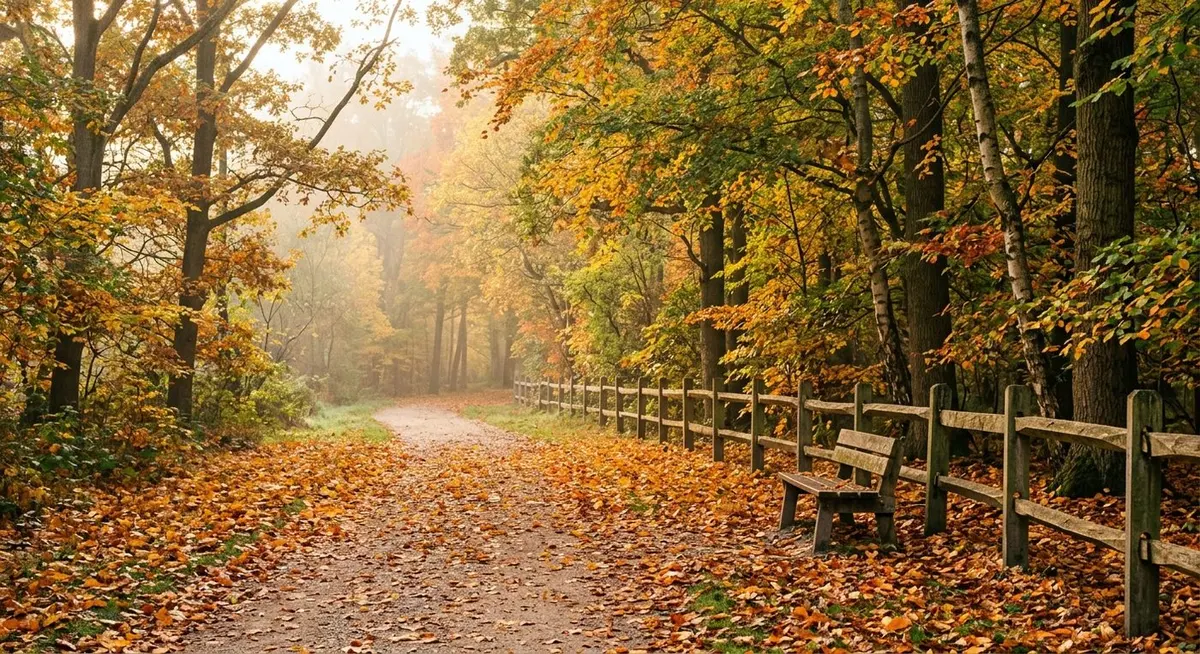
Outdoor autumn play is the highest-value activity on this list, and it costs nothing. Cold-weather outdoor time is also one of the best things you can do for a preschooler’s mood and sleep, so treat a daily walk as the baseline rather than the treat.
Leaf pile play
Rake a pile and let them destroy it. This sounds trivial and is not: jumping into a pile teaches a child about their own body in space, about cause and effect, and about the fact that some things are worth doing purely for joy. Rake it back up and let them do it again. Ten rounds is a normal number.
A nature walk with a purpose
A walk with a job holds attention far longer than a walk without one. Give your child a paper bag and a single instruction — collect five different kinds of leaf, or find three things that are brown — and the walk becomes a hunt. Bring a magnifying glass if you have one; looking closely at a leaf is genuinely absorbing at this age.
Dress for the ground, not the air. Waterproof trousers or an old pair of leggings matter more than a warm coat, because the interesting part of autumn is at knee height.
Bring a bag, not a basket. A paper bag is easier for small hands to hold open and carry, and it does not matter if it gets crushed.
Let them lead the pace. A preschooler covers a hundred metres in twenty minutes and that is the correct speed. The point is the noticing, not the distance.
The same path in September and in October is a different walk. That change is the whole lesson.
The Fall Nature Collection (and How to Sort It)
The collection your child brings home is the raw material for a week of learning, and sorting it is the single most valuable thing you can do with it. Sorting is early maths: it is the same mental move as classifying, comparing and eventually counting in groups.
Tip the whole collection out onto a tray or a sheet of paper. Let your child handle everything first, with no instruction at all. This free-exploration step is not optional; it is how they take in the material.
Ask one sorting question at a time. Start with colour, because it is the easiest to see. Make two piles and let them choose where each thing goes.
Move to size on a second day. Big pile, small pile. Then line a few items up from smallest to largest.
Try texture next: smooth, prickly, soft, crunchy. This is where vocabulary grows fastest, because you are giving them the words as they feel the difference.
Finish with a count. Count the acorns, count the red leaves, count how many things are round. Do not worry about getting past ten.
Keep the collection in a shallow box with a lid, and add to it every time you go out. A collection that grows over a season teaches something a one-off craft cannot.
Wash your hands after handling. Wild acorns, seeds and leaf litter carry dirt and, occasionally, mould. A quick wash after sorting is worth the habit, and it also stops the collection ending up in someone’s mouth.
Fall Art and Craft Activities
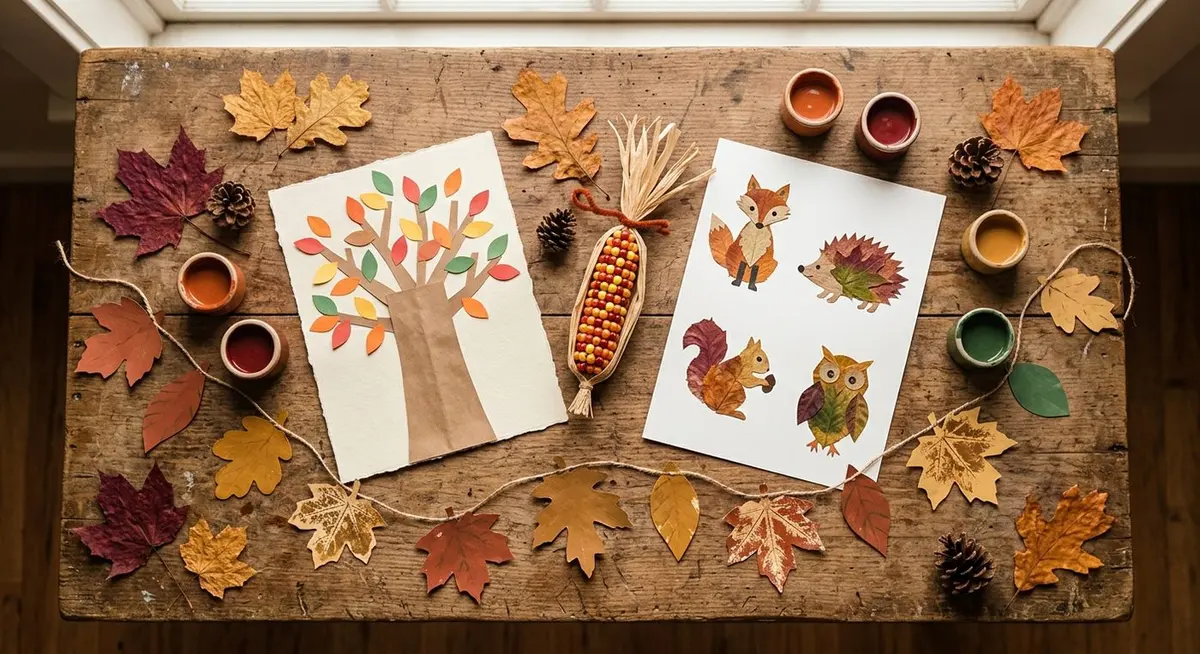
Autumn art is unusually forgiving, because the material is beautiful before the child has done anything to it. That takes the pressure off the result and lets the process be the point, which is exactly how art should work at this age.
Leaf printing
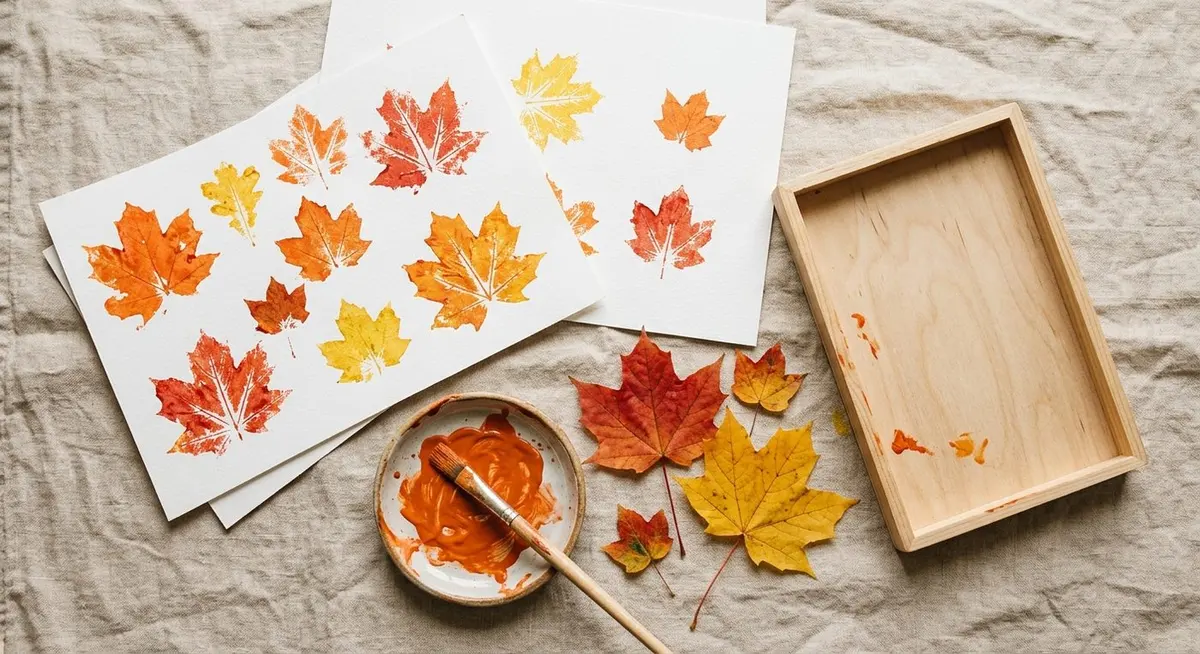
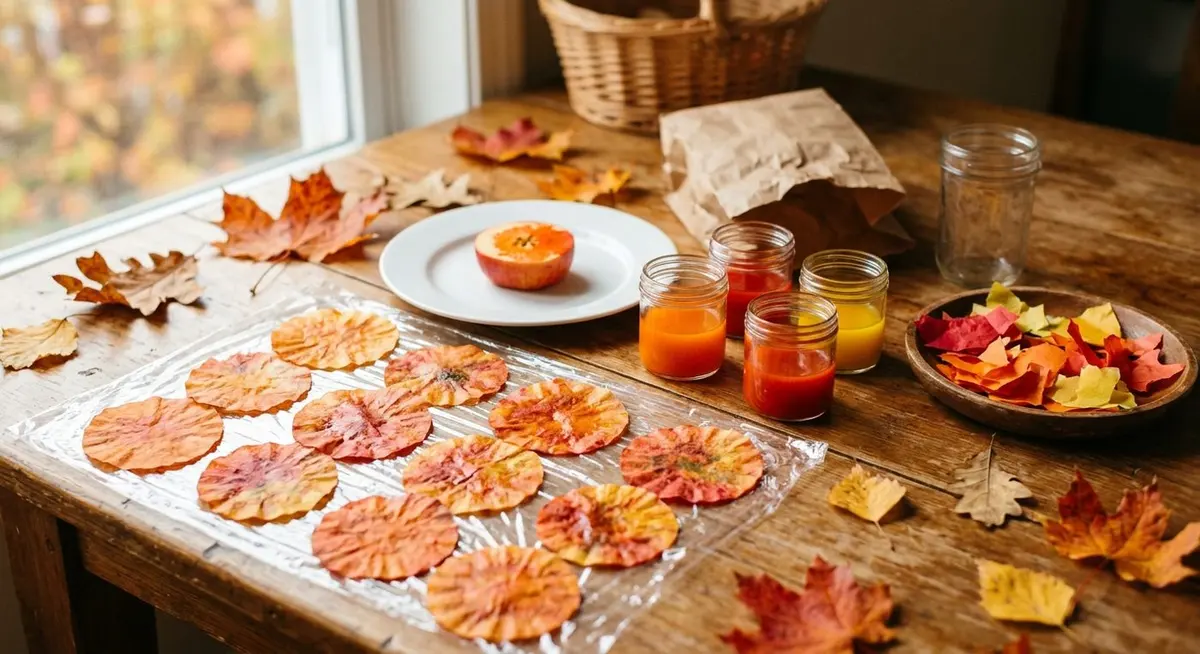
Press a leaf vein-side down into a shallow dish of paint, then press it onto paper and peel it off slowly. The first print is usually a smudge and the third is usually beautiful, so plan for several sheets. This is one of the best fine-motor activities of the season, because peeling the leaf off without tearing the paper takes real control.
Painted pumpkins, no carving
Skip the knife entirely. A whole pumpkin plus washable paint, stickers, pom-poms and glue gives you an hour of decorating with none of the safety risk of carving. A preschooler can paint a pumpkin almost independently, which is rare and valuable. Washable paint matters here — it will end up on the table, the floor and possibly the dog.
Chunky brushes beat thin ones. A fat brush is easier to grip and covers a pumpkin faster, which keeps the activity moving.
Glue sticks beat liquid glue for anything a child is placing themselves. Liquid glue floods the paper and frustrates them.
Lay down a shower curtain or a bin bag before you start. Clean-up is the part that decides whether you do this again next week.
Let it dry somewhere out of reach. A painted pumpkin needs a few hours, and a preschooler will absolutely touch it before then.
The third print is always the good one. Plan for several sheets and let the first two be practice.
The Pumpkin Science Experiment
This is the activity children ask to repeat, and it is genuinely a science lesson rather than a craft. You hollow out a pumpkin to make a bowl, then let a child spoon baking soda into it and pour in coloured vinegar. The reaction fizzes, foams and overflows, and the questions come on their own.
What you need
One medium pumpkin, top cut off and seeds scooped out to make a bowl
A box of baking soda and a jug of white vinegar
A few drops of food colouring or watercolour stirred into the vinegar
A shallow tray or roasting tin to catch the overflow
A spoon your child can hold, and an old towel underneath everything
How to run it
Set the hollowed pumpkin in the tray and let your child spoon baking soda into it. Do not measure. Let them fill it a third of the way up.
Give them the jug of coloured vinegar and let them pour slowly. The first fizz is the moment they will remember.
When it settles, add more baking soda and pour again. The reaction repeats, which is what makes it feel like a real experiment rather than a trick.
Ask open questions while it works: what do you think is happening, what does it sound like, what happens if we add more. You do not need to know the chemistry to lead this well.
Save the seeds you scooped out. Rinse them and they become the material for the next activity.
You do not need to explain it. The value here is the wondering, not the answer. A child who asks why it fizzes and then tests what happens with more vinegar has done real scientific work, whether or not anyone tells them the word for it.
Sensory Bins That Don’t End in Chaos
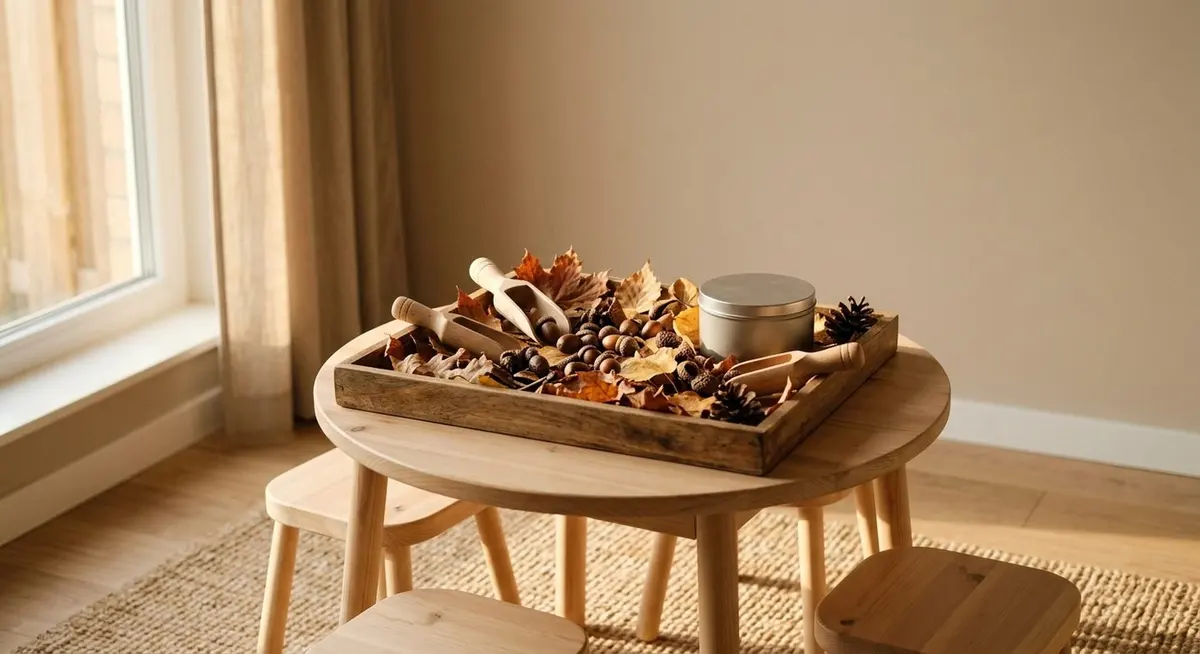
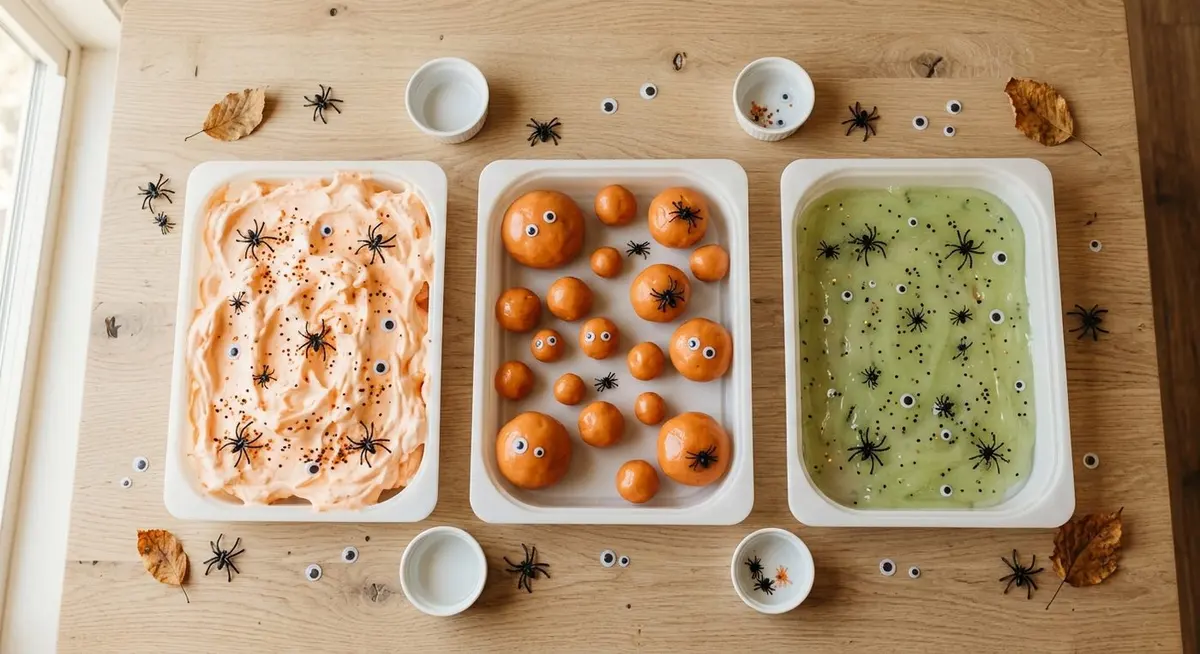
A sensory bin is a shallow container of loose material plus a few tools to move it around with. It is one of the most effective fine-motor and language activities you can set up, and it is also the one most likely to end with a floor covered in rice. The difference is entirely in how you build it.
Gives the bin its texture and its weight; this is the layer that gets scooped
Filler
Leaves, pinecones, acorns, small pumpkins, fabric scraps, pom-poms
Adds the seasonal interest and the variety that keeps attention
Tools
Scoops, spoons, small bowls, muffin tins, tongs, a funnel
Turns the bin from a texture into an activity; this is the layer that builds hand strength
Build the bin on a tray or a towel, and put it on the floor rather than the table. A bin on the floor spills onto a towel; a bin on the table spills onto the whole room. Keep the base shallow — two centimetres is plenty — and change one layer at a time rather than rebuilding the whole thing, so the bin stays familiar while still feeling new.
Match the base to the mouthing stage. Dried beans and popcorn kernels are choking hazards. For a child who still puts things in their mouth, use large leaves, whole pinecones and big fabric scraps as the base instead, and save the small loose parts for later.
DIY Fall Music Makers
A shaker is the easiest instrument a preschooler can make and the one they will use longest. It also happens to be a neat little lesson in cause and effect: different fillings make different sounds, and the child is the one who discovers which is which.
Save a cardboard tube or a small plastic bottle. A tube is easier for small hands to hold; a bottle is easier to seal.
Cover one end with a square of paper and tape it down firmly. Let your child do the taping, even if it is messy.
Fill it a third full with one material only: dried rice, dried pasta, popcorn kernels or dried beans. Let your child choose and pour.
Seal the other end the same way, then tape around both ends again. A shaker that opens is a mess, not an instrument.
Decorate it with stickers, crayons or torn paper. This step matters more than it sounds — it makes the shaker theirs.
Make a second one with a different filling and compare the sounds. Which is louder, which is softer, which one sounds like rain.
Seal it properly. Tape both ends twice and check them before handing the shaker over. Dried rice and beans are exactly the size that ends up in a mouth, and a shaker that bursts is a choking risk as well as a mess.
Fall Baking and Kitchen Activities
Baking with a preschooler is slower, messier and worth it. It is also the most natural maths lesson available, because measuring, counting and following a sequence are all built into the process rather than bolted on. Expect it to take twice as long as doing it alone, and plan for that.
What to bake with a preschooler
Drop cookies — the dough is forgiving, the shaping is done by hand, and there is no rolling or cutting to get wrong.
Simple loaf cakes and quick breads — one bowl, one stir, and a long bake that gives you time to clean up together.
No-bake treats — mixing and shaping with no oven at all, which is the safest option for a two- or three-year-old.
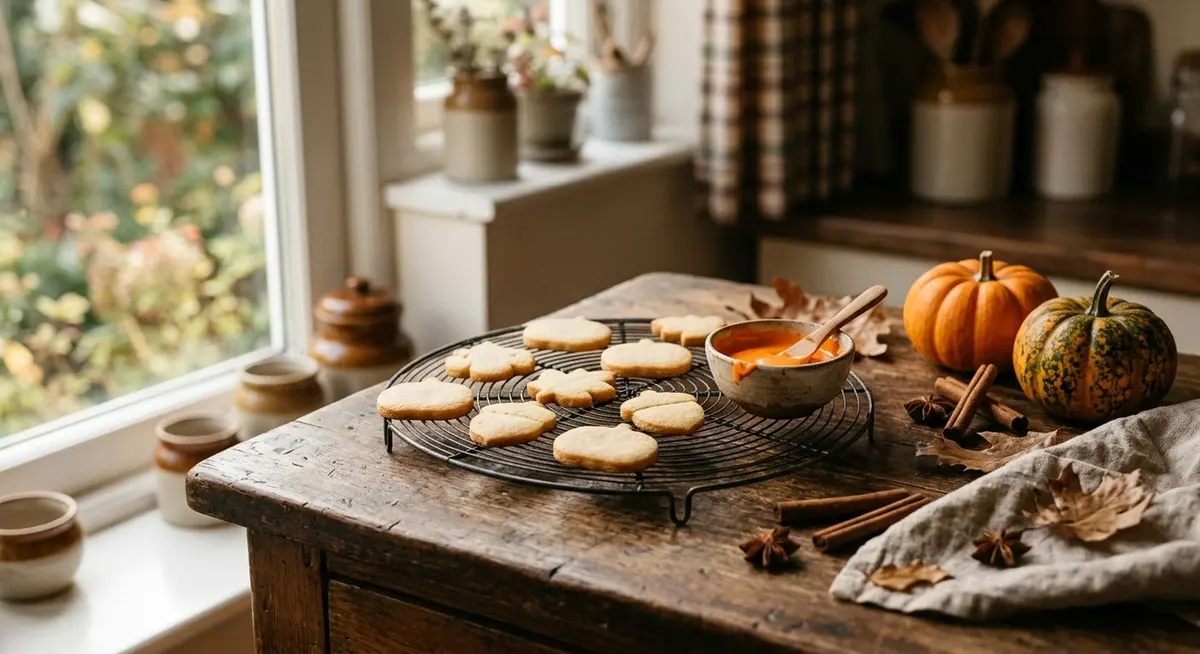
Decorating, not baking — bake the base yourself and let your child do the icing and the sprinkles. This is often the version that actually works.
The maths hiding in baking
Every scoop is a counting opportunity and every cup is a comparison. Let your child count the scoops out loud, ask which bowl has more, and let them feel the difference between a full cup and a half cup. None of this needs to be framed as a lesson. It is just what happens when a small person is allowed to do the measuring.
Bake the base yourself and let your child do the decorating. That is the version that actually gets finished.
Kitchen safety, plainly. Keep your child away from the open oven door, the hob and anything sharp. Put the bowl at the far end of the counter, use a step stool with a lip, and never leave a preschooler alone with a hot tray. The safest job in the kitchen is the one at the table.
Cozy Fall Story Time
Reading together is the quietest activity on this list and one of the most valuable. Autumn gives you a natural theme, and a themed story time is easier to hold than a random one, because the child can connect the book to the leaves they collected that morning.
Choose books about change. Stories where something transforms — a seed, a season, a colour — match what your child is watching happen outside.
Choose books with a repeated line. Preschoolers love to join in, and a refrain they can say with you keeps them in the story instead of beside it.
Choose books with rich pictures. At this age the illustrations are doing half the work, and a detailed picture gives you things to point at and name.
Reread the same book. Repetition is not boredom at this age; it is how a story becomes theirs. The tenth reading is often the one they love most.
Make it a ritual rather than an event. A blanket, a cushion, the same corner of the room and the same time of day turns story time into something your child asks for. Ten minutes is enough. If you want to extend it, ask them to tell you what happens next, or to find the leaf that matches the one on the page.
Let them hold the book. A preschooler who turns the pages is participating, even if they turn them too fast. Slow the reading to their page-turning rather than taking the book back, and the whole thing becomes a shared activity instead of a performance.
The Fall Safety Checklist
Autumn is a low-risk season overall, but it has a few specific hazards that are worth a two-minute check before you head out or set anything up. None of them should stop you doing the activities; they are just the things that are easy to forget.
Small loose parts — acorns, seeds, beans, popcorn kernels — are kept away from any child who still mouths objects.
Hands are washed after handling leaf litter, acorns and outdoor collections.
Pumpkin carving is done by an adult, with the knife kept out of reach and the child given the decorating job instead.
The vinegar-and-baking-soda experiment is set on a tray, with the child seated, and never with the container held at face height.
Shakers and sensory bottles are taped shut at both ends and checked before each use.
Outdoor layers cover the legs and the ground is checked for glass or sharp debris before leaf play.
Hot trays, the open oven and the hob are treated as adult-only zones, with the child working at the table.
Any activity is stopped the moment it stops being fun, because a tired preschooler is the one who gets hurt.
A Simple Four-Week Fall Rhythm
You do not need a new activity every day. A rhythm that repeats is easier to keep and easier for a child to predict, and predictability is what makes a preschooler willing to try the new thing when it comes. This is a shape you can repeat all season.
One week, repeated four times
Day
Outdoor
Messy
Quiet
Monday
Walk and collect
—
Sort the collection
Tuesday
—
Leaf printing
Story time
Wednesday
Leaf pile play
—
Name tracing with seeds
Thursday
—
Sensory bin
Story time
Friday
Nature walk with a job
—
Music makers
Saturday
—
Baking together
—
Sunday
Family walk
—
Rest
The point of the rhythm is that it removes the daily decision. You are not choosing an activity from scratch each morning; you are doing whatever the day says. Swap the days around to suit your week, and skip any day without guilt — a rhythm you keep three days out of seven is still a rhythm.
Keep one thing the same. Whatever else changes, keep the same walk, the same story-time corner or the same baking day. The familiar anchor is what makes the rest of the week feel safe enough to explore.
Questions Parents Ask
These are the questions that come up most often about autumn activities for this age group. Most of the difficulty traces back to one of three things: an activity pitched at the wrong age, a set-up that made the mess unmanageable, or a child who was simply done before the adult was.
What if my child refuses to go outside in the cold?
Start with a very short outing and a job to do. A five-minute walk with a bag to fill is far easier to agree to than an hour in the park. Dress for the ground rather than the air, go out at the warmest part of the day, and let the first few trips be genuinely brief. Once the collecting habit starts, the length takes care of itself.
How do I stop the mess getting out of control?
Contain it before it starts. A towel or shower curtain under the sensory bin, a tray under the pumpkin experiment, and a designated table for anything with paint or glue. Then accept that some mess is the activity rather than a failure of it. A preschooler learns texture by squashing it, so the goal is to contain the mess, not to prevent it.
My child loses interest after five minutes. What am I doing wrong?
Probably nothing. Five minutes is a normal attention span for a two-year-old, and it grows slowly. The fix is usually to shorten the set-up so the interesting part arrives sooner, and to have the next thing ready. If an activity is consistently over in five minutes, it is pitched too easy or too hard rather than being a discipline problem.
Are acorns and pinecones safe?
Pinecones are fine for almost any age because they are too big to swallow. Acorns are a choking hazard for a child who still mouths objects, so keep them for the four-year-olds and up, and wash hands after handling either. If your child is past the mouthing stage, both are excellent for sorting and counting.
Can I do these activities with more than one child of different ages?
Yes, and the easiest way is to give each child a different job in the same activity. A two-year-old can collect and carry; a four-year-old can sort and count; a five-year-old can plan and lead. The activity stays the same and the difficulty scales with the job, which is far simpler than running two separate activities.
What if we do not have a garden or a park nearby?
Almost all of these work indoors or on a single street. Leaf collecting works on any pavement with a tree, the sensory bin and the pumpkin experiment are entirely indoor activities, and leaf printing needs nothing but paper and paint. A windowsill with a few collected leaves is enough for the sorting and the counting.
How long should a fall activity last?
Plan for twenty minutes and let it end there. That matches a preschooler’s attention span and it means the activity finishes while it is still enjoyable, which is what makes them willing to do it again. If they are still absorbed at twenty minutes, by all means keep going — the rule is a ceiling, not a target.
Do I need to buy special supplies?
No. The best autumn activities use what the season already provides: leaves, acorns, pinecones, sticks and a pumpkin. The only things worth buying are washable paint, a box of baking soda, a bottle of vinegar and a bag of dried rice or beans for the sensory bin. Everything else you almost certainly already have.
Free Printable: The Preschool Fall Activity Planner
A printable companion to this guide — the age-and-skills chart, the three-layer sensory bin formula, the safety checklist, a four-week rhythm planner, a scavenger hunt to take outside and an activity log to keep track of what worked.
Elowen Thorn I cook, photograph and re-test every recipe in an ordinary home kitchen before it goes up, so what you make matches what you see. Savory Discovery is where simple weeknight cooking, seasonal ideas and the odd bit of kitchen craft sit side by side — written plainly, and worth cooking twice.