The Christmas Blurt It Out Game: The Loudest, Funniest 60 Seconds of Your Holiday Party
One timer, one reader, a room full of people shouting over each other — and forty ready-made category cards you can play from this page for free. Here is the full game, start to finish.
By Elowen Thorn · Savorydiscovery.com · 14 minute read
Blurt It Out at a glance
Players
4 to 40+ — it scales either way
Ages
6 and up in family mode, 14+ for the adult set
Playing time
15 to 45 minutes, depending on rounds
Setup time
About 10 minutes, once you have printed the cards
Space needed
One table, enough chairs, and open air for the shouting
Equipment
A 60-second timer, the category cards, two score pads, pencils
Cost
Free — play straight from this page or print the cards below
Four people are shouting at once, the timer is draining, and somebody’s aunt has just stood up to shout “PIGS IN BLANKETS” at close range into a teenager’s face. That is the Christmas Blurt It Out game working exactly as intended.
It takes about ninety seconds to explain to a room full of relatives you have not seen since last December. It needs no board, no app and no batteries. And unlike most party games that quietly fall apart once you mix grandparents with seven-year-olds, this one gets funnier the more wildly mismatched your group is. That is the whole trick of it, and it is why it has become a fixture at Christmas tables.
I have written this as the complete kit rather than a quick explanation. Below you will find the rules, a scoring system that actually resolves the “but I said it first” argument, forty tiered category cards with more than 280 answers you can play from this page without printing anything, formats for two people up to forty-plus, versions for every age mix at the table, a prize table by budget, a troubleshooting chart for the six things that reliably go wrong, and a printable score pad.
Read the rules once, then jump straight to the category cards and start playing. Everything you need is in one place, and nothing needs to be bought.
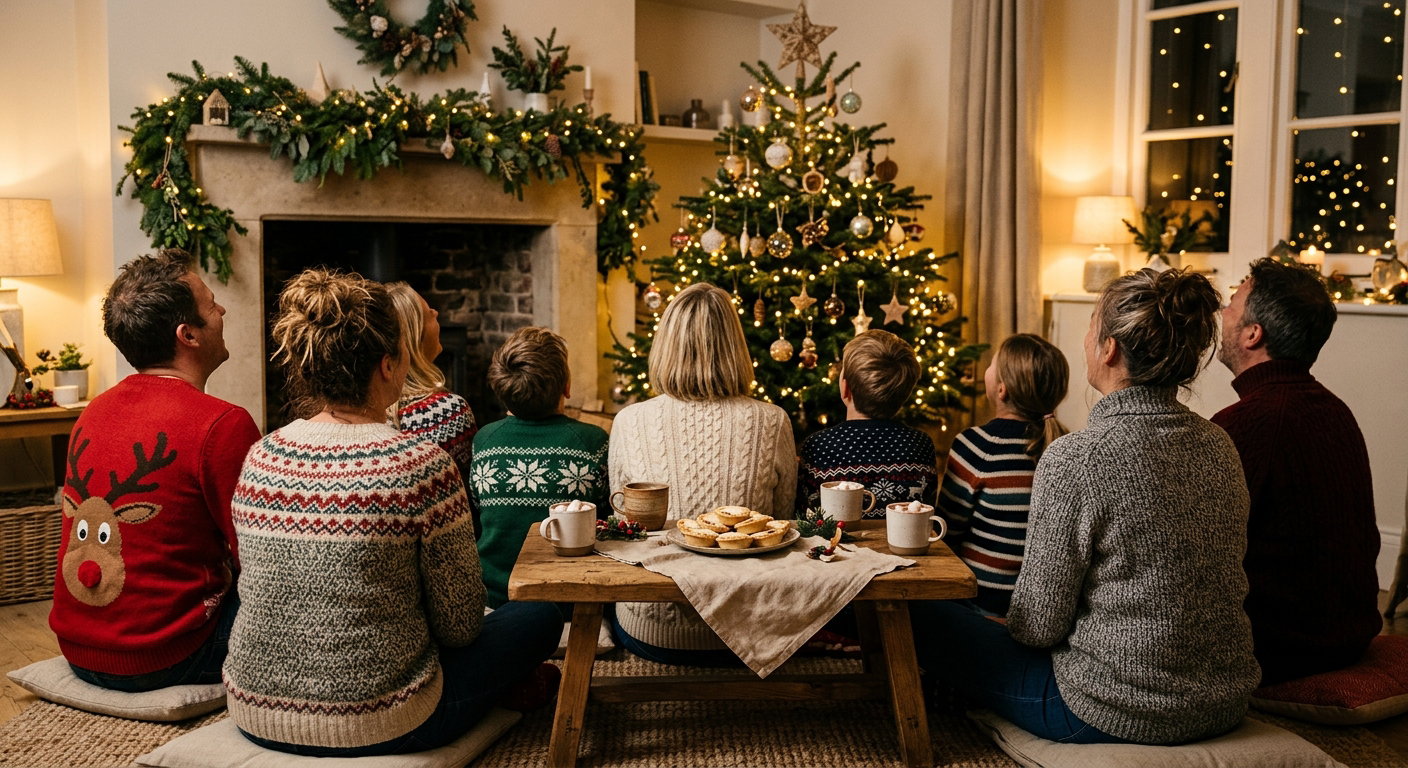
Eight players, one coffee table, sixty seconds on the clock. The view from behind the firing line is the whole game.
What the Blurt It Out game actually is
Blurt It Out is a category-guessing game built on a single, very old idea: give a team a subject, start a clock, and let them shout whatever comes into their heads until the time runs out. You have almost certainly played a version of it. The mechanic descends from the classic commercial word-blurting board games where a reader announces a topic and everyone races to name the things on the hidden list before the timer drains.
What makes the Christmas version worth a whole article is the theme. A Christmas category gives every player in the room a shared body of knowledge to draw on — songs, films, food, decorations, family rituals, that one advert everyone remembers — so nobody is disadvantaged by being younger, older, or less well read. A child of seven and a grandparent of seventy both know what a candy cane is.
The shape of a single round
One team reads a category aloud. The other team shouts answers for sixty seconds. The reading team crosses off correct answers on the card as they hear them. Then the teams swap. That is the entire game loop, repeated until you run out of cards or patience.
Two things make it more than a shouting match. First, the card is the referee. Answers are judged against a written list, not against whoever shouts loudest, which removes the single biggest source of family argument. Second, the timer is the equaliser. Slow thinkers are not penalised for being slow; they are penalised for being slow and quiet, which is a different and much funnier failing.
What you need, and what you genuinely do not
The full equipment list is a timer, a set of category cards, and something to keep score on. That is it. You do not need a board, a mat, tokens, a spinner, a phone app, a printer if you would rather read from a screen, or a single purchase of any kind.
If you are playing in the next ten minutes, use the print-and-play cards further down this page or simply read categories off a phone. If you are hosting a bigger party and want something that feels like a proper boxed game, the guidance in the card design section will get you a set you can print, laminate and bring out every December for years.
The short version
Blurt It Out in one sentence: a reader names a Christmas category, their opponents shout as many correct answers as they can in sixty seconds, and the card decides what counts. Most correct answers wins the round.
Why this game works when other party games flop
Most Christmas party games fail for one of four reasons. They need a fixed number of players. They need everyone to be roughly the same age. They take twenty minutes to explain. Or they reward whoever has played before. Blurt It Out avoids all four, and it does so structurally rather than by accident.
It has no correct number of players
Two teams of two works. So does six teams of five. Because teams take turns rather than everyone playing simultaneously, adding players does not slow the game down — it just makes each turn louder. A party that swells from eight guests to twenty as the evening goes on does not need the game reset; you simply rebalance the teams at the next round.
The scoring is decided by the card, not by the room
Ask a family to settle a dispute over whether “gravy” counts as a Christmas dinner food and you will lose fifteen minutes of the evening to it. The card settles it in a second. This sounds like a small design detail and it is in fact the reason the game survives a whole evening with relatives.
Everybody knows the answers, but nobody can reach them fast
The joy of the game is not knowledge. It is retrieval under pressure. Every adult at that table knows that yule log is a Christmas dessert, and roughly half of them will be unable to produce the phrase within the sixty seconds because a different part of their brain is busy screaming “BAUBLE!” at the ceiling. The gap between what people know and what they can reach in time is where all the laughter lives.
Why it suits a Christmas table specifically
Christmas gives you an unusually deep shared vocabulary. Between the food, the films, the carols, the decorations and the rituals, there are hundreds of near-universal reference points. That density is what lets a seven-year-old and a grandparent compete on the same card, which is not true of general-knowledge quizzes or most house party games.
It fills the dead hour after dinner
There is a specific block of a Christmas evening — plates cleared, nobody ready to move, nobody willing to start a full board game — that Blurt It Out fills almost perfectly. Rounds are short enough that people can drift in and out, and loud enough that nobody drifts far. You can play four rounds in twenty minutes and then stop, or run it for an hour between courses. It bends to the evening rather than demanding the evening bend to it.
How to play, step by step
The rules below take about ninety seconds to read aloud to a room. Read them once, then put the page down and play — you will not need to refer back.
Before the first round: the setup
Split into two teams. Aim for balanced experience rather than balanced age. One strong player on each side is better than one strong team. For every setup variation, see team formats.
Give each team a score pad and a pencil. One team scores on its own turn; designating a single scorekeeper for the whole game is faster but more prone to “errors”.
Deal out the category cards, face down. Put the stack in the middle of the table. Shuffle so nobody knows what is coming.
Set the timer to sixty seconds and check everyone can hear it. A timer that beeps matters more than one that is precise, because the beep is what stops arguments about whether time was up.
Agree the round count. Six rounds takes about twenty minutes. Decide this now so the game has an ending rather than trailing off when people get tired.
Running a round
Team A draws a card and becomes the reader. Team A reads the category aloud — clearly, once, to the whole room. No hints, no sound effects, no acting it out and no mouthing words.
Team B becomes the guessers. As soon as the category is spoken, start the sixty-second timer.
Team B shouts. Any member of Team B can call out an answer at any time. There is no turn order within the team and no penalty for a wrong guess — you can guess as many times as you like.
Team A crosses answers off the card. The moment a shouted answer matches one on the list, Team A calls “yes” and marks it. The guessers should hear confirmation so they know not to repeat it.
Keep going until the timer sounds. Whatever is still uncrossed at the beep does not count.
Score the round, then swap. Team B banks its points, hands the card back or discards it, and the teams reverse roles for the next round.
The single rule that matters most: only answers printed on the card score. This is what keeps the game fast. If you start allowing near-misses you will spend the evening negotiating instead of playing. Tell your room this before the first round and you will never have to defend it again.
Everything the game needs: cards, a timer, something to score on. No board, no app, no purchases.
The anatomy of a good round
Once you have played a few rounds you will notice they all follow the same five-beat structure. Knowing it helps you pace a party, because you can tell from the noise level which beat you are in.
How sixty seconds actually plays out
Beat
What the room sounds like
What to do as host
0–10 seconds The flood
Scattered confident shouts, mostly correct. Four answers land almost at once.
Stay quiet and mark fast. The reading team should keep up with the speed here.
10–25 seconds The stall
A gap. The obvious answers are gone and people start naming things from adjacent categories.
Do nothing. Encourage nothing. This stall is where the game gets interesting.
Call “yes” clearly when something lands, so the team can reset and move on.
45–55 seconds The gold rush
Somebody suddenly remembers three answers at once. Volume peaks.
Mark as fast as you can; this is where points are won and where sloppy marking loses them.
55–60 seconds The beep
One last shout, then laughter and immediate argument about what was said before the buzzer.
Rule on it instantly: if it was not crossed off, it does not count.
Host ruling
If two people on the same team shout two different answers at the same instant and both are correct, mark both. It is rare, it is spectacular, and refusing to mark it creates far more friction than the extra point costs you.
Scoring, bonuses and tie-breakers
A party game lives or dies on whether people trust the score. These rules are designed so that every point can be traced to something that happened, and so that the running total is interesting to watch rather than just a formality.
The base score
1 point per correct answer. The reading team crosses off as it hears them; the number crossed off at the beep is the score.
+3 bonus points for a clean sweep. Name every answer on the card inside the sixty seconds and take three extra. On a seven-answer card this is genuinely hard and worth the reward.
+2 for the last-answer dash. If the final answer is called in the last ten seconds, add two. This keeps teams shouting right to the buzzer instead of conceding at forty-five seconds, which is the single most common way a game goes flat.
0 for a blank card. No answers at all scores nothing. It happens rarely, and the room will not let them forget it.
Optional bonuses for a livelier table
Pick two of these at most. Stacking all of them turns a crisp game into an accounting exercise.
Creative credit (+1). If a team gives an answer that is not on the card but that every opposing player agrees is legitimately in category, award one point. Both teams have to agree, which keeps it rare and therefore fun. This is the one rule that lets you play with categories from another country or a different generation.
One-voice rule (+2). Award two points if the team delivers every correct answer through a single nominated spokesperson. A brutal but brilliant difficulty dial for strong players, because it forces them to self-organise under the clock.
Silence bonus (+2). Two points to a reading team that reads the category, marks the answers, and never once repeats the category to nudge their opponents. Rewards a clean, fair read.
Comeback bonus (+2). The team currently behind by ten or more points gets two free points at the start of each of their rounds. Keeps a lopsided party from losing interest, and nobody objects to it because the leader is still clearly ahead.
Handicaps that work
If one team is clearly stronger — say two teachers against four teenagers — apply a handicap before the game rather than after it.
Handicap options by imbalance
Situation
Handicap
One team is somewhat stronger
Stronger team starts at −3 points
One team is much stronger
Stronger team shoots at 45 seconds, other team at 60
Mixed ages, uneven reading ability
Stronger team may not use the two-letter rule (answers must be more than two words)
Very uneven, kids against adults
Adults play with a 40-second clock and the children read the categories
Tie-breakers, in order
Sudden-death card. Draw one unused card. Both teams get sixty seconds on the same category, one after the other, with the first team’s answers written down so the second team cannot simply repeat them. Highest count wins.
Fewest repeat guesses. If the sudden-death card is also tied, the team that repeated itself least across the whole game wins.
Longest single answer. Still tied? The team with the longest correct answer of the game takes it. Somebody will have said “National Lampoon’s Christmas Vacation” at some point, and it is only fair that it counts for something.
Designing your own score pad
Draw columns for Round, Team A, Team B and Running total. Write the running total after every round rather than only at the end — seeing the gap close in real numbers is what keeps the trailing team shouting in round five. There is a printable score pad below.
Two columns, a pencil and a running total. Write the score after every round, not at the end.
Timing, pacing and your party timeline
Blurt It Out is short by design, which means the hosting challenge is not keeping it going — it is slotting it into an evening where it lands at peak energy rather than after everybody has eaten too much.
Choose your round length for the room, not the rulebook
Clock settings by group
Clock
Best for
Effect
30 seconds
Sharp, experienced groups who already know the game
Very loud, very frantic, frustrating in a good way
45 seconds
Mixed adult groups, second or third game
The sweet spot for competitive rooms
60 seconds
Default. Family groups, first-time players, mixed ages
Enough time to recover from a stall
90 seconds
Young children, grandparents, anyone who needs thinking room
Slower and gentler, still very funny
Two minutes
Large hall games with distant teams
Needed when answers have to travel across a room
If your first round ends with most cards half-filled, your clock is too short. If it ends with every card cleared and the teams shrugging, it is too long. Adjust once after round one and then leave it alone — changing the clock mid-game is the fastest way to make a room feel cheated.
How many rounds is the right number?
Plan for six rounds for a two-team game, which is about twenty minutes including scoring. Two guides on either side of that:
Never play fewer than four rounds. With fewer, the final score is decided mostly by which team drew the easier cards, and a team that loses that way will say so.
Never play more than ten rounds in one sitting. Beyond ten, retrieval fatigue sets in, the cards start repeating themes in people’s minds, and the noise stops being laughter and starts being shouting. Break, eat something, then come back to it later in the evening.
A two-hour party timeline that works
Here is how the game sits inside a real Christmas gathering, if you want it to carry an evening rather than fill a gap.
Where Blurt It Out fits in a Christmas evening
Time
What is happening
Blurt It Out role
Arrival
Drinks, coats, people arriving over forty minutes
Nothing. Do not start a game while the doorbell is still going.
Before the meal
Nibbles, kitchen still busy
One practice round with whoever is standing around. Teaches the room the rules for free.
After the main course
Plates cleared, nobody ready for dessert
Rounds 1 to 3. The best gaming slot of the night. Energy is high, nobody is bored yet.
Dessert
Pudding, coffee, people moving around
Pause. Leave the cards on the table for people to read.
Between courses or after the meal
Dinner is over, the evening needs a second act
Rounds 4 to 6. Finish the game and announce a winner.
Appoint a host who is not playing. One person who reads, times and rules on disputes removes almost all friction. If everyone is playing, the host role should rotate with the reading role.
Announce the score out loud every round. “That’s eleven to nine, Team A still ahead.” Ten seconds of commentary buys you a room that stays invested.
Keep the used cards visible. A growing pile of spent cards tells the room the game is progressing and stops people asking how many rounds are left.
End on a win, not on exhaustion. Stop when the room is still laughing. If you play until it fizzles, nobody will suggest it next year.
Have the next thing ready. If you plan to run a second game afterwards, decide which one before you start the first, so you move straight into it instead of losing five minutes to discussion.
Printable cards, score pad and how to design your own set
You can play the whole game straight from a phone screen, and many people do. But a printed set changes the feel of the evening: it can be dealt, shuffled, drawn face-down and passed around, and it survives being dropped in the gravy. A set made properly in December will come out again every year.
Card dimensions and layout
Use A6 landscape — that is a quarter of an A4 sheet, roughly 148 × 105 mm. It is big enough for seven answers in readable type and small enough to hold in one hand while the other hand holds a pencil. Plain card stock of about 200–250 gsm is ideal; regular printer paper works but will show the answer list through the back, which lets a sharp-eyed opponent read ahead.
On each card, lay it out like this:
Top third: the category name, in caps, large. This is the only thing the reader says aloud.
Middle: the answer list, numbered 1 to 7, one per line, with enough white space that a pencil tick is obvious.
Bottom strip: a small tier label — Easy, Medium or Hard — so you can control difficulty without reading the answers.
Bottom right corner: a card number. This is what lets you check a disputed card later instead of arguing from memory.
Colour coding by difficulty
Print the three tiers on three different colours of card. This is the single most useful thing you can do with a homemade set, because it lets you pull an Easy card for a round with the children and a Hard card for the adults-only game without reading anything.
Easy — green. Named objects and foods. Card bank A below.
Medium — gold. Requires a little memory or word association. Card bank B below.
Hard — red. Constrained lists, scoring by quality of recall. Card bank C below.
Print and play
Print-and-play card grid
Cut along the lines to make four cards. Each card below is a complete, playable category with seven answers — read the heading aloud and cross off the answers as your team shouts them. This grid is a taster of the full banks that start in the next section.
ON A CHRISTMAS TREE 1. Star 2. Lights 3. Baubles 4. Tinsel 5. Garland 6. Ribbon 7. Angel
Card 03 · Medium
Card 04 · Hard
CHRISTMAS SOUNDS 1. Sleigh bells 2. Carol singing 3. Crackers snapping 4. Wrapping paper tearing 5. Church bells 6. Log fire crackling 7. Timer beeping
WORDS THAT RHYME WITH “SNOW” 1. Go 2. Slow 3. Glow 4. Grow 5. Below 6. Mistletoe 7. Hot cocoa
Print and play
Printable score pad
Copy this grid onto paper, or draw it by hand — it is four columns wide. Fill in the running total after every single round.
Round
Team A
Team B
Running total
Practice
1
2
3
4
5
6
FINAL
Making the set last
Laminate the cards. Cheap laminating pouches turn a single-Christmas set into a ten-year one, and let you wipe off pencil ticks with a cloth.
Use pencil, not pen. Pencil rubs out; pen means the card is used once.
Store by tier, not by number. Three elastic bands, three difficulty tiers. It makes choosing a card at the table instant.
Keep a blank card in each tier. Guests will invent categories, and some of them will be good enough to keep. Write down the best ones each year.
Number every card. When two people disagree about whether an answer was on the card, the number settles it in seconds.
Writing your own categories
The category banks that follow contain 40 cards and more than 280 answers, which is far more than most groups will get through in one December. If you do want to write your own, four rules keep cards playable:
Seven answers, no more, no fewer. Six is too easy to sweep; eight drags and the last two answers are almost never reached.
Every answer must be gettable by somebody in the room in ten seconds. If you would need to think about it, it does not belong on a card.
No overlap with another card. Two cards that both heavily feature Santa will make the second one feel like a repeat.
Keep the funny one in. Every card should have one answer that makes people laugh when it finally lands. That answer is usually the last one crossed off.
Forty cards, three tiers, one elastic band each. Print on card stock and laminate once.
Category bank A: 14 easy cards
Green tier. Named objects, foods and characters that every player in the room can picture. These are the cards to use for round one, for younger players and for warming up a room where half the guests have never played. Seven answers each.
Food and drink
Easy
1. Christmas dinner
Turkey
Stuffing
Gravy
Roast potatoes
Carrots
Brussels sprouts
Cranberry sauce
Easy
2. Christmas desserts
Christmas pudding
Mince pies
Yule log
Gingerbread
Sugar cookies
Peppermint bark
Trifle
Easy
3. Christmas drinks
Hot chocolate
Eggnog
Mulled wine
Apple cider
Peppermint mocha
Champagne
Warm squash with cinnamon
Easy
4. Party buffet food
Sausage rolls
Pigs in blankets
Cheese board
Crisps
Mini quiche
Sandwiches
Pickles
Decorations and the tree
Easy
5. On a Christmas tree
Star
Lights
Baubles
Tinsel
Garland
Ribbon
Angel
Easy
6. Christmas decorations
Wreath
Stockings
Candles
Nativity scene
Fairy lights
Door wreath bow
Advent calendar
Easy
7. Things that are red at Christmas
Santa’s suit
Poinsettia
Rudolph’s nose
Candy canes
Holly berries
Red baubles
Christmas bows
Easy
8. Things that are green at Christmas
Christmas tree
Holly leaves
Evergreen branches
Mistletoe
Wreath foliage
Ivy
Elf costumes
People and characters
Easy
9. Christmas characters
Santa Claus
Mrs Claus
Rudolph
Frosty the Snowman
The Grinch
Buddy the Elf
A shepherd
Easy
10. Words to describe Santa
Jolly
Merry
Generous
Bearded
Round-bellied
Cheerful
Chimney-trained
Activities and traditions
Easy
11. Christmas activities
Decorating the tree
Baking cookies
Wrapping presents
Watching Christmas films
Singing carols
Opening stockings
Writing cards
Easy
12. Things you do before Christmas
Buy gifts
Wrap presents
Send cards
Bake mince pies
Put up the tree
Hang stockings
Write a wish list
Easy
13. Things you might find in a stocking
Sweets
Socks
Gift cards
Chocolate coins
A toothbrush
Lip balm
Tangerine
Easy
14. Signs of a white Christmas
Snow
Frost
Icicles
Snowman
Snowflakes
A frozen pond
Footprints in the snow
Tier check
If a group clears most Easy cards with ten seconds to spare, move to bank B immediately. An easy card that gets swept in twenty seconds is not a warm-up any more — it is dead time.
Category bank B: 14 medium cards
Gold tier. The answers are still common knowledge, but they need a small step of recall or word association rather than simple naming. This tier is where most adult groups land after round two, and where the best laughs happen — the answers are reachable, just not immediately.
Memory and association
Medium
15. Christmas smells
Pine
Cinnamon
Mulled wine
Gingerbread
Roasting turkey
Woodsmoke
Orange and clove
Medium
16. Christmas sounds
Sleigh bells
Carol singing
Crackers snapping
Wrapping paper tearing
Church bells
Log fire crackling
Bottle corks popping
Medium
17. Things you can hang on a tree
Chocolate baubles
Family photo frames
Handmade paper chains
Popcorn string
Miniature instruments
A liquorice allsort
A sprig of dried orange
Medium
18. Things you might see in a nativity scene
Manger
Baby Jesus figure
Mary
Joseph
Three wise men
A donkey
A star above
Pop culture and festive media
Medium
19. Christmas films
Home Alone
Elf
The Santa Clause
A Christmas Carol
It’s a Wonderful Life
The Muppet Christmas Carol
Love Actually
Medium
20. Christmas film characters
Kevin McCallister
Buddy the Elf
Ebenezer Scrooge
Clark Griswold
Cindy Lou Who
Jack Frost
George Bailey
Medium
21. Christmas carols
Silent Night
Jingle Bells
O Holy Night
Deck the Halls
Joy to the World
Away in a Manger
We Wish You a Merry Christmas
Medium
22. Christmas adverts everyone remembers
Something with a snowman
Something with penguins
Something with bells
A long walk home
A surprise gift
A choir
A big-feelings ending
Places and occasions
Medium
23. Things you might see at a Christmas market
Wooden stalls
Mulled wine stand
Bratwurst grill
Handmade ornaments
Fairy lights overhead
A carousel
A brass band
Medium
24. Things you do on Christmas morning
Open presents
Wear the paper crown
Eat a late breakfast
Call relatives
Take photos
Walk the dog
Watch a festive film
Medium
25. Things you might do in the snow
Build a snowman
Make snow angels
Have a snowball fight
Go sledging
Make a snow fort
Catch snowflakes on your tongue
Shovel the drive
Medium
26. Christmas traditions
Opening one present on Christmas Eve
Matching family pyjamas
Leaving out mince pies
Watching the same film every year
Writing a wish list
Boxing Day walk
Christmas Eve box
Wordplay
Medium
27. Christmas words beginning with C
Christmas
Candle
Carol
Cracker
Chestnut
Chimney
Candy cane
Medium
28. Christmas words beginning with P
Present
Pudding
Poinsettia
Peppermint
Pine
Party
Penguin
Reading tip
With gold-tier cards, resist repeating the category. Teams will ask you to say it again, and saying it again doubles as a hint that resets their thinking. Say it once, clearly, and then be silent for sixty seconds.
Category bank C: 12 hard cards
Red tier. These cards constrain the answer in a way that makes recall genuinely difficult — a letter, a rhyme, a word shape. Use these for the final rounds of a competitive adult game, or as a late-evening tie-breaker. Expect scores to drop, and expect the room to get much louder.
Hard
29. Christmas words beginning with S
Stocking
Sleigh
Snow
Star
Stable
Sprouts
Scarf
Hard
30. Christmas words beginning with M
Mistletoe
Mince pie
Manger
Mittens
Mulled wine
Merry
Myrrh
Hard
31. Words that rhyme with snow
Go
Slow
Glow
Grow
Below
Mistletoe
Hot cocoa
Hard
32. Words that rhyme with bells
Swells
Shells
Tells
Smells
Farewells
Carousels
Elves
Hard
33. Two-word Christmas foods
Mince pies
Christmas pudding
Candy canes
Sausage rolls
Yule log
Roast potatoes
Pigs in blankets
Hard
34. Countries that celebrate Christmas in summer
Australia
New Zealand
South Africa
Brazil
Argentina
Chile
Fiji
Hard
35. Christmas jobs and roles
Santa’s grotto elf
Gift wrapper
Delivery driver
Choir conductor
Panto dame
Turkey farmer
Tree seller
Hard
36. Things people say at Christmas
“Merry Christmas”
“Who’s this from?”
“Mind the paper”
“Have you got the tape?”
“That’s not my plate”
“Say cheese”
“One more present each”
Hard
37. Things that arrive by post in December
Christmas cards
Parcels
Catalogues
Charity appeals
Online order slips
Calendars
Family newsletters
Hard
38. Things that can go wrong at Christmas
Overcooked turkey
Forgetting someone’s present
Running out of chairs
Melted dessert
A power cut mid-film
Wrong-size gifts
Crossed wires on wrapping
Hard
39. Compound Christmas words
Gingerbread
Snowman
Candlelight
Peppermint
Mistletoe
Yuletide
Evergreen
Hard
40. Christmas words with a double letter
Christmas
Bells
Shopping
Wrapping
Eggnog
Stuffing
Coffee
Two extra sets for specific rooms
These are drawn from the same tiers but grouped so you can pull one set for a room of children and a different one once the children are in bed. Nothing here needs printing — read the list straight from the page.
Kids · ages 6–10
Children’s set — use these eight cards
Cards 1, 5, 9, 11, 13 and 14 from bank A, plus the two below. Every answer on these is nameable by a six-year-old without reading help, and no category needs an adult to explain it.
Things a snowman wears or holds: scarf, hat, carrot nose, coal eyes, stick arms, buttons, broom
Good stocking fillers for a child: bubbles, stickers, crayons, chocolate coins, playing cards, a whoopee cushion, bubble bath
Adults only
Adults-only set — use these eight cards
Cards 29, 31, 34, 36, 38 and 39 from bank C, plus the two below. Nothing here is unsuitable for teenagers; it is simply calibrated for a room that has stopped needing gentle categories. For a version that goes further, read the adults-only variant.
Excuses for leaving a Christmas party early: early start tomorrow, the dog is home alone, you promised to call your mother, you have run out of small talk, it is a long drive, you are the designated driver, the baby monitor
Things nobody has ever got right at Christmas: the turkey timings, the right gift size, the number of chairs, who is vegetarian this year, wrapping without tape, the card list, the tree lights on the first try
Two teams, four teams and very big rooms
Every group is a different size, and a game that only works for eight people is a game you cannot plan a party around. Below are six formats, arranged from smallest to largest. Pick the one that matches your room and adjust nothing else.
Format 1: two teams (4–12 players)
The default. Two teams, alternate rounds, one reader per round. Everything in this article works exactly as written. This is the format to choose if you have any doubt at all, because it is the one people already understand.
Format 2: three teams with a rotating reader (6–18 players)
Three teams, and each round the reading duty moves to the next team in the circle. Team A reads for Team B, Team B reads for Team C, Team C reads for Team A. The advantage is that with three teams somebody is always resting, which means the noise stays loud for longer and people can get up for a drink without stalling the game.
The one change to scoring: with three teams, a spread of scores is less motivating than a race, so announce the leaderboard after every round. It matters more here than in a two-team game.
Two teams, two card stacks, two score pads: the default format, and the one to choose if you are in any doubt.
Format 3: four-plus teams tournament (16–40 players)
Four or more teams, split across two tables or two corners of a room, playing in parallel. This is the format that turns the game into a party centrepiece rather than a table game.
Split the room into four teams of roughly equal strength.
Pair them up: Team 1 plays against Team 2, and Team 3 plays against Team 4, in different parts of the room.
Run two rounds in parallel. Each pair keeps its own score.
Swap opponents: the winners of each pair now play each other for the final, and the two losing teams play a consolation round.
Champion is the team that wins the winners’ final. Announce it loudly — with parallel tables, half the room will have missed it otherwise.
Parallel-table tip
Give each table its own timer. Two teams sharing one timer means one of them is always waiting for the beep, and a table that is waiting is a table that has gone quiet. Kitchen timers, phone timers or a timer each on a wrist all work.
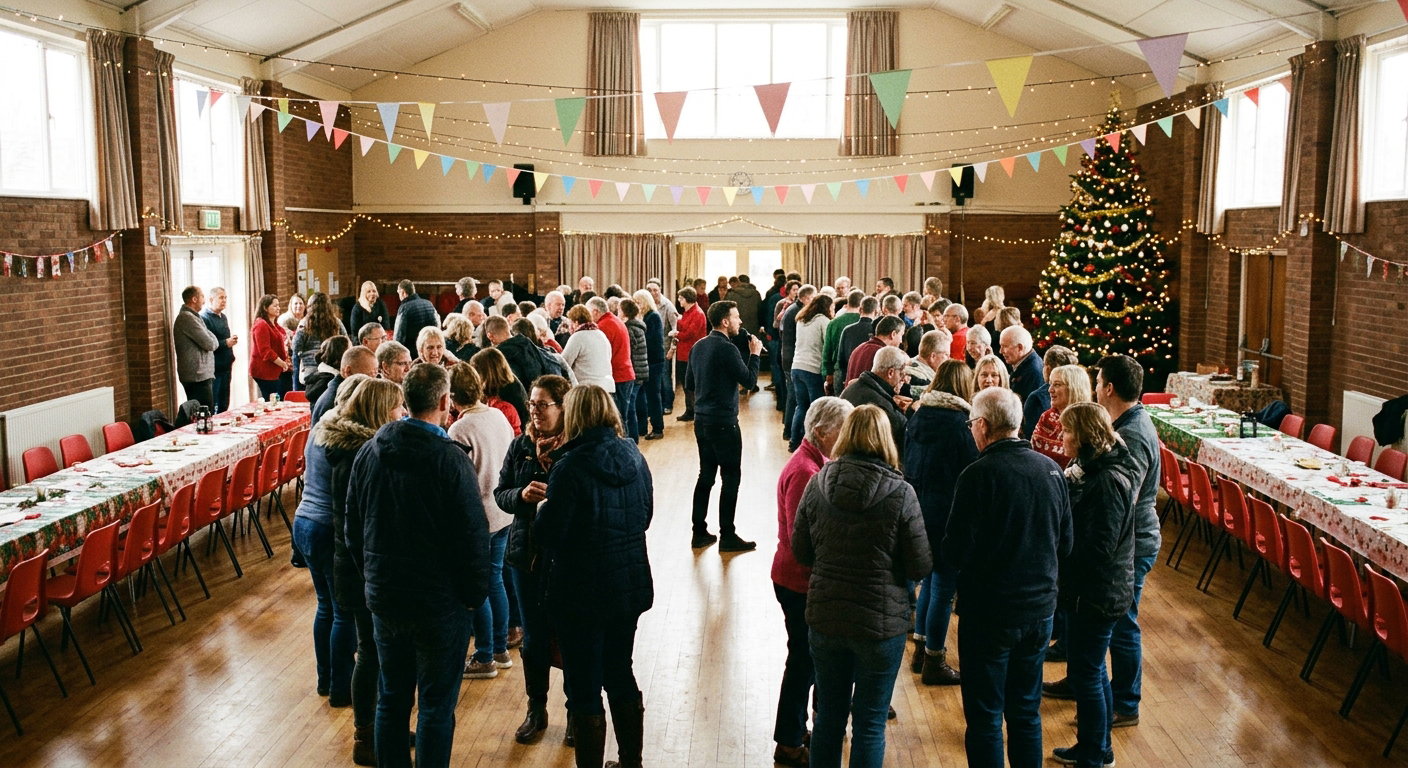
Format 4: large hall game (30–60+ players)
For a community hall, a works party, a big family reunion or a school event. The mechanic is identical; the logistics change.
Use a microphone. A reader without amplification cannot be heard beyond about twenty people, and a category nobody can hear is a dead round.
Project the category. If you have a screen, put the category name on it in large type. This removes the hearing problem entirely and lets the hall read along.
Extend the clock to two minutes. Answers have to physically travel across a room. Sixty seconds is not enough when a team is shouting from opposite ends of a hall.
Nominate one scorekeeper per team. Do not rely on group marking at scale — designate one person per side with the card and a pencil.
Play in a horseshoe, not rows. If you can push tables to the sides and seat the teams in a U shape, every team can see and hear the host.
Appoint a runner. One non-playing person who carries cards between the host and the teams saves minutes per round, which at scale is the difference between six rounds and three.
Format 4 at scale: tables pushed to the sides, teams in a horseshoe, one host with a microphone.
Format 5: the living-room format (2–4 players)
Sometimes it is just two of you, or you and the children. Do not try to run teams — play head-to-head instead.
One player reads, the other guesses, for sixty seconds.
Swap immediately. Both players get the same card, so the difficulty is exactly equal.
Turn about for as many cards as you fancy. Highest total wins.
With two players, the reading role is also the scoring role, so agree before you start that the reader marks honestly and generously — near-misses that are clearly intended should get the tick, because there is no second opponent to keep them in check. It is a two-player game; allowing the near-miss makes it a friendlier one.
Format 6: classroom and youth-group format (any size)
Schools, scouts, youth groups and after-school clubs can run this with one adjustment: the adult or leader reads and scores, and never plays. Children divided into four or five teams, one leader at the front with the cards, and the clock visible on a screen or board. Use the children’s set for the six-to-ten age bracket, and bank A for anything younger.
For very young groups, cut the answers per card from seven to five before you start and extend the clock to ninety seconds. A card that only half the room can finish is a card that has done its job.
Kid, family, teen and adults-only versions
This is the section that decides whether the game lands. The mechanic does not change across age groups — the tier of card, the clock length and the scoring bonuses change. Get those three dials right and the same game works from a six-year-old’s birthday table to a grown-up Boxing Day party of eighteen people.
Bonuses: keep the clean-sweep bonus, drop everything else. Bonuses add up faster than children can follow.
Reading: an adult or an older sibling reads.
Teams: mix adults and children rather than children against adults. Teaming each child with one grown-up guarantees every child gets to shout and be heard.
Rule change: allow “close enough” answers. If a child says “sprouts” and the card says “Brussels sprouts”, tick it. At this age the game is about being loud and being right, not about exact phrasing.
Ninety-second clock, five answers per card, gentle scoring. Loud is the point.
The family version (mixed ages, 6–80)
The version most households will actually play on Christmas Day. The trick is that each team must contain one child and one adult. That single constraint fixes almost every age problem in a party game: no team is dragged down by its youngest member, and no child is left sitting watching adults answer everything.
Tier: start with bank A for round one, move to bank B once the room is warm, and let any team choose to say “we are taking a gold card” for a bonus point.
Clock: 60 seconds, extended to 90 for any round that includes a player under eight.
Bonuses: clean sweep and last-answer dash only.
The one essential house rule: an adult may not answer for a child, and a child may not answer for an adult. Everybody shouts for themselves.
The teen version (ages 13–17)
Teenagers are usually the strongest players at the table, because their recall is fast and they are fearless about shouting. Two adjustments keep the game interesting for a room of them.
Tier: banks B and C, with an extra rule on C cards — no answer may be said twice by the same team across the whole game. Once “gangster” has been used for a rhyme card, it is spent.
Clock: 45 seconds.
Add the one-voice rule (+2): all answers must come through a nominated spokesperson. This is the single best rule for a room of teenagers, because it forces them to organise instead of yelling over each other — and the moment they get it wrong is hilarious.
Add phone-free scoring: the reading team keeps score by hand. A phone on the table becomes a search engine within ninety seconds otherwise.
The adults-only set: same rules, harder cards, shorter clock, louder room.
The adults-only version (14+ or 18+)
The same game with three dials turned up. This is the version to run after the children have gone up and the room has settled into the second half of the evening.
Clock: 30 seconds. At this speed the game becomes almost entirely about retrieval speed, and the room will get very loud very quickly.
Bonuses: creative credit (+1, by unanimous agreement of the opposing team) and the one-voice rule (+2).
Handicap: stronger players shoot at 20 seconds.
The adults-only party variant
This is the drinking-game version, and it needs to be handled carefully because it is easy to make it unpleasant. Keep it to a single rule, and keep it mild:
Wrong answer, small sip. Not a shot, not a penalty drink — a sip. A wrong guess costs you a sip, and that is the entire house rule.
Nobody is obliged. Water, soft drinks and no drink at all are all valid — the rule applies to whatever is in your glass. Say this out loud before the first round; it is what makes the variant welcoming rather than pressuring.
No penalties for not answering. Only wrong guesses cost a sip. Silence is always free. This stops the rule from punishing the shyest person in the room, who is also usually the person most likely to be a good player once they relax.
Cap it at three rounds. Enough to be funny, not enough for the game to degrade into people mishearing the category.
Skip the variant entirely if there is anyone at the table who is driving, pregnant, on medication or simply not drinking. There is no version of this rule that is worth making a guest feel singled out.
A note on the adults-only tier
None of the cards in this article contain anything unsuitable for teenagers. If your room mixes teenagers and adults and you want a single game that works for both, use the medium bank and apply the one-voice rule — it is competitive enough for adults and fast enough for teens, without needing a separate card set.
Which version for which room
Version picker
If your room is…
Use
Clock
Bonuses
Mostly under 10
Bank A + children’s set
90 sec
Clean sweep only
Mixed ages 6 to 80
Bank A, then bank B
60–90 sec
Clean sweep + last-answer dash
Mostly teenagers
Banks B and C
45 sec
+ One-voice rule
Adults, casual
Bank B + adults-only set
45 sec
Creative credit
Adults, competitive
Bank C + adults-only set
30 sec
One-voice rule + creative credit
Very large hall
Bank A and B
2 min
Clean sweep only
Hosting tips, prizes and troubleshooting
The rules are simple; hosting a room of shouting relatives is not. Here is what actually goes wrong, what to do about it, and how to set up a table so the game runs itself.
Setting up the room
Seat teams facing each other. Teams sitting side by side end up whispering to each other, which kills the game. Facing each other keeps everyone shouting outward at the opponents.
Put the reader in the middle of their own team. The reader needs to hear every opponent’s shout clearly to mark the card, and the middle of your own row is the best acoustic seat in the room.
Remove phones from the table. Announce it as a house rule at the start rather than policing it later. A phone is a search engine the second somebody gets stuck.
Have water on the table. Sixty seconds of shouting is surprisingly drying. Nobody thinks of this until round three.
Clear the clutter. Plates, glasses and cracker debris are what knock cards on the floor. Push them to a side table before the first round.
Turn the music down. If there is a Christmas playlist on, drop it for game time. Music is the single most common reason a team cannot hear a category.
Prizes that work, by budget
A prize is not required — bragging rights carry this game further than most — but a small prize sharpens play noticeably. The best prizes are consumable, shareable and slightly silly. Resist anything expensive; a disproportionate prize makes the losing team feel worse and the game less fun.
Prize ideas by budget
Budget
Prize
Why it works
Nothing
The winner chooses the next game, or chooses the music for the rest of the evening
Costs nothing, and choosing next is a surprisingly powerful prize
Nothing
A paper crown worn for the rest of the party, or the title “Blurt Champion” until next year
A child will wear it proudly; an adult will complain about it and secretly enjoy it
Under £3
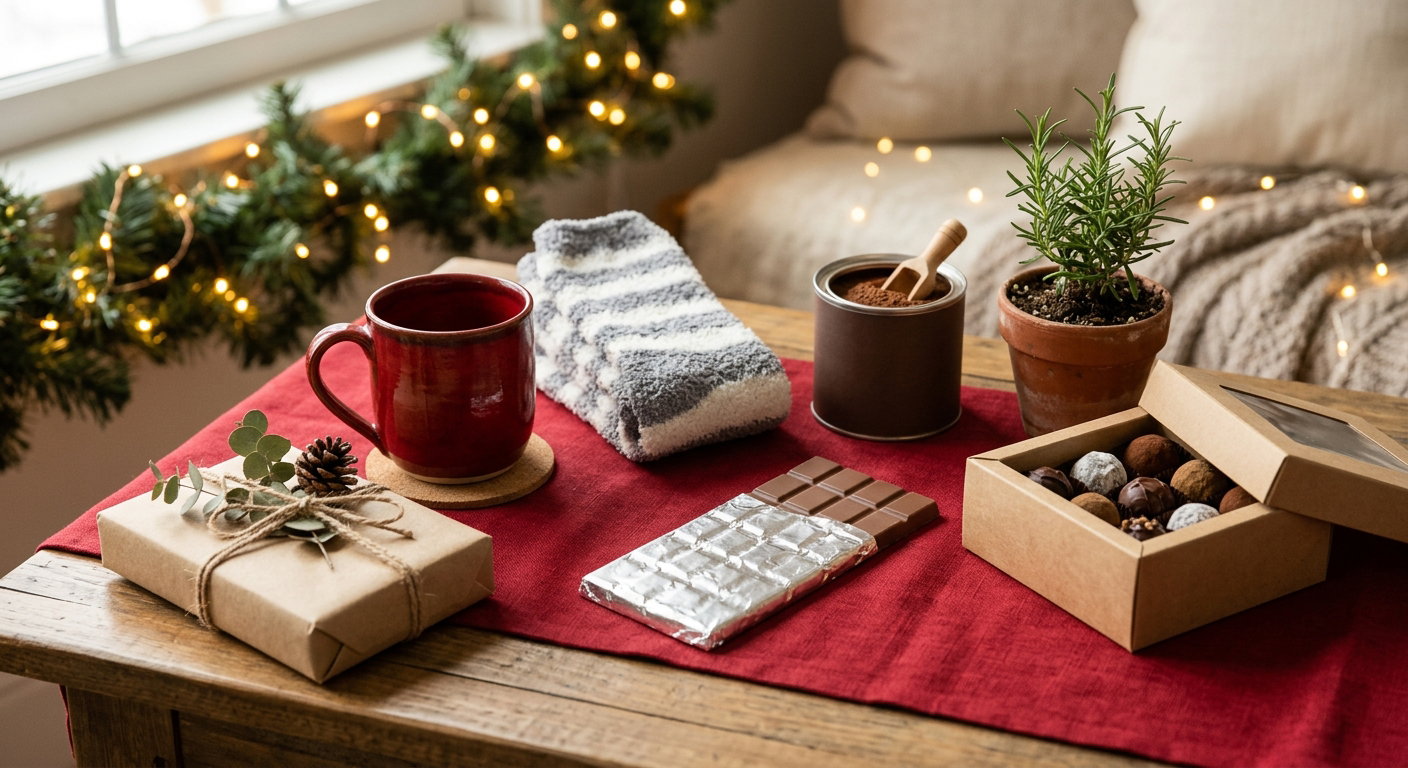
A tin of hot chocolate, a box of your team’s favourite chocolates, a packet of good biscuits
Shared instantly around the table, which spreads the win
Under £3
Fuzzy socks, a novelty mug, a small potted herb
Cheap, useful, and mildly ridiculous — the correct tone for a party prize
Under £10
A board game, a book, a box of proper chocolates
Feels like a real prize without making the loss sting
Over £10
A gift card, tickets, or the biggest item in the tombola
Keep this for a charity or works event rather than a family table
Prize rule of thumb: consumable, shareable, slightly silly. Under a tenner does the job.
Troubleshooting: the six things that reliably go wrong
Fixes for the problems that actually happen at the table
Problem
Why it happens
The fix
One person is answering everything
Their team has discovered they are the fastest player, so they take every shout
Apply the one-voice rule for one round, but nominate the quiet person as the spokesperson. It resets the team dynamic without singling anyone out.
The room goes quiet mid-round
Retrieval fatigue. The obvious answers are gone and nobody can reach the rest
Say nothing. Do not hint, do not repeat the category. The silence lasts about fifteen seconds and then somebody breaks it — that moment is the best part of the round.
Arguments over what counts
Someone gave a near-miss or a synonym and the reader is unsure
Apply the card rule instantly and once: if it is not on the list, it does not count. Add the creative-credit bonus instead, so near-misses have a legitimate outlet.
A team is far behind and has stopped shouting
The score gap has killed their motivation, usually around round four
Announce a comeback bonus of two free points per round for the trailing team, and say the running total out loud after every round. Both are cheap and both work.
Children keep losing to adults
Card tier is too high and the clock is too short for their reading speed
Switch to bank A, extend to 90 seconds, and mix one adult into each child’s team rather than running children against adults.
The game has gone on too long
Nobody agreed a round count before starting
Call the last two rounds out loud. Never simply stop — announcing “two rounds left” gives the trailing team something to chase and gives the room a clean ending.
Answers are being repeated over and over
Teams are not listening to their own side
Charge nothing for it, but have the reader say “already had it” instead of “yes”. Two rounds of that and a team starts listening to itself.
Nobody can hear the category
Background music, a big room, or a soft-spoken reader
Cut the music, and for anything over twenty players get a microphone or project the category name on a screen.
Disagreement about whether time was really up
The timer was silent, or someone called an answer as it beeped
Use a timer that beeps audibly, and rule in advance that the beep ends the round instantly. If the answer was not crossed off when it sounded, it does not count.
The host’s golden rule
Rule fast, rule once, and rule in favour of the guessers. Every disputed point that you resolve in two seconds is a point the room keeps playing; every one you deliberate over for a minute is a minute the party stops. Nobody has ever remembered who won. Everybody remembers the year someone shouted “pig in a blanket” at a grandparent.
Frequently asked questions
The questions people actually ask before playing this for the first time.
How many people do you need to play Blurt It Out?
Four is the comfortable minimum, because you need two teams of two. Two players can play a head-to-head version where both take the same card in turn, and there is no real upper limit — the largest format in this guide runs comfortably with forty or more players across parallel tables. The game scales by adding teams rather than by adding turns, so a bigger room gets louder rather than slower.
What age is this game suitable for?
Six and up, with an adult reading the categories. The game mechanic itself has no age floor — a six-year-old can name Christmas foods as fast as anybody. What changes with age is the card tier and the clock, which is why this guide separates the easy, medium and hard banks. For a mixed-age family table, team each child with an adult and use the easy bank, and the game works for everyone from six to eighty.
How long does a game take?
Six rounds takes roughly twenty minutes including scoring, which is the length most groups settle on. You can run a quick three-round game in ten minutes as a filler, or stretch it to ten rounds across a whole evening with breaks between courses. Decide the round count before you start so the game ends deliberately instead of fizzling out.
Do I need to buy anything to play?
No. The category banks on this page contain forty complete cards with more than 280 answers, and you can read them straight from a screen. The only other things you need are a sixty-second timer — a phone works — and something to keep score on. If you want a printed set you can keep for years, the card design section explains how to print and laminate your own from the same lists.
Are answers really restricted to the printed list?
Yes, and this is the rule that makes the game work. Allow near-misses and every round turns into a negotiation about synonyms, which is slower and less funny than the game itself. The card is the referee and it settles disputes in one second. If your group finds the list too strict, add the optional creative-credit bonus instead: one point for an answer that is not on the card but that both teams agree is legitimately in category.
Can this be played over video call with remote family?
It works better than most party games, but needs two changes. First, nominate one reader per screen rather than one reader for the whole call, because latency makes a single reader unusable. Second, extend the clock to ninety seconds, since shouts arriving late on a call are effectively losing a second or two each. Turn on captions if your platform supports them — they help the guessers enormously with a laggy connection.
How do I stop one player dominating?
Use the one-voice rule for a round and nominate the quietest player as the spokesperson. The fast player is not excluded — they can still think of answers — but their team has to channel everything through somebody else, which redistributes the shouting without embarrassing anyone. A handicap is the alternative: the strongest player shoots at a twenty-second clock while everybody else gets sixty.
What if a category is impossible for my group?
Retire the card mid-round and draw another. It does not happen often with these banks, because the cards are weighted towards shared Christmas knowledge rather than trivia. If it does happen, it is usually because the room is from a different country or generation than the card assumes — which is exactly what the creative-credit bonus is for.
Is there a drinking-game version?
Yes, and it is deliberately mild: a wrong guess costs one sip of whatever is already in your glass, silence never costs anything, and the variant is capped at three rounds. Water and soft drinks are fully valid — the rule applies to your glass, not to alcohol. Skip the variant entirely if anyone at the table is driving, pregnant, on medication or simply not drinking, and never make a guest explain why they are not taking a sip.
Can we play this at work or at a school?
Both work well with one adjustment: an adult or leader reads and scores, and does not play. That removes any question of the host having an advantage and keeps the round moving at scale. For schools, use the children’s set for ages six to ten and reduce the answers per card from seven to five for the youngest groups. Everything else is identical.
What is the best moment in the party to play?
After the main course and before dessert. Energy is at its highest, nobody is bored yet, and people are still at the table rather than scattered through the house. If you are running it as the main event later in the evening, wait until everyone has arrived and settled — starting a game while the doorbell is still ringing means half the room misses the rules.
Can I use these cards for a non-Christmas party?
The mechanic works for any occasion, and the category structure is the useful part: seven answers, one tier system, one list per card. The easiest adaptation for a birthday or a summer party is to keep bank A’s structure and simply swap the theme — party foods, holiday activities, film characters, things at a barbecue — while keeping the same seven-answer rule and the same clock.
Play it tonight
You now have everything: the rules in ninety seconds of reading, forty cards with more than 280 answers, a scoring system that settles its own arguments, six formats from two players to a full hall, and versions calibrated for every age at your table.
The only thing left is the part that actually matters, and it takes ten seconds. Say the category out loud. Start the clock. Let the room get loud.
Print and keep
Quick-reference card: the whole game on one page
Print this box, or copy it onto a card and keep it with the deck. This is everything you need at the table, without scrolling.
Blurt It Out at a glance
You need
A 60-second timer, the category cards, two score pads, pencils
Teams
Two, facing each other across the table. One reader, one guessing team per round
A round
Reader names the category → start the clock → opponents shout answers → reader crosses off matches → timer sounds → book the score → swap roles
Scoring
1 point per correct answer. +3 for a clean sweep. +2 if the last answer lands in the final 10 seconds
The key rule
Only answers printed on the card score. The card is the referee
Clock by room
90 sec for children · 60 sec default · 45 sec mixed adults · 30 sec competitive · 2 min large hall
Rounds
Six for a two-team game, about 20 minutes. Never fewer than four, never more than ten
Card tiers
Green easy · gold medium · red hard
Handicaps
Stronger team starts at −3, or shoots at 45 seconds while the other team gets 60
Tie-breaker
One shared card, both teams take it in turn, highest count wins
Best slot
After the main course, before dessert
Host’s rule
Rule fast, rule once, rule in favour of the guessers
Grab the cards and get the room shouting
Forty categories, three difficulty tiers, more than 280 answers — all free on this page, or print your own set from the card design guide.
Draw the score pad on the back of an envelope. Four columns, six rows.
Set a phone timer to 60 seconds and test that you can hear it from across the room.
Decide your round count now. Six rounds, then announce the winner.
Read the round steps aloud once to whoever is standing nearest. That is the whole briefing.
Then put the page down, pick up the cards, and let somebody shout “BRUSSELS SPROUTS” at a grandparent. That is the game, and it works every single year.
How this guide was put together
The rules, timings and scoring in this article were written from scratch and tested against the way the game is actually played at a family table rather than in a tournament setting. The category banks were built to a fixed structure — seven answers per card, three difficulty tiers, no thematic overlap between cards — so that any card you draw is playable inside sixty seconds by a mixed-age group. The clock recommendations, handicap options and hosting fixes are drawn from the practical problems that come up repeatedly with group guessing games: one player dominating, a team falling too far behind to care, a category nobody can hear, and the argument about whether time was really up.
Where a rule could not be settled cleanly, the guide deliberately chooses the version that produces less friction at the table, and says so where it does. Every recommendation here can be varied to suit your room — the structure is what matters, not the exact numbers.
Please drink responsibly. The adults-only party variant described in this guide is entirely optional and deliberately mild: a single sip of whatever is already in your glass for a wrong guess, with no penalty for staying silent, and a cap of three rounds. It should always be run with a non-alcoholic option and is not suitable if anyone at the table is driving, pregnant, on medication or simply not drinking. Never make a guest explain or justify their choice of drink.
Play safely. Shouting games get loud and people lean across tables. Clear glassware, hot drinks and candle flames out of the reach of reaching arms before you start, and keep the game away from open fires and low-hanging lights. Check that any prizes are age-appropriate before handing them to children, and be aware of choking hazards in small prizes where young children are playing.