By Elowen Thorn · Autumn Activities · Free printable inside
A scavenger hunt works when the list is finishable. That is the whole secret — not the theme, not the printable, not the prizes. A list a child can actually complete in the time you have is what turns a twenty-minute walk into something they ask to do again next weekend. Below are the twelve items worth hunting for, where each one hides, the boundary-and-setup that keeps the afternoon from ending in tears, and a printable kit you can carry outside today.
Most printable hunts are written for the photograph rather than the walk. They are full of owls, hedgehogs and four-leaf clovers — things you have never once seen on a Tuesday afternoon. You hand one to a six-year-old, they tick three items in the first hundred metres, and then they spend the rest of the outing asking when it is over.
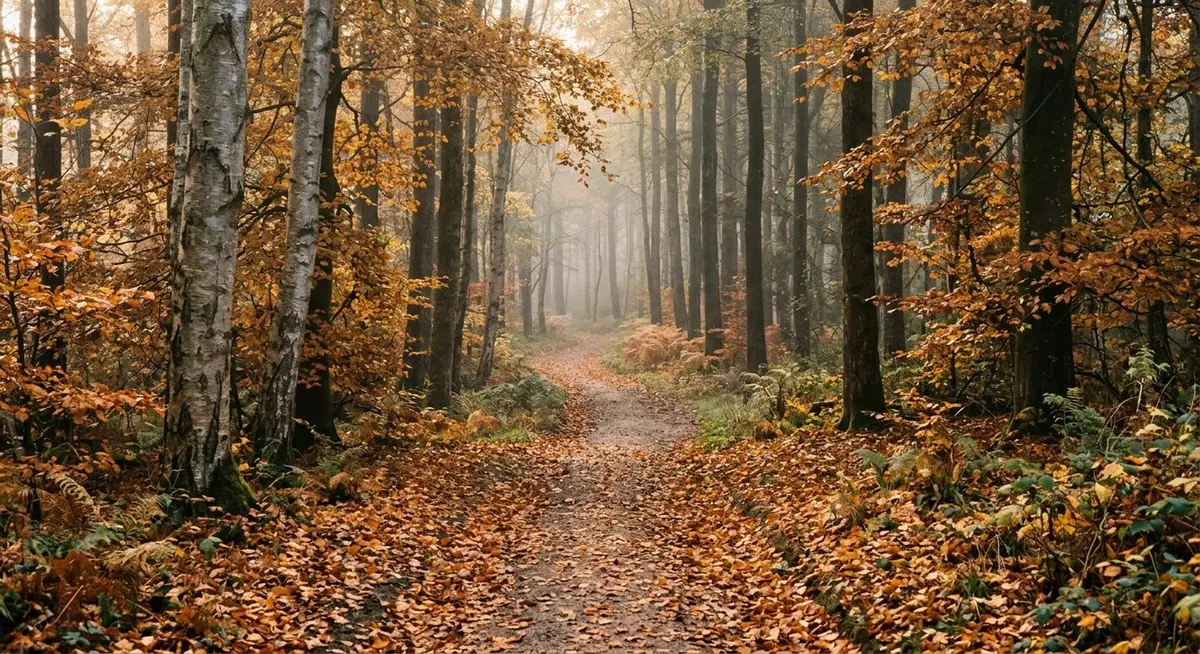
A hunt a child can finish does the opposite. It hands them a win every few minutes, and that is what keeps them walking, looking and asking questions. The twelve items below are deliberately ordinary: leaves, acorns, cones, stones, feathers. Every one of them is findable in a park, on a school run, in a garden or along a hedgerow through most of October. That is not a shortage of imagination. It is the design.
The ten-minute rule. Stop while there is still something left on the list. Ending on a find they were still hunting for is what makes them ask to go again. Ending on the twelfth tick, with a tired child and a long walk home, is what makes them not want to.
The Twelve Items Worth Hunting For
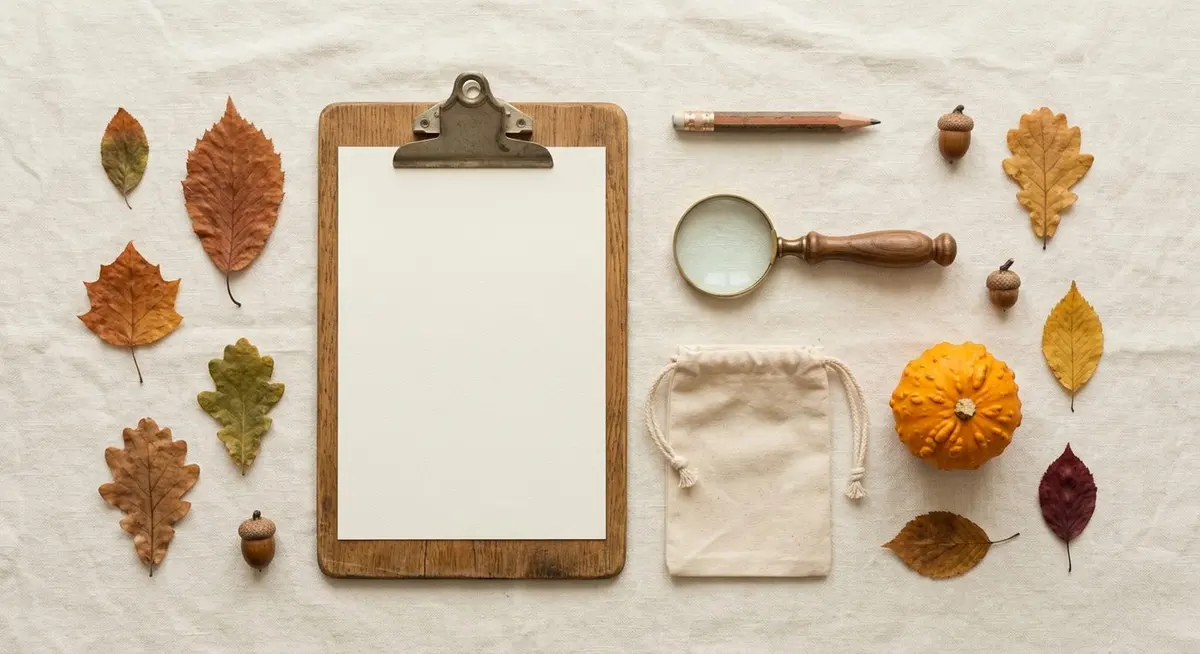
Print the sheet, clip it to something rigid, and give one pencil to each child. Nothing on this list is rare, alive or behind a fence — and if you want a version that works on the most ordinary street in the country, the colour hunt further down is the one to use.
One sheet, one pencil each, clipped to something rigid. The clipboard is not a detail — a loose sheet of paper in an autumn wind is a hunt that ends in tears.
The twelve-item hunt sheet
Item
Where to look
Why it earns its place
A leaf bigger than your hand
Under broadleaf trees after wind
Size is something a three-year-old can judge without help
Three different leaf colours
Anywhere leaves have fallen
Teaches noticing variation, not just collecting objects
An acorn or a sweet chestnut
Beneath oak or chestnut trees
The classic autumn find, and the one worth saving to plant
A pine cone
Under evergreens, or on a path
Almost never fails, and it is a freebie on most routes
Something that smells of autumn
Bark, cones, damp leaves
Engages the one sense most walks ignore completely
A seed that travels by air
Sycamore, maple, ash
Turns into a throwing game on the way home
A feather
Open ground, hedges, parks
Light, easy to carry, and it starts a talk about birds
A berry or a rosehip
Hedgerows — look, do not pick
Teaches the look-don’t-touch rule with something tempting
Something older than you
Walls, stumps, gate posts
Slides in a little history and time, without a lecture
Something the colour of a pumpkin
Anywhere — hunt the colour
The rescue item for when spirits and the list are both nearly done
A perfect leaf with no holes
Under the best tree you find
The one item that rewards slowing down and looking properly
An empty snail shell or a smooth stone
Walls, kerbs, soil
Ends the hunt on something small enough for a pocket
If you are building the list yourself instead of printing it, keep the same shape: ten items you are confident are there, two that are a small stretch, and nothing that requires trespassing. There is a fuller set of ideas for running the same hunt at different ages in this preschool autumn activity guide, and a wider set of outdoor plans in the fall activities for kids roundup.
The rescue item
Every list needs one line that can be ticked from the pavement, at any moment, with no searching at all. Here that is item ten — something the colour of a pumpkin. It has rescued more hunts than any other item on the sheet, because a child who is two finds from finishing and flagging can tick it immediately and keep going.
What to Leave Off the List
The things to avoid matter as much as the things to find. Every one of the following has ruined somebody’s afternoon.
Anything rare. Owls, hedgehogs, deer antlers, four-leaf clovers. If a child believes they are one bird away from finishing, they will not finish — and they will remember that.
Anything alive that you might realistically see. A squirrel sounds fun right up until the squirrel does not turn up on the day.
Anything behind a fence. A list item across a boundary pushes children to test the boundary. Never put one there.
Anything that belongs to someone else. Decorated pumpkins on a neighbour’s step, wreaths on doors, scarecrows on a porch. Find a pumpkin reads as take a pumpkin to a determined five-year-old.
The litter-pick trap. Adding pick up five pieces of litter turns a hunt into a chore and hands a small child a job with a hygiene edge. Do it as a separate five-minute activity if you want it, not as a list item.
Too many adjectives. A red maple leaf with five points is a reading test. A red leaf is a hunt.
One exception worth making. Include a single item you know for a fact is on the route — a particular gnarled stump, a gate post, one specific stone. It gives the walk a landmark, and it is the item children remember next time.
Setting the Boundary Before Anyone Moves
This is the part that gets skipped, and it is the part that causes almost every problem. Before anyone looks at the sheet, stand at the start and point at the edges out loud. As far as the blue gate. Not past the road. Back here when I call.
The boundary has been said out loud and pointed at, using a landmark rather than a distance.
The ending has been agreed: where the hunt finishes and how they will know.
The meeting point has been walked to before anyone starts looking.
A grown-up stays in sight of the youngest at all times.
The route has been checked for ticks, nettles and water, and anything to steer around is noted.
Everyone knows what to do if they get separated: stop, stay where you are, call.
The group is small enough that one adult can actually see every child.
The picking rule has been said: fallen things yes, growing things no.
Why the boundary comes first, not last. A child who is searching is not listening. Every instruction you give after they have started looking is a distraction from the hunt. Give them the frame before the fun and the afternoon runs itself.
The Seven-Step Run Order
Print the sheet and clip it to something rigid. One sheet and one pencil each — sharing a sheet is the single most common cause of an argument.
Say the boundary and the ending out loud, as above. Do not skip this because you are in a hurry; it takes thirty seconds and saves the afternoon.
Walk the first fifty metres together and find the first item as a group. This is how the youngest learns what finding actually means.
Let them spread out but keep the youngest in sight. Resist pointing at things — being told where something is removes the entire game.
Ask a question at each find rather than ticking in silence. The questions further down are the ones that do the work.
Call the ten-minute warning while items remain. Ending early is a feature, not a failure.
Walk the last stretch home with the finds in a bag and let them tell you which one was best and why.
There is no scoring against a clock and no need for a prize at all. If you do want a competitive version, the variations below include one — but the quiet version is the one that survives contact with a tired child.
What Changes With Age
The same hunt, four ages
Age
What to change
How long it lasts
Under 2
Carry them and hunt for two or three textures — a smooth conker, a crunchy leaf, something soft. No sheet.
10 – 15 minutes
2 – 4
Six items, all large and obvious. Let them hold the sheet and do the ticking with a chunky pencil.
20 – 30 minutes
5 – 7
The full twelve. Add the counting and colour questions, and let them lead the route.
45 – 60 minutes
8 – 12
Give them a list and a boundary and let them go in pairs. Add a photo challenge or a time limit.
60 – 90 minutes
Six items is plenty for a two-year-old. The sheet matters far less than letting them be the one who carries it.
If you have a mixed-age group
Give the older children the sheet and the youngest a job — carrying the bag, holding the pencil, being the one who spots the colour of a pumpkin. A two-year-old with a role stays in the hunt far longer than a two-year-old with a list they cannot read. Our autumn activities for toddlers and twenty-minute toddler ideas are where to look if you need the pre-reading version in more detail.
Eight Variations to Keep It Fresh
The same route, run the same way, stops working around the fourth time. Change the goal, or change the conditions — one of the two is usually enough.
Change the goal
Colour hunt. Six colours, no list of objects. Put the dots on the sheet so pre-readers can match them. The best version for a street with nothing on it.
Senses hunt. Find something soft, something rough, something cold, and something that makes a noise when you step on it.
Size hunt. Find something smaller than your thumb, something the size of your hand, and something bigger than your whole body.
Alphabet hunt. Find something beginning with each letter of a short word — F-A-L-L is a good one for a five-year-old.
Change the conditions
Torchlight hunt. The same hunt after dark with a torch. Shorten the boundary to about half and stay on ground you walked in daylight.
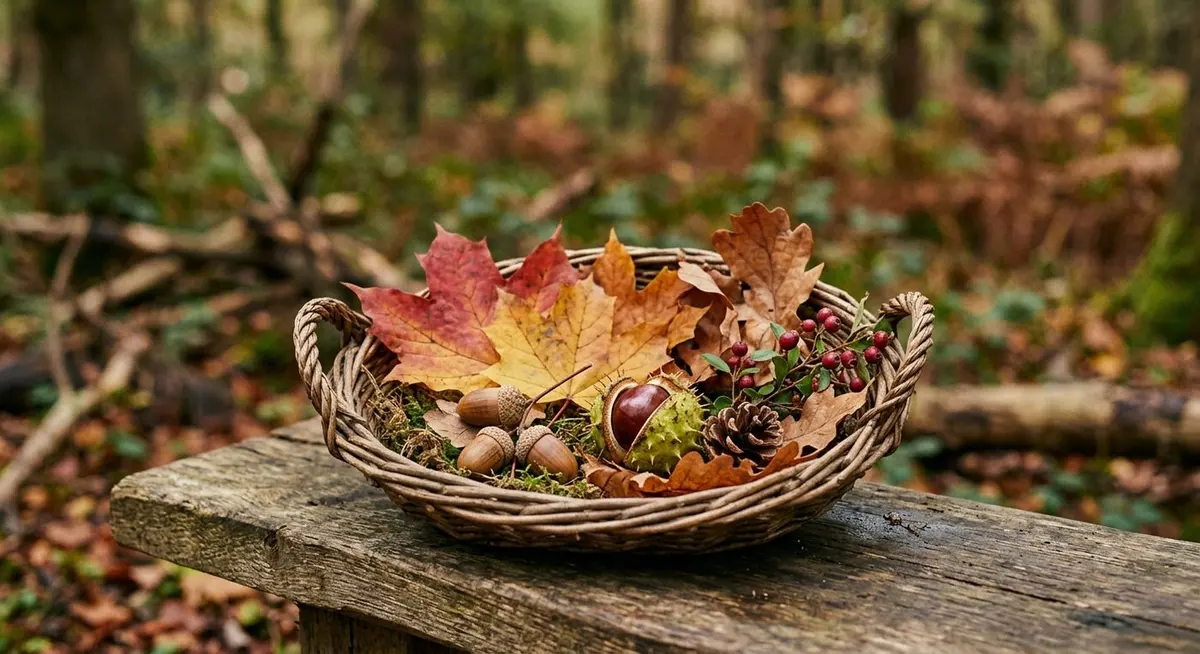
Basket hunt. Everything goes in a basket and comes home, then gets arranged into a window display or a nature table.
Photo hunt. No collecting at all — the find is the photograph. Ideal on a route where nothing may be taken, and for a child who does not like carrying things.
Two-team hunt. Two sheets, two teams, first to a full house. Keep it to the twelve items, and agree in advance that the losing team still gets the walk.
Keep one thing the same. Variation is what makes a hunt repeatable, but the boundary, the ending and the one-pencil-each rule should never change. Children relax into a familiar frame, and they explore harder inside rules they already know.
What to Do With the Finds
The bag of leaves and stones that comes home is either the best part of the afternoon or the start of an argument about the floor. It helps enormously to decide in advance which it is going to be.
Sort it before you go inside. Everything goes into one of three piles at the door: keep, photograph, return.
Wash and dry the stones. Smooth stones and shells look completely different wet, and a two-minute dry-off makes them feel like treasure.
Press the best leaves. Between sheets of newspaper under a heavy book for a week. They hold their colour better if you do it the same day.
Photograph the rest and let it go. A photograph of the whole haul is often enough, and it means nothing else has to be stored.
Keep a box, not a collection. One shoebox per child, emptied at the end of the season, avoids the slow takeover of the windowsill.
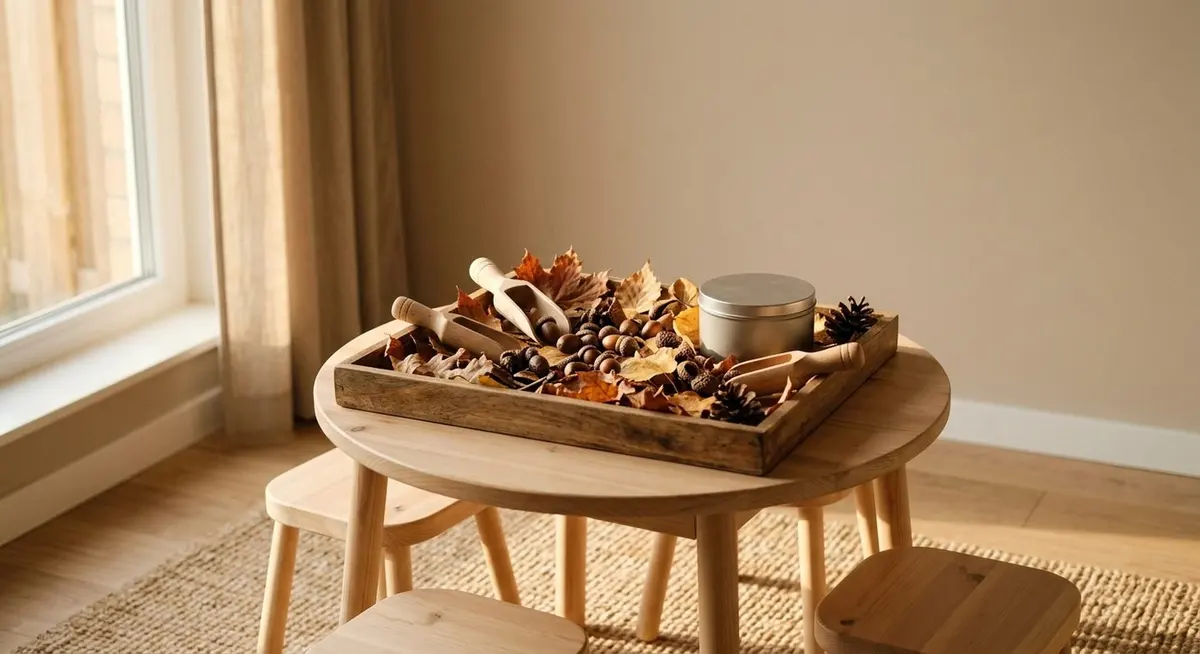
The nature table
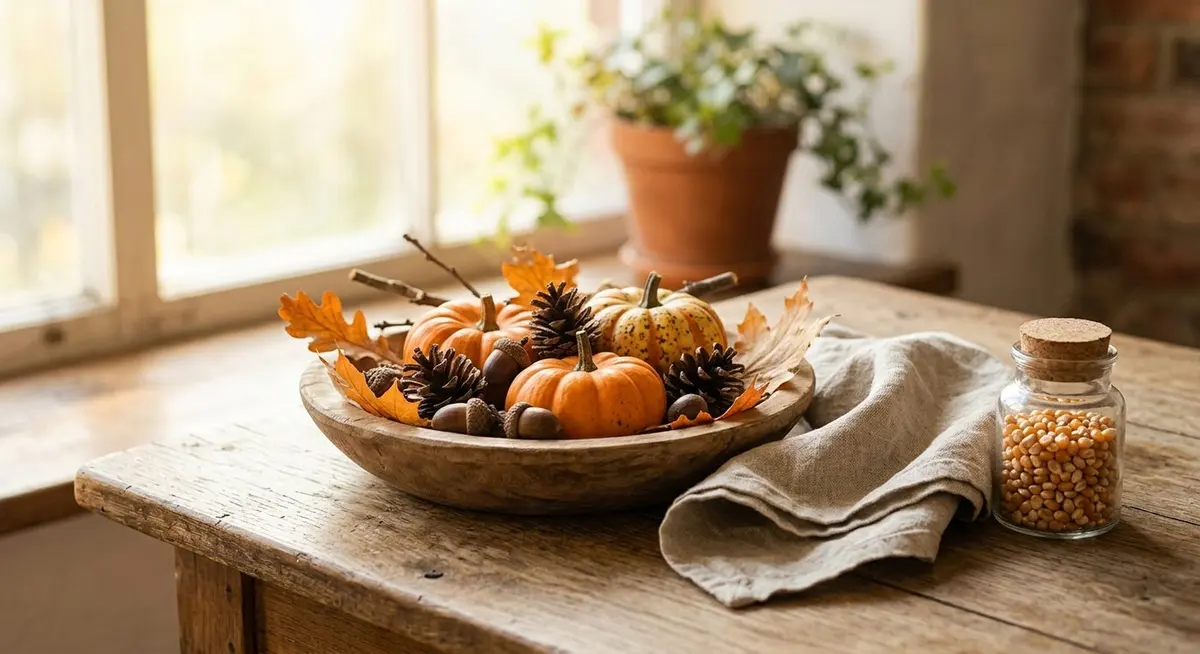
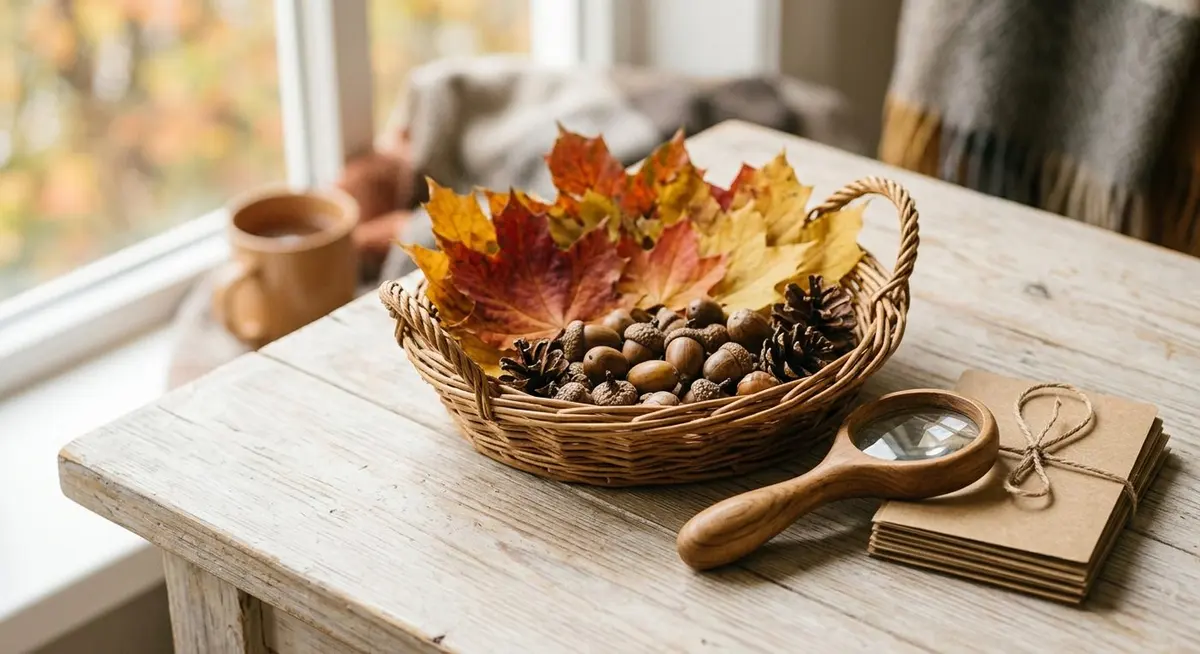
If the finds are going to live somewhere, give them a proper home — a tray at the back door, a shelf, a plate on the table. Children return to a display they arranged themselves far more often than to a pile in a bag. And when the season turns, the whole box goes back into the garden, which is a very good closing conversation about where all of it came from.
Eight Questions That Make It Worth Doing
The questions are the part the printable cannot do for you. A hunt that ends with eight answered questions is a different afternoon from one that ends with twelve ticks.
The ticking is the game. The questions are the lesson — and each one takes about ten seconds, asked while the child is still holding the find.
How does it feel — smooth, rough, cold or crumbly?
What does it smell like when you scratch it?
Which tree do you think it came from?
Is it heavier or lighter than the last one you found?
How many can you find the same? Count them in twos.
Why do you think it fell off now and not in summer?
What colour is it under the tree, and in your hand? Is it the same?
Which one are you keeping, and why that one?
The one question that matters most. Ask why that one about the item they choose to keep. The answer is almost always a small, specific story — and it is the thing they will remember about the afternoon long after the sheet has been lost behind the car seat.
When the Weather Turns
What to do about the weather
Conditions
Verdict
Adjustment
Bright and dry
Perfect
Run it as written, and take the long route
Overcast and mild
Ideal
The flat light is better for photographs and leaves stay crisp
Windy
Good
Hunt for air-travelling seeds; shorten the boundary so nothing blows away
Light rain
Fine
Waterproofs on, and hunt textures and colours instead of paper — a wet sheet falls apart
Heavy rain
Move it
Run the colour hunt from a porch, or take the torchlight version into the garden
Cold snap
Shorten
Fifteen minutes, six items, and a hot drink at the end
The wet-weather answer is the colour hunt, which needs no collecting at all. Shoes, umbrellas, coats, a puddle — six colours inside twenty metres and nothing to carry home. If you would rather stay in the warm, the no-carve pumpkin projects and the painted monster pumpkin guide are both good indoor swaps for a hunt that has been rained off.
Keeping It Going All Season
Laminate the sheet or slide it into a page protector, and the same hunt works every weekend from September to November.
The sheet is laminated, or in a page protector, with a dry-wipe pen.
It lives by the door with the pencils so it can come out in thirty seconds.
The list is rotated once a month rather than once a week.
The children build the next list themselves — their own hunt is always the one they run hardest.
The same route is walked again weeks later, and the two sets of finds are compared.
A hunt is one of the few autumn activities that gets better each time you repeat it. The first run is about the ticking. The third run is about knowing where the good tree is. If you want the wider version of the season, there is a forty-idea fall bucket list and a hundred-idea bucket list to pull from, and if the afternoons are drawing in, our bedtime routine cards are how we close the day without a fight.
Troubleshooting and Questions
These are the questions that come up most often. Almost every problem with a scavenger hunt traces back to one of three things: a list that could not be finished, a boundary that was never said out loud, or an outing that ran too long.
What age is a fall scavenger hunt good for?
It works from about two, but the sheet has to change. Under two, carry them and hunt for two or three textures with no sheet at all. Two to four can manage six big, obvious items. Five to seven can run the full twelve. Eight and up can take a sheet and a boundary and go in pairs. The idea is the same at every age; only the number of items and the amount of help changes.
How do I stop it turning into an argument?
One sheet and one pencil each, decided before you leave the door. Sharing a single sheet is the most common cause of a meltdown, because two children then have to agree on the same find. If you only have one printed sheet, pair an older child with a younger one and give the younger child the job of holding the pencil.
What if we cannot find something on the list?
That is what the rescue item is for. Pick one line that can be ticked anywhere — here it is something the colour of a pumpkin — and let a child use it when they are flagging. Then look up: a spider web, a puddle, a patch of lichen or a rusting gate will usually fill the rest. If an item is genuinely missing from your area, cross it off together and let them write in a replacement.
Should there be a prize?
Only if you want the hunt to become a competition, which changes the feel of the whole afternoon. Without a prize, children keep looking after the sheet is full and invent extras of their own. With one, they race. Both are fine, but choose deliberately rather than by accident — and if you do have a prize, make it something shared. A hot chocolate at the end works better than a toy.
Can we do it in the garden?
Yes, and it is the best first run. A garden hunt can be set up in advance by hiding a few items, which means the first finds come quickly and the child learns how the game works before you take it somewhere with traffic. Once they have the idea, a park, a woodland path or the school run all work the same way.
Is it safe to let them hunt without me?
Not until they are old enough to hold a boundary, which usually means eight or nine and only on ground you have already walked together. Until then, keep the youngest in sight at all times. Give the boundary a landmark rather than a distance, walk the meeting point before you start, and tell them what to do if you get separated: stop, stay where you are, and call.
What do we do with everything they collect?
Decide at the door. Sort the haul into keep, photograph and return. Stones and shells should be rinsed and dried the same day. The best leaves go between newspaper under a heavy book for a week. One shoebox per child, emptied at the end of the season, keeps the collection from taking over the house — and putting the whole box back into the garden is a good way to close the season.
How long should it last?
Between twenty minutes and an hour for most families, and it is better to finish slightly early than to push on. Call a ten-minute warning while there are still items on the sheet. A hunt that ends with something left to find is a hunt they will ask to repeat next weekend.
Free Printable: The Fall Scavenger Hunt Kit
A printable companion to this guide — the twelve-item hunt sheet, a route card, a blank version for building your own list, the colour and torchlight variations, a find log and a pre-departure check.
Elowen Thorn I cook, photograph and re-test every recipe in an ordinary home kitchen before it goes up, so what you make matches what you see. Savory Discovery is where simple weeknight cooking, seasonal ideas and the odd bit of kitchen craft sit side by side — written plainly, and worth cooking twice.