By Elowen Thorn · Thanksgiving · 30 activities, sorted by the day you actually have
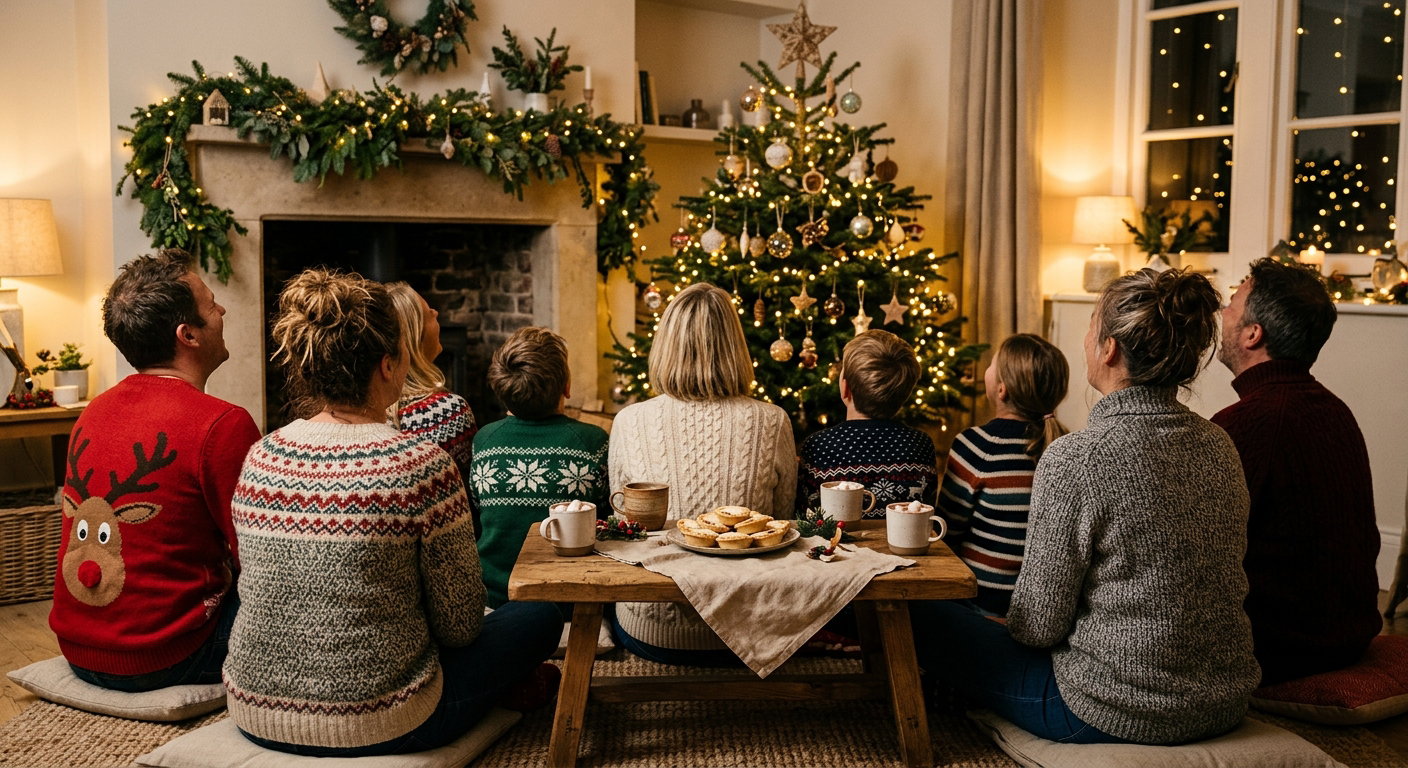
Every November someone announces that this year the family is going to do something together, and every year the day arrives and the same three things happen: the parade, the meal, and a slow slide into phones. The problem is almost never a shortage of ideas. It is that thirty ideas arrive at once, nobody chooses, and the day runs out. So here are thirty activities that genuinely work — sorted by how much time and energy each one costs, with the three you should actually pick.
Thirty activities is not a plan. It is a menu, and a menu with thirty items on it produces exactly one outcome: nobody decides, and the day defaults to whatever is easiest. So before you read the list, decide how many you are doing. Three is the right number for most families. Five is ambitious. Ten is a fantasy that ends with a tired adult and a child in tears over a craft.
Then ask three questions about each candidate, in this order.
Who is actually in the room? A toddler and a fourteen-year-old will not enjoy the same activity, and forcing them into one guarantees that one of them is miserable. Pick activities that have a job for each age, or run two things at once.
Who is running it? Every activity needs one named adult. Not “we’ll all pitch in” — one person, by name, who knows it is theirs. Activities without an owner do not happen.
What does it cost in energy, not money? A gratitude jar costs almost nothing and takes ten minutes. A family parade takes an afternoon of preparation. Both are good. Doing both on the same day is not.
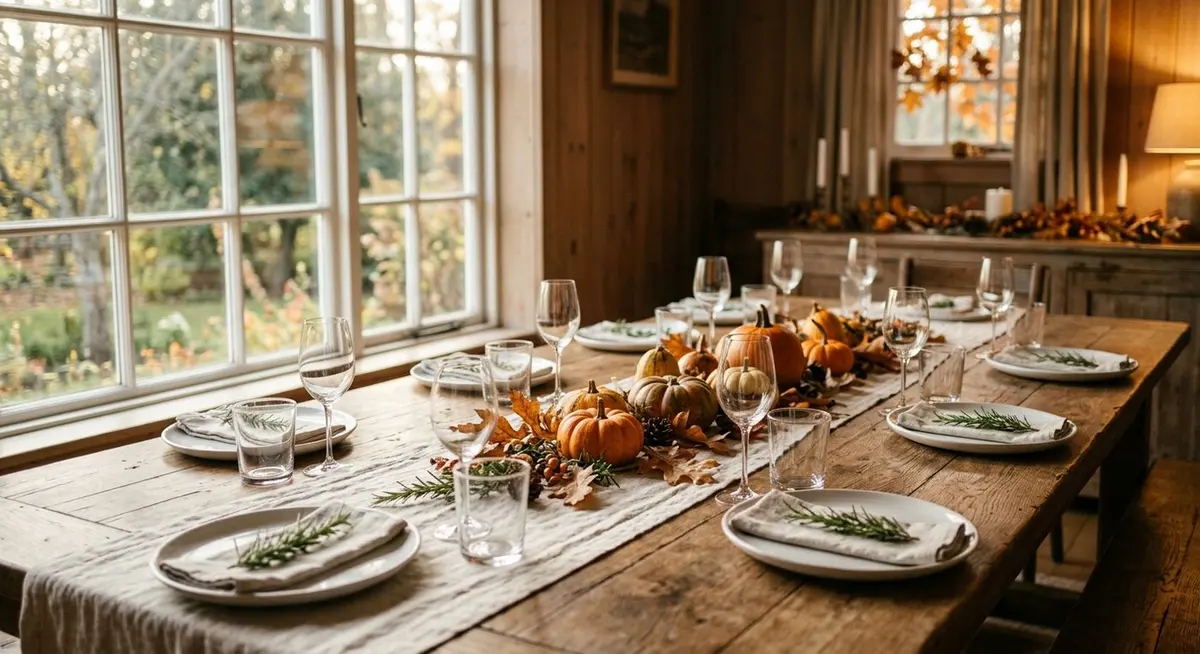
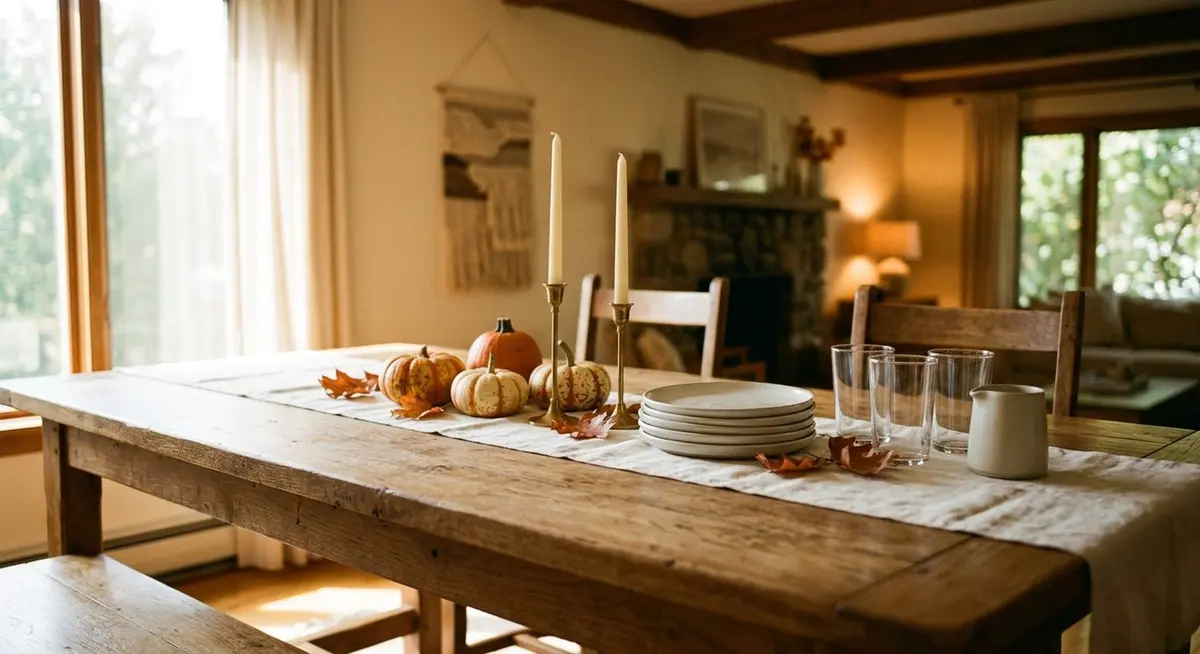
The table is the one thing every family does together. Everything else on this list is optional, and that is the point.
The rule that saves the day: leave one hour completely unscheduled. Not “free time” that quietly becomes screen time — genuinely empty, with nothing expected of anyone. The families who enjoy Thanksgiving most are not the ones who did the most. They are the ones who left room for the day to be pleasant.
All 30 Activities at a Glance
Here is the whole list in one table, sorted by how much of the day each one takes. Use it to pick, then read the sections below for the ones you chose.
Thirty activities, sorted by time and effort
Activity
Time
Best age
Prep needed
Share what you are grateful for
10 min
All ages
None
Break the wishbone
5 min
4+
None
Watch the parade
Passive
All ages
None
Watch an NFL game
Passive
8+
None
Movie marathon
Passive
All ages
Pick the films
Watch a classic the night before
Passive
6+
Pick the film
Take a family walk
20 – 40 min
All ages
Warm layers
Play thankfulness tag
15 – 20 min
3+
None
Make a gratitude jar
20 min
3+
Jar, paper, pens
Write thank-you cards
20 – 30 min
6+
Cards, stamps
Decorate placemats
30 min
3+
Paper, crayons
Make a thankful tree
30 min
4+
Branches, card, twine
Do a scavenger hunt
20 – 40 min
4+
A printed list
Play Thanksgiving Pictionary
30 – 45 min
8+
Paper, pens
Play board games or cards
45 min +
5+
Games you own
Do a festive craft
45 min
3+
Craft supplies
Make a family tree
45 min
7+
Paper, old photos
Make matching t-shirts
1 hour
5+
Blank shirts, pens
Make dessert together
1 – 2 hours
5+
Ingredients
Volunteer as a family
2 – 3 hours
6+
Book ahead
Go to the movies
2 – 3 hours
All ages
Tickets
White elephant exchange
30 – 45 min
6+
Wrapped gifts
Backyard pumpkin sweep
20 min
4+
Brooms, a lawn
Flag football
1 hour
7+
A ball, a field
Turkey Trot
1 – 2 hours
5+
Register ahead
Decorate for Christmas
2 – 3 hours
All ages
The decorations
Gingerbread houses early
1 – 2 hours
5+
Kits or from scratch
Gift homemade ornaments
1 – 2 hours
5+
Blank ornaments
Host a meal
All day
All ages
The whole plan
Have your own family parade
All day
All ages
Costumes, a route
Read the “prep needed” column before you commit. The activities that fail are almost never the ones that were too hard. They are the ones nobody realised needed a trip to the shop, a printer, or a phone call three weeks earlier.
The Twenty-Minute Activities
These are the ones that fit into the gaps — while something is in the oven, while you are waiting for people to arrive, while the parade is on in the background. They are also the ones that most reliably get done, because they ask almost nothing of you.
Share what you are grateful for
The simplest activity on the list and the one people remember. Go around the table and have each person name one thing. The trick is the follow-up question: after someone says what they are thankful for, ask what they are looking forward to in the coming year. The first answer is usually polite and rehearsed. The second one is where the real conversation starts.
Break the wishbone
Save the wishbone from the bird, rinse it, and let it dry overnight on a windowsill. On the day, two people each take a side, make a silent wish, and pull. The person holding the larger piece wins. It takes five minutes and it is the single most requested repeat activity in most families — which is why you should not let anyone near the wishbone before it has dried.
Play thankfulness tag
A garden game with one rule change. Whoever is “it” chases the others, and when they tag someone, the person tagged has to name something they are thankful for before they can run again. It sounds slight. It works, because it turns a gratitude conversation into something a six-year-old will actually do voluntarily.
Take a family walk
The most underrated item on this list. A walk after the meal does three things at once: it gets everyone out of the house, it gives the kitchen a chance to be cleared, and it burns off the energy that otherwise turns into an argument at four o’clock. Twenty minutes is enough. If you have a nature walk with a list to tick off, even better — a task keeps the walk from becoming a forced march.
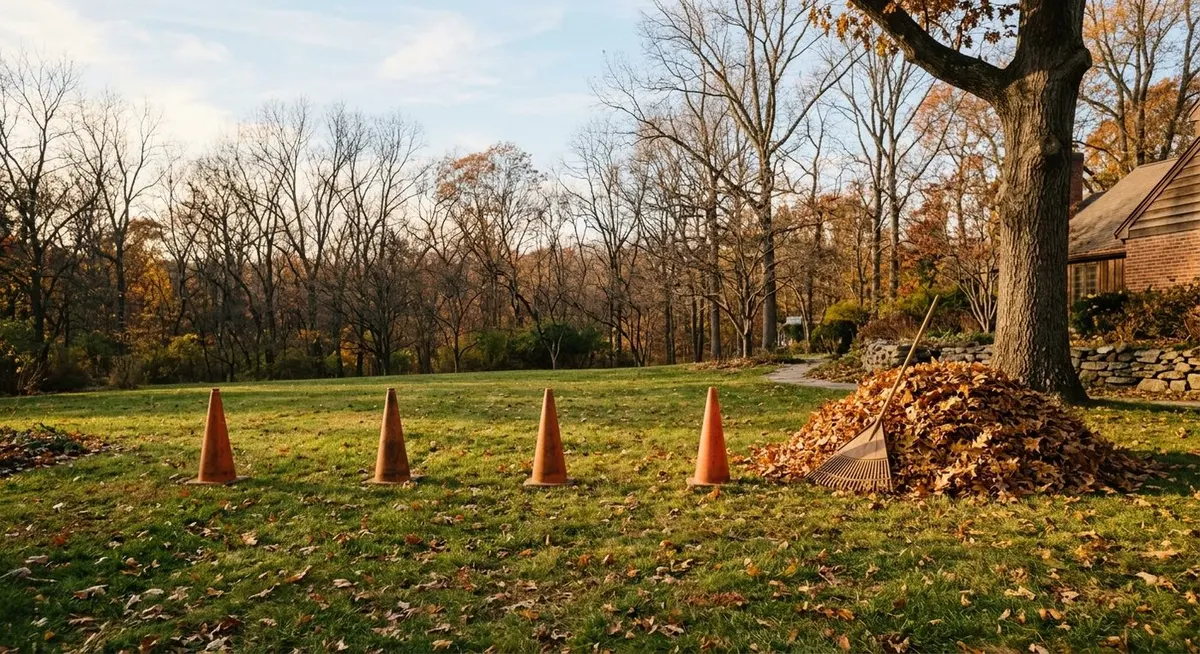
The backyard is the cheapest activity space you own. Cones, a ball and a pile of leaves will hold a mixed-age group longer than anything you can buy.
The Two-Hour Activities
These need a real block of time and at least one adult who is not cooking. They are the ones that make the day feel like an occasion rather than a meal with a long wait either side of it.
Volunteer as a family
The most meaningful thing on this list, and the one that requires the most planning. Food banks, shelters and community kitchens are busiest in the week before Thanksgiving, and most need volunteers booked weeks in advance — not on the day. If you have left it late, the alternative is a neighbourhood version: a family on your street who would otherwise spend the day alone, or a batch of meals delivered to someone who cannot cook for themselves. Children who help deliver something understand gratitude differently afterwards.
Make dessert together
Give each child one component and let them own it end to end. The youngest can crush biscuits for a base or stir a filling. A ten-year-old can measure and mix. A teenager can be handed a whole recipe and told it is theirs, which is a very different instruction from “help me with this”. If you want something that survives being made by four people at once, a simple autumn bake is more forgiving than a layered dessert.
Decorate for Christmas
Some families find this unthinkable before the plates are cleared. Others do it every year, and the reason is practical: everyone is already in the house, the tree is already in the loft, and the alternative is doing it on a Tuesday evening in December when nobody has the energy. If you are in the second camp, put it after the meal rather than before — decorating before the meal means the meal happens in a half-finished room.
Gift homemade ornaments to family far away
A genuinely good activity for a mixed-age group, because the output is a parcel rather than a mess. Blank wooden or ceramic ornaments, paint, and a permanent marker for names and the year. The point is that the ornament goes to someone who is not at the table, which gives the activity a reason beyond filling an afternoon. Post them the next day, not in December.
Host a white elephant gift exchange
Works best with six or more people and a strict spending cap, ideally a low one. Everyone brings one wrapped gift. People take turns choosing a gift or stealing one that has already been opened, and each gift can only be stolen a set number of times before it is locked. The cap is what makes it funny. Without a cap it becomes a competition, and someone goes home annoyed.
The Whole-Day Activities
Two of the thirty take the entire day. Both are wonderful. Neither should be combined with anything else on this list.
Host the meal
The obvious one, and the reason the day exists. The single decision that determines whether hosting is enjoyable is whether you cook everything yourself. You do not have to. Assign dishes by name in advance — not “bring something”, which produces four desserts and no vegetables, but “bring the mashed potatoes, enough for twelve”. Keep a written list of who is bringing what, and check it the day before. If you are hosting for the first time, the safest structure is to own the bird and the gravy and let everything else be someone else’s.
Have your own family parade
The most ambitious item here, and the one children remember longest. The version that works is small: costumes from the dressing-up box, a route around the block, a couple of instruments, and a neighbour or two warned in advance so they come out and wave. Do not attempt a float. Do not attempt choreography. The whole thing should take an hour to prepare and twenty minutes to walk, and it should end somewhere with hot drinks.
If you are doing a whole-day activity, do not also do a two-hour one. This is the most common Thanksgiving mistake: a family commits to hosting and to a craft and to a game, and by four o’clock everyone is exhausted and the craft is half-finished on the floor. One big thing is a good day.
The Gratitude Jar, Done Properly
The gratitude jar is the most recommended activity of the season and the one most often abandoned by January. The reason is almost always the same: it was set up as a Thanksgiving craft rather than as a habit, so once the day passed, so did the jar.
A jar that lives on the table with paper beside it gets used. A jar that lives in a cupboard does not.
How to set it up so it survives
Put the jar on the table a week before Thanksgiving, not on the morning itself. A jar that appears on the day reads as an assignment; a jar that has been sitting there for a week reads as part of the furniture.
Let the youngest decorate it first, with no instructions and no corrections. Ribbon, stickers, paint, whatever they want. They will defend a jar they made and ignore a jar you made.
Write the first slip yourself, out loud, and put it in. Someone has to go first, and it should be an adult, because it sets the register. Keep it specific — “the walk on Tuesday” lands better than “family”.
Leave the paper and pens beside the jar permanently. This is the whole trick. A jar you have to fetch paper for gets used twice and then never again.
Read three or four slips at random before the meal. Not all of them. The point is that there are more, and that next year there will be more still.
Keep it going after the day. One slip a week is enough. By next November you will have fifty, and reading them is a better activity than anything on this list.
Do not correct what goes in. If a child writes “my tablet”, it goes in. The jar is not a test of gratitude quality, and the moment it becomes one, children stop writing honestly — which is the only thing that makes it worth doing.
Activities for the Table Itself
These are the ones that make the table feel like it belongs to the family rather than to the host. They are also the easiest to hand to children, because the output is visible and the stakes are low.
Decorate Thanksgiving placemats
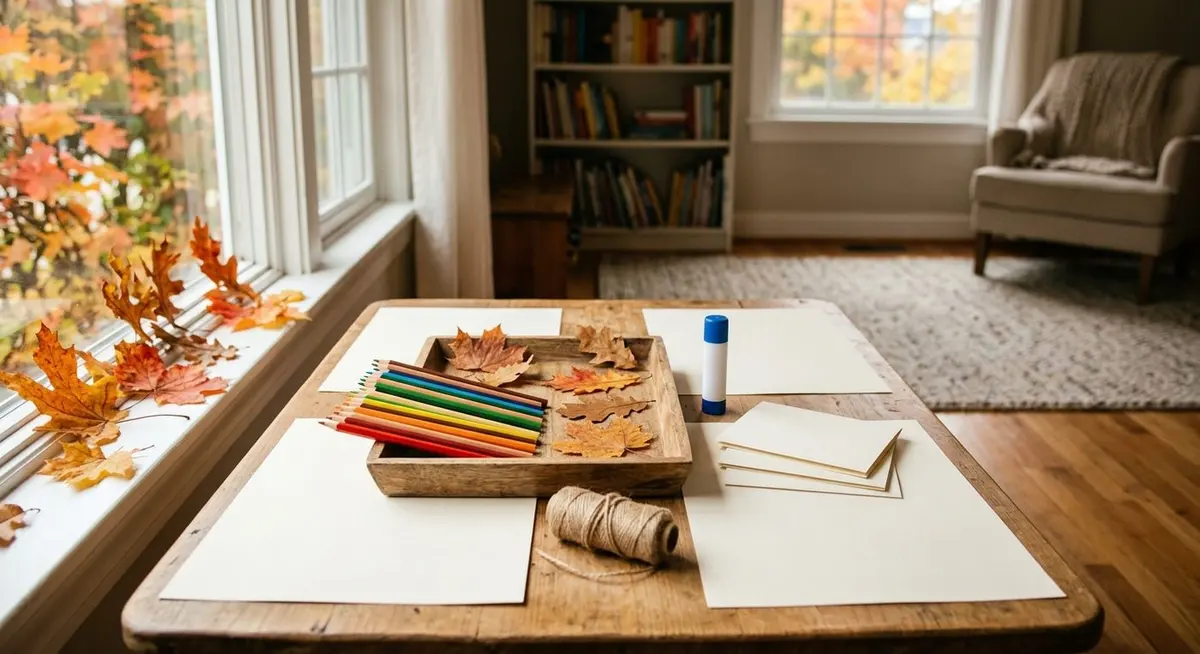
Plain paper or card, crayons, and one instruction: draw something you are thankful for. Pressed leaves and a glue stick turn it from a drawing into something worth keeping. The practical advantage is that a child who made the placemat will sit at the table for longer than one who did not.
Write thank-you cards
The version that works is aimed outward. Rather than writing cards to each other, write to people who are not at the table — a grandparent, a teacher, a neighbour, someone who helped this year. Have the addresses ready and stamps in the house, or the cards will sit in a pile until February. This is also the activity that pairs best with a season-long family list, because it gives the list something to point at.
Make a thankful tree
A few bare branches in a jar, some card cut into leaf shapes, and a hole punch. Everyone writes one thing on a leaf and hangs it. It takes half an hour and it doubles as a centrepiece, which is the reason it beats most crafts: it does not need to be cleared away before the meal.
Make a family tree
Best for children aged seven and up, and best done with old photographs rather than a blank sheet. Print or dig out pictures of grandparents and great-grandparents, and let the children place them and write the names. The conversation that happens while you do this is the actual activity. If you have relatives joining by video call, this is the one to do while they are on the screen.
Set the craft table up before anyone arrives. An activity that needs setting up is an activity that gets skipped.
Getting Children Into the Kitchen
The kitchen is where the day actually happens, and it is also where children are most often given fake jobs — stirring something that does not need stirring, or watching. Real jobs, matched to real ability, keep them in the room for an hour instead of five minutes.
Real kitchen jobs by age
Age
Job that actually helps
What to watch for
2 – 4
Tearing bread for stuffing; washing potatoes in a bowl of water
Water on the floor; keep the bowl shallow
5 – 7
Mashing potatoes; snapping beans; setting the table
Mashing needs a pan that will not tip
8 – 10
Peeling and chopping soft vegetables; measuring dry ingredients
Give them a small knife and a board that grips
11 – 13
Making a whole side dish from a written recipe
Read the recipe together once, first
14 +
Owning one dish end to end, including the timing
Let them fail a little; that is the point
Give the teenager the dish that matters. Not the salad garnish — the thing people will actually comment on. A fourteen-year-old who owns the mashed potatoes and gets them right will volunteer again next year. One who was handed a bowl of crisps will not.
Games for the Long Afternoon
The stretch between the meal and the evening is where the day either settles or falls apart. A game is the cheapest way to hold a mixed-age group together, provided you pick one that does not require reading speed or patience from the youngest person in the room.
Which game, for which room
Game
People
Space needed
Runs for
Thanksgiving Pictionary
4+, two teams
A table and a pad
30 – 45 min
Thankfulness tag
3+, any age
A garden or a hallway
15 – 20 min
Board games or cards
2 – 6
A table
45 min +
White elephant exchange
6+
A living room
30 – 45 min
Scavenger hunt
2+, in pairs
Indoors or out
20 – 40 min
Backyard pumpkin sweep
4+
A lawn
20 min
The backyard pumpkin sweep
The best game on this list for a mixed-age group, and the one nobody has heard of. Line up the leftover pumpkins along one side of the lawn. Split into teams. Each team has a broom and has to sweep their pumpkin to the far side and back, relay style. It is absurd, it takes twenty minutes, and it works for a four-year-old and a forty-year-old in the same race because the pumpkin is the equaliser.
Thanksgiving Pictionary
Two teams, a pad and a pen, and a list of words written in advance — turkey, wishbone, parade, pumpkin, football, gratitude. The advance list matters: making up words on the spot means the first round is spent arguing about the rules. Keep the youngest players on a team with an adult who can read the word to them quietly.
What Works at Each Age
The most common reason a Thanksgiving activity fails is not that it was a bad idea. It is that it was pitched at the wrong age, and the child who could not do it disengaged while the adult was still setting it up.
Matching the activity to the child
Age
What holds attention
What to avoid
Under 2
Being carried on the walk; tearing paper for the jar; the parade
Anything with small parts, rules or a wait
2 – 4
Decorating the jar, scribbling placemats, thankfulness tag
Turn-taking games; anything over 20 minutes
5 – 7
Place cards, the scavenger hunt, mashing potatoes, the wishbone
Pictionary, which needs reading speed
8 – 10
Pictionary, the lawn game, measuring and chopping
Being given a job with no real stakes
11 – 13
Running a game for the younger ones; a whole side dish
Being treated as a babysitter for the whole day
14 +
Owning one dish end to end; the white elephant; the family tree
Busywork. Give them something that matters
The teenager problem, solved. Almost every family has one adolescent who is bored by the whole day. The fix is not to find a more exciting activity — it is to give them authority. Put them in charge of the game, or of one dish, or of filming the parade. A teenager with a job is engaged. A teenager being entertained is not.
A Realistic Thanksgiving Day
This is what the day looks like when it works. Note how little is scheduled, and note that the quiet hour is deliberate rather than a failure.
An hour-by-hour plan that survives contact with reality
Time
What happens
Who is on it
8:00 – 9:30
Parade on in the background, breakfast, no cooking yet
Anyone awake
9:30 – 10:30
Gratitude jar slips and placemats at the table
Children, one adult
10:30 – 12:00
Kitchen crew starts; the youngest on the easiest real job
Whoever volunteered
12:00 – 1:00
Outside: walk, lawn game or the pumpkin sweep
Everyone who can walk
1:00 – 2:00
Quiet hour. Screens allowed. This is not a failure
Everyone
2:00 – 3:00
Table set, place cards written, cards to absent family
Children, one adult
3:00 – 4:00
The meal
Everyone
4:00 – 5:00
Wishbone, dessert, the game that always causes an argument
Everyone
5:00 – 6:00
Clean-up as a group, then the film or the board game
Everyone
6:00 onward
Nothing scheduled. Leave it that way
—
Protect the quiet hour. The single most useful thing in this plan is the hour after lunch where nothing is expected of anyone. Families who skip it are the ones who hit four o’clock with a tired child and a half-finished craft. Put it in the plan and defend it.
When It Goes Sideways
Something will go wrong. It always does, and it is almost never the thing you were worried about. Here are the six failures that come up most, and what to do about each.
Common problems and the fix
What happened
Why
What to do
Nobody did the activity you planned
It had no named owner
Assign one adult by name before the day, and write it down
The craft is half-finished on the floor
It was pitched at the wrong age
Split the group; give the older children a different job
A child lost interest in ten minutes
The activity needed waiting, not doing
Choose something with a job for every pair of hands
The meal ran two hours late
Too many dishes on one oven
Write the oven schedule the night before, in time slots
An argument at four o’clock
Everyone was tired and nothing was scheduled
Protect the quiet hour; it prevents this
The gratitude jar was never used again
The paper was not left beside it
Leave paper and pens on the table permanently
Lower the bar on purpose. The families who enjoy Thanksgiving are not the ones who executed a perfect plan. They are the ones who decided in advance that three activities was enough, and who did not treat a half-finished craft as a failure. If you take one thing from this guide, take that.
Questions and Answers
These are the questions that come up most often when families plan this day.
How many activities should we actually plan?
Three, for most families. One that takes real time, one that fits in a gap, and one that involves the table. Five is ambitious and ten is a fantasy. The number matters less than the fact that each one has a named adult responsible for it.
What if we have a toddler and a teenager at the same table?
Pick activities that have a job for each age rather than trying to find one thing they both enjoy. The pumpkin sweep, the gratitude jar and the scavenger hunt all work because the task scales. Pictionary and board games do not, because they need reading speed and patience.
Is it too early to decorate for Christmas on Thanksgiving?
That is entirely a family decision, and both camps are well represented. The practical argument for doing it on the day is that everyone is already in the house and the decorations are already out of storage. If you do, put it after the meal rather than before, so the meal does not happen in a half-decorated room.
How do we make the gratitude jar last past November?
Leave the paper and pens beside the jar permanently, and read a few slips at random before the meal rather than all of them. A jar that requires fetching paper gets used twice. A jar that lives on the table with a pen next to it becomes a habit.
What is the best activity for a family that does not enjoy crafts?
The walk, the wishbone, the parade and the games. None of them require supplies, none of them produce a mess, and all four work for a mixed-age group. The walk in particular does more for the mood of the day than any craft on this list.
How do we include relatives who cannot travel?
Two activities work best over a video call: the family tree, because it is a conversation with something to look at, and the gratitude round, because it is short and everyone can take a turn. Set the laptop at the end of the table rather than in the middle, so they can see faces rather than the ceiling.
What do we do if the day starts to fall apart?
Feed everyone, then send them outside. Almost every Thanksgiving crisis between two and five o’clock is a combination of low blood sugar and too much indoor time. Twenty minutes in the garden fixes more than any amount of planning.
Do we need to buy anything for these activities?
Almost nothing. The jar, the paper, the cards and the placemats are the only purchases, and they cost very little. The activities that need booking — volunteering, a Turkey Trot, cinema tickets — are the ones to decide on weeks in advance, not on the day.
Free Printable: The Thanksgiving Family Activity Planner
A printable companion to this guide — all thirty activities as a tick list, a supplies checklist, the gratitude jar method, place card templates, an hour-by-hour day plan, the games table and a next-year page.
Elowen Thorn I cook, photograph and re-test every recipe in an ordinary home kitchen before it goes up, so what you make matches what you see. Savory Discovery is where simple weeknight cooking, seasonal ideas and the odd bit of kitchen craft sit side by side — written plainly, and worth cooking twice.